- Raised beds solve Winnipeg’s biggest gardening problem: heavy Red River clay that drains poorly and compacts under traffic
- Cedar is the standard material for Winnipeg raised beds: naturally rot-resistant and handles freeze-thaw expansion without splitting the way pine does
- Corner posts and frame connections need to account for frost heave: beds that are not anchored or weighted settle unevenly after the first winter
- Fill the bed with 4-way mix, not straight topsoil: the drainage, aeration, and fertility profile of a blend is what makes raised beds worth building
- Ditchfield supplies the soil and aggregate materials for your raised bed project, including 4-way mix, topsoil, and compost; delivery available across Winnipeg from 2929 Sturgeon Road
- This guide covers materials and planning; installation is done by the homeowner or a licensed contractor
Why Raised Beds Work in Winnipeg
Raised beds are not a trend in Winnipeg; they are a practical solution to a specific problem. Most of the city sits on Red River clay, one of the densest native soils in Canada. Clay drains slowly, compacts readily, and heaves with moisture changes. Trying to grow vegetables or high-performance perennials directly in Winnipeg clay without significant amendment is a perpetual uphill battle.
A raised bed sidesteps the problem entirely. You fill it with whatever growing medium the plants actually need, and the clay below becomes largely irrelevant. The result is dramatically better root development, more consistent moisture, better drainage, and the ability to grow plants that would struggle in the native soil regardless of how much amendment you apply at the surface.
The additional benefit in Winnipeg: a raised bed warms up faster in spring. Soil in a raised frame is above grade and exposed to sun on the sides. In a climate where soil temperature in early May is still too cold for most seeds, a raised bed can be 2 to 4 degrees warmer than the surrounding ground, extending the effective growing season by two to three weeks.
Material Options for Raised Beds in Winnipeg
Cedar — The Right Choice for Winnipeg’s Climate
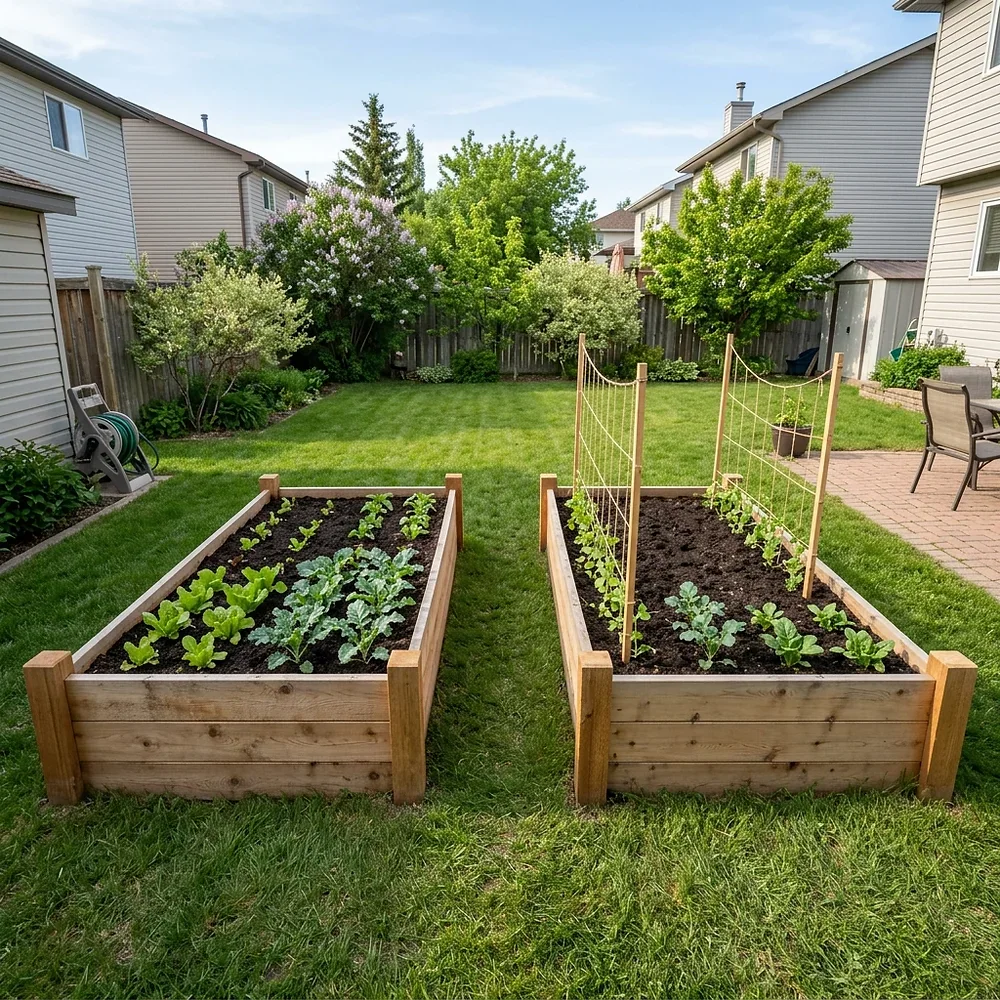
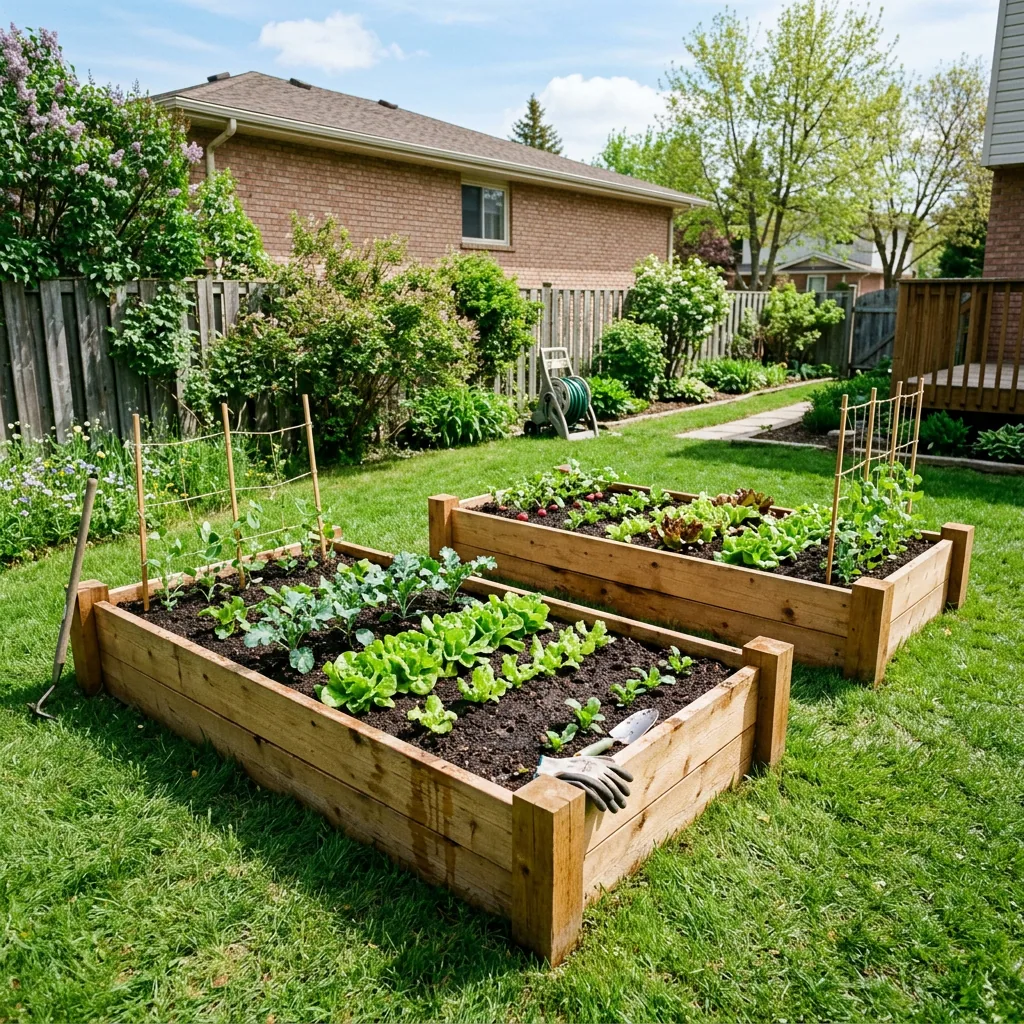
Western red cedar is the standard for raised garden beds in Canadian climates. It is naturally rot-resistant due to the oils in its wood, which means it does not require chemical treatment to last. In Winnipeg’s conditions, a properly built cedar raised bed typically lasts 10 to 15 years before needing significant repair or replacement, sometimes longer. The critical property for freeze-thaw climates is cedar’s dimensional stability — pressure-treated pine and spruce expand and contract significantly with moisture changes, and in a Winnipeg winter, boards that absorb moisture in fall freeze, expand, and can split or push against fasteners. Cedar handles this cycle with much less movement. Standard dimensions: 2×6 or 2×8 for bed walls, 4×4 corner posts for beds over 12 inches tall.
Composite Lumber — Low Maintenance, Higher Cost
Composite lumber products made from recycled wood fibre and plastic binders will not rot, do not require any chemical treatment, and are dimensionally stable through freeze-thaw. They cost significantly more than cedar per linear foot but have an indefinite functional lifespan in Winnipeg conditions. For homeowners who want a permanent bed that will never need replacement, composite is worth the premium. For most vegetable garden applications where the bed will be expanded or rearranged over time, cedar is more practical.
What to Avoid in Winnipeg
Untreated pine and spruce rot quickly in contact with moist soil. Most pine raised beds sold as kits at big-box stores are designed for milder climates and have a 3 to 5 year lifespan in Winnipeg conditions. Railroad ties and old telephone poles should be avoided for food gardens due to creosote and other treatment chemicals.
The Frost Heave Problem and How to Address It
This is the Winnipeg-specific detail that most raised bed guides miss entirely. When the soil beneath a raised bed freezes and thaws through the winter, the pressure can shift bed frames. Corner posts push up or shift inward. Boards separate at joints. A perfectly level bed in October can be visibly racked by April.
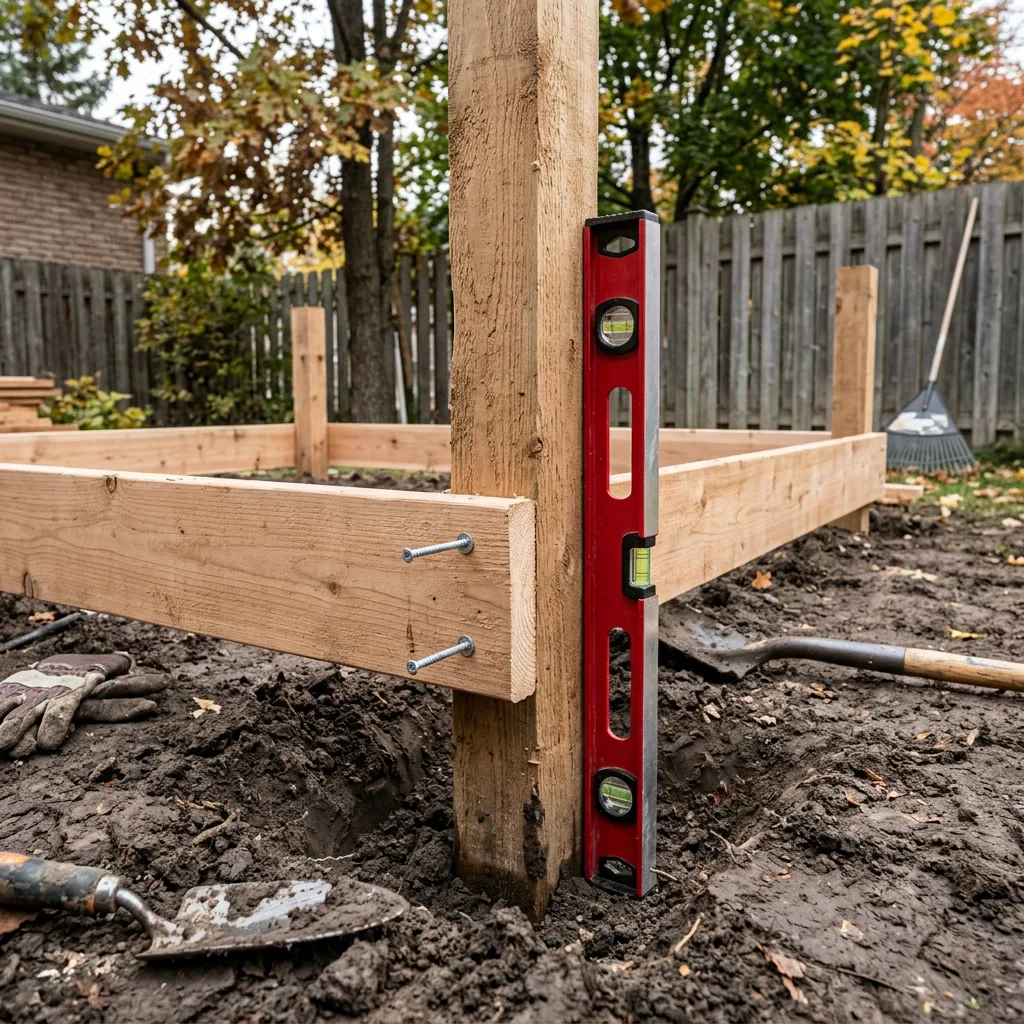
Use corner posts set below grade where possible: a 4×4 post with 6 to 8 inches buried in the ground provides anchoring that resists vertical heave movement.
For beds on hard surfaces like patios or concrete, use heavy-duty L-brackets and corner connectors that keep the frame geometry intact through movement.
Taller beds (over 12 inches) are less susceptible to heave because their own weight and soil mass resist the upward pressure. Short, lightweight beds on flat surfaces are most vulnerable.
Allow small gaps at board joints: rigid tight-fit construction that leaves no room for seasonal movement will develop cracks and gaps. A 1/8-inch expansion gap at end joints is appropriate.
On slopes or drainage-problem areas, install a perimeter of coarse gravel around the bed base to prevent water from pooling and freezing against the frame.
What Goes Between the Bed and the Clay
Hardware Cloth for Rodent Protection
In Winnipeg’s established residential neighbourhoods, voles are a real consideration for below-grade beds. A layer of 1/4-inch hardware cloth stapled to the bottom of the frame before filling prevents voles and mice from burrowing up through the bed from below. This is particularly worthwhile for beds at grade level where the bottom boards are in contact with or close to the soil surface.
No Landscaping Fabric on the Bottom
Landscaping fabric on the bottom of a raised bed is counterproductive. It restricts root downward growth into the native soil below (which is desirable after the bed is established), becomes clogged with roots over time, and eventually creates drainage problems. Leave the bottom open, or use hardware cloth for pest protection only.
Loosening the Clay Below
Before filling the bed, loosen the clay below with a fork or digging bar to 6 to 8 inches. This is the single most impactful thing you can do for long-term bed performance. It allows roots to penetrate below the bed as the plants establish and creates a transition zone for drainage rather than a hard clay stop.
Soil Fill: What to Order and How Much
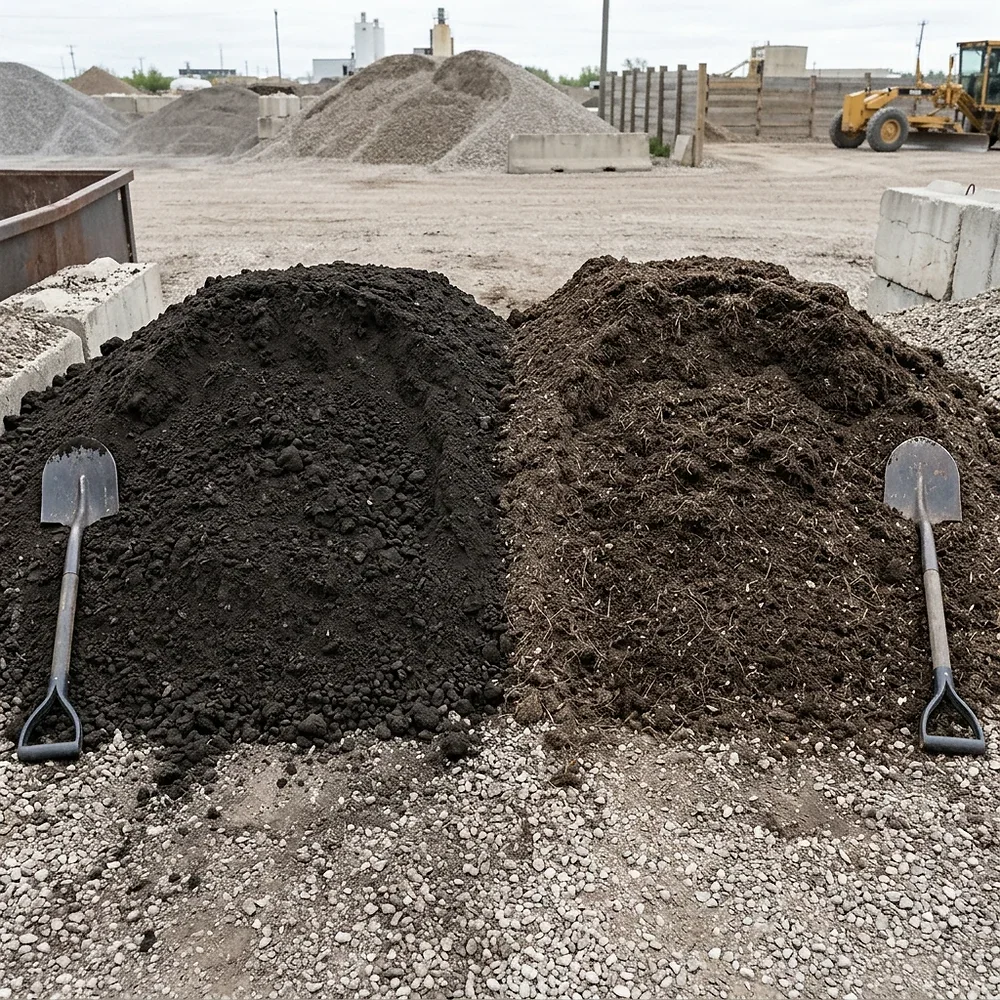
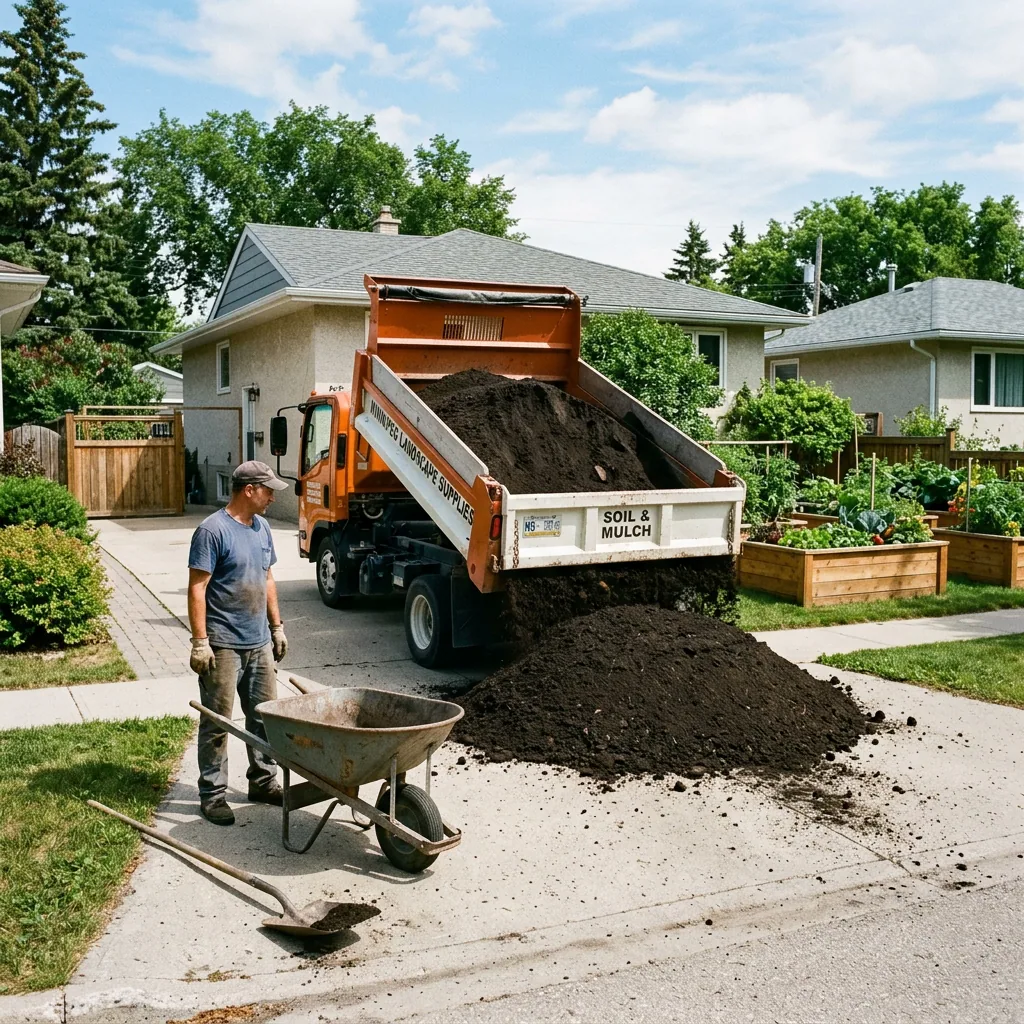
The single most important material decision for a raised bed is what you fill it with. Screened topsoil alone is not the right answer — it lacks the drainage, aeration, and organic matter that make raised beds perform. The right product is 4-way mix: a blend of screened topsoil, peat moss, compost, and sand. It drains well, holds moisture consistently, provides active fertility, and does not compact into a dense mass over time. For the complete breakdown, see our Compost vs Topsoil vs 4-Way Mix guide.
| Bed Size | Depth | Fill Required | Product |
|---|---|---|---|
| 4 × 8 ft | 10 inches | 1.0 cubic yard | 4-way mix |
| 4 × 8 ft | 12 inches | 1.2 cubic yards | 4-way mix |
| 4 × 12 ft | 10 inches | 1.5 cubic yards | 4-way mix |
| 8 × 12 ft | 12 inches | 3.6 cubic yards | 4-way mix |
Add 10 to 15% for settling. Raised beds lose 10 to 20% of their initial fill volume in the first season as the organic material compresses. Topping up with additional 4-way mix or compost in year two is normal and expected. Order 4-way mix and topsoil at ditchfieldsoils.ca/soil-black-dirt-clean-fill or call 204-889-6268. See our topsoil delivery guide for volume calculations and delivery details.
Prairie Wind Exposure on Taller Beds
Raised beds taller than 18 inches on exposed sites in Winnipeg need to account for wind load. Winnipeg’s prairie exposure means sustained winds that can stress tall, narrow bed walls. A bed that is 24 inches tall and 4 feet wide with no intermediate support will flex under wind pressure, eventually working the corner joints loose.
For beds over 18 inches: use 4×4 corner posts extending above the top board by 2 to 4 inches as wind bracing. For beds over 24 inches: add intermediate vertical supports at the midpoint of walls longer than 6 feet. The soil mass inside the bed provides significant lateral support, but the frame above the soil line is exposed.
FAQ: Raised Garden Beds in Winnipeg
When can I start planting in a raised bed in spring?
The soil warming advantage of raised beds typically allows planting 2 to 3 weeks earlier than in-ground beds. In Winnipeg, where in-ground soil reaches workable temperature in mid to late May, a raised bed in a south-facing location can be ready for cold-tolerant crops (lettuce, spinach, kale, peas) by the end of April or early May. A cold frame or row cover over the bed can extend this further. After the May long weekend, all crops are safe to plant.
How deep does a raised bed need to be for vegetables?
For most vegetables, 10 to 12 inches of fill depth is sufficient. Deep-rooted crops like carrots and parsnips benefit from 14 to 16 inches. The roots will also extend into loosened native soil below the bed once established. A bed that is only 6 inches deep can work for lettuce and shallow-rooted herbs but will restrict root development for most other crops.
How long before my raised bed needs to be replaced?
A cedar raised bed built with proper dimensions and good joinery typically lasts 10 to 15 years in Winnipeg’s climate before the lowest boards begin to soften and need replacement. The bottom-most board in contact with moist soil degrades first. Many beds can be extended in life by replacing the bottom board only and leaving the upper frame intact. Composite lumber beds do not degrade and do not need replacement on any set timeline.
Order Your Raised Bed Materials at Ditchfield
Ditchfield supplies 4-way mix, topsoil, and compost in bulk for raised bed projects. For cedar lumber and hardware, your local building supply retailer carries the framing materials. For raised bed installation including framing and soil filling, Lawn ‘N’ Order handles full garden builds across Winnipeg.
Order at Ditchfield Supplies
Call 204-889-6268