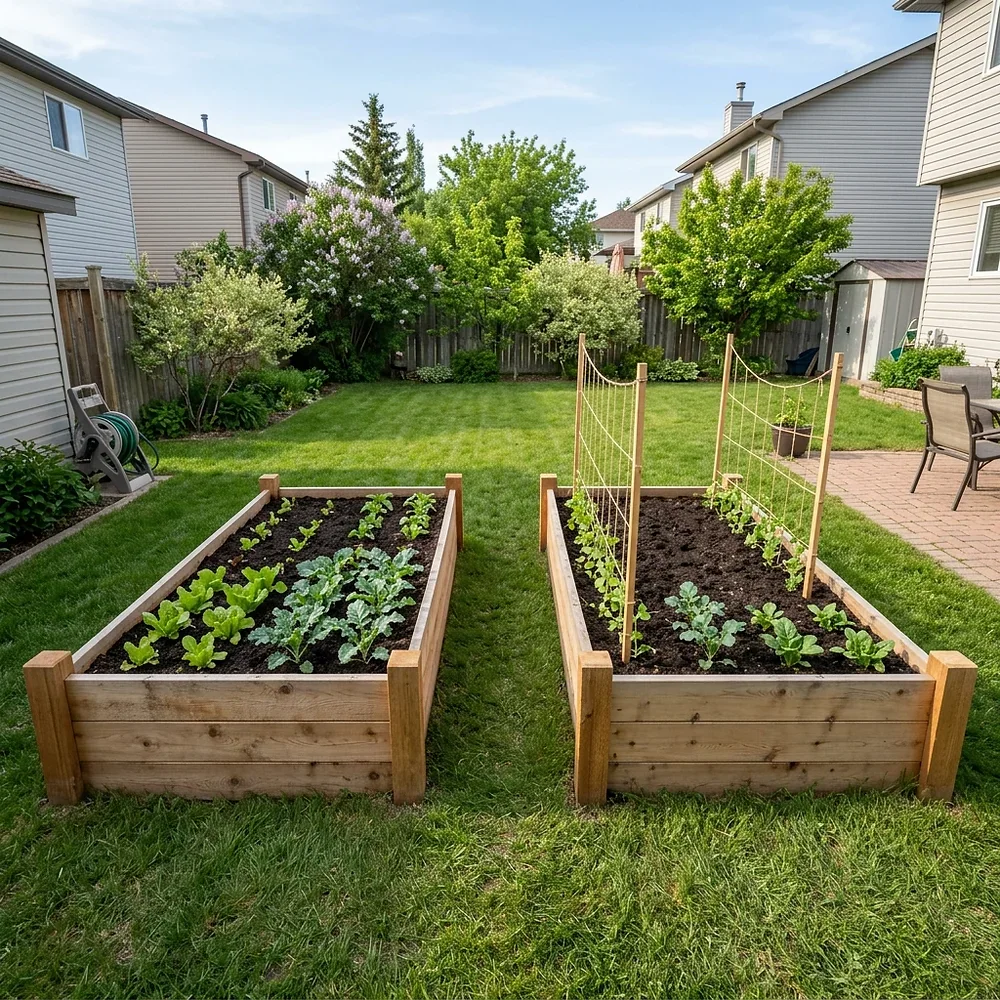
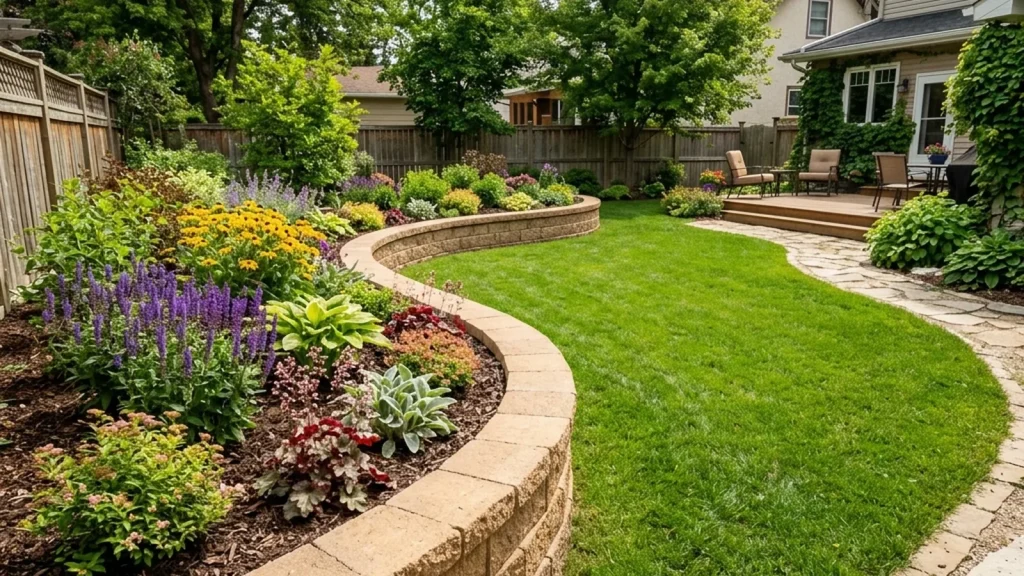
- Segmental planter wall blocks are a distinct product category from full retaining wall systems: designed for garden borders, raised planter walls, and low freestanding walls rather than significant soil retention
- The 3 to 4 foot height range is where planter block applications end and true engineered retaining wall requirements begin: taller walls need geogrid reinforcement and often engineering review.
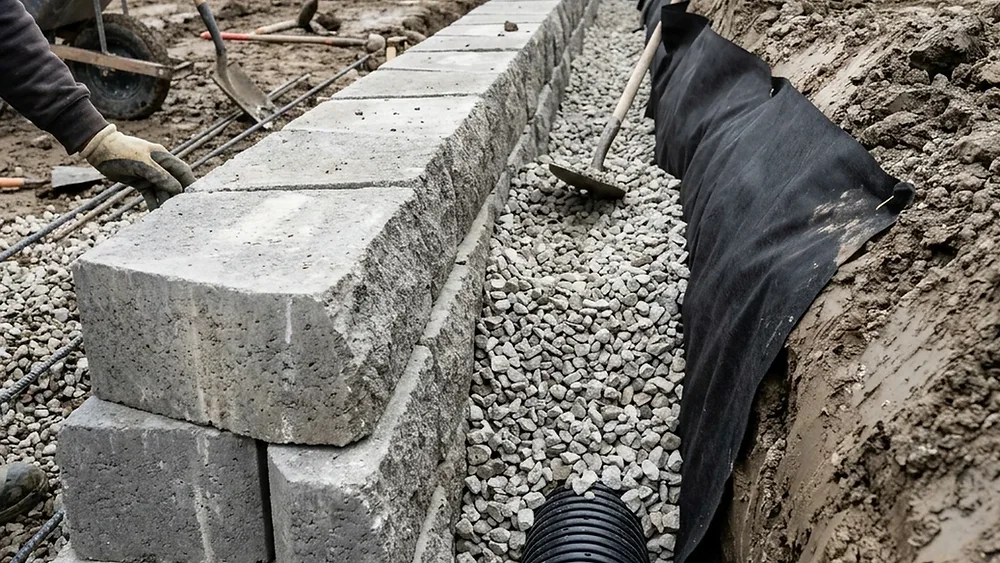
- Even a low planter wall needs a compacted gravel base and, where soil contact is sustained, some drainage consideration: skipping this because the wall is small is the most common failure cause.
- Curved planter designs are one of the main reasons homeowners choose segmental block over poured concrete or timber: the block geometry accommodates curves that other materials cannot.
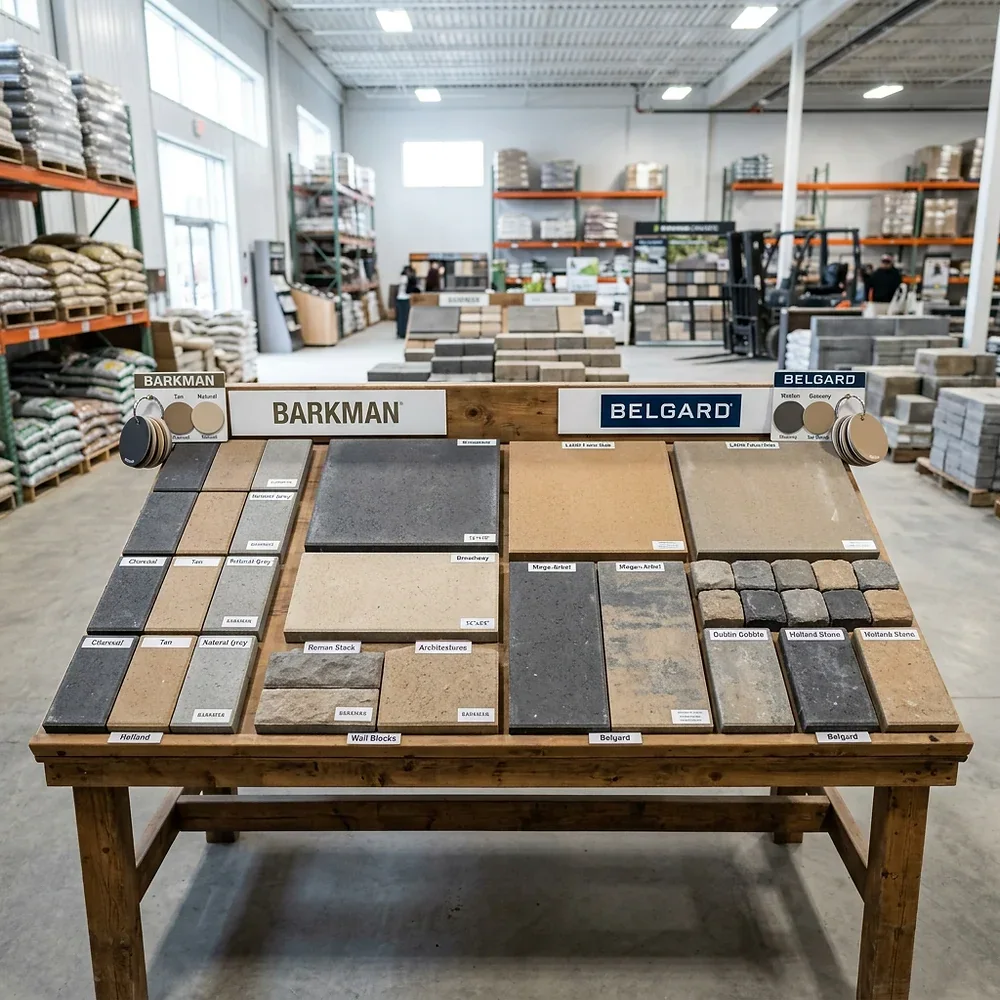
- Ditchfield stocks planter and garden wall block from Barkman and Belgard alongside the larger retaining wall lines
Planter Wall Block vs Full Retaining Wall Systems
Segmental concrete block is sold across a range of scales, from small planter and garden wall units to full engineered retaining wall systems. The distinction matters because the design requirements are genuinely different depending on which category applies to your project.
A planter wall block application typically involves a low wall, under about 2 feet, retaining a modest amount of soil in a raised garden bed, defining a border, or building a freestanding low wall with no significant retained soil behind it at all. A full retaining wall system holds back a meaningful slope or grade change and carries real structural load. For the full retaining wall comparison between Barkman and Belgard product lines, drainage requirements, and engineering considerations for taller walls. This post is specifically about the smaller-scale planter and garden wall applications.
Common Uses for Planter Wall Block
Raised Garden Beds and Planters
Segmental block builds a raised planter that holds soil at a comfortable working height, without the frost heave and rot concerns of a timber-framed raised bed over the long term. For a comparison with timber-framed raised beds specifically, see our raised garden beds guide. Segmental block planters are a durable, decades-long alternative where the aesthetic fits the rest of the landscape design.
Garden Bed Borders
A low course or two of block defines a garden bed edge with a permanent, frost-stable border that will not shift the way loose edging materials can. This use case carries the least structural demand since the block is not retaining meaningful soil height, mainly defining a boundary at grade.
Low Freestanding Walls
Seat walls, low decorative walls that frame a patio space, and short garden walls with no significant soil retained behind them fall into this category. These are primarily architectural and functional (seating, spatial definition) rather than structural retaining elements.
Curved and Circular Designs
One of the most common reasons homeowners choose segmental block for planters specifically is the ability to build clean curves and circles, a tree well, a circular planter, a serpentine garden border, that would be difficult to achieve cleanly with poured concrete forming or with straight timber lengths. The unit size and shape of most planter block products is designed to accommodate curved layouts without special cutting.
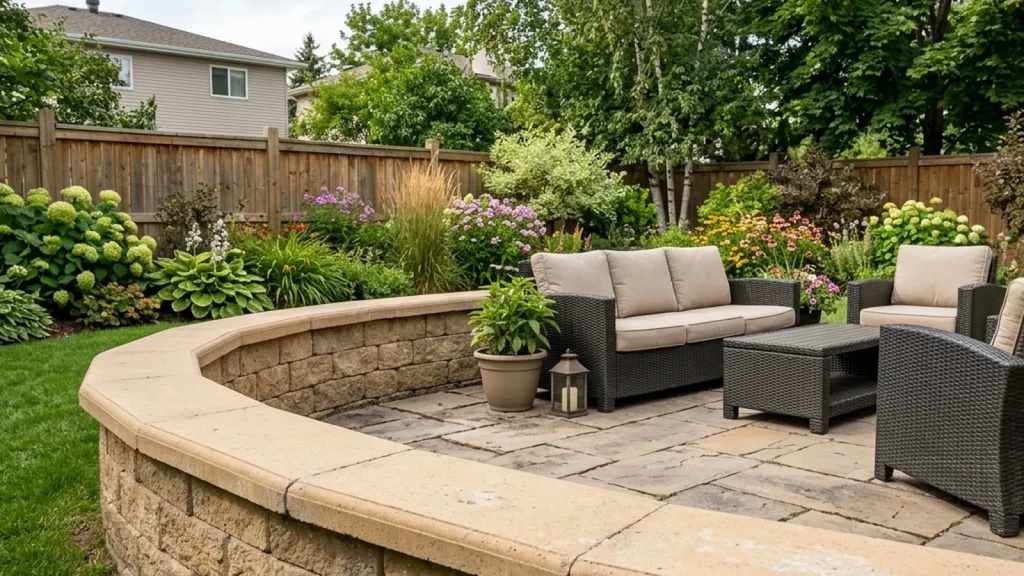
Where Planter Wall Applications End and Retaining Wall Requirements Begin
Height is the primary factor, but not the only one. Whether the wall is retaining a meaningful soil slope versus just defining an edge at grade also matters.
| Wall Height | Typical Category | Base and Drainage Requirement |
|---|---|---|
| Under 12 inches, minimal soil retained | Garden border/edging | Compacted gravel base; drainage generally not critical |
| 12 to 24 inches, raised bed or low planter | Planter wall block | Compacted gravel base; basic drainage behind the wall recommended |
| 2 to 4 feet, retaining a slope | Retaining wall (residential scale) | Full drainage system: granular backfill, geotextile fabric, weeping tile |
| Over 4 feet, or any surcharge load | Engineered retaining wall | Geogrid reinforcement and likely engineering review required |
For the full drainage system specification, granular backfill, geotextile fabric, and weeping tile, that applies once a project moves into true retaining wall territory, see our drain rock and retaining wall drainage guide.
Base Preparation for Planter and Low Garden Walls
Even at the smaller scale of a planter or garden wall, skipping proper base preparation because “it’s just a small wall” is the most common cause of premature failure, more common at this scale than at full retaining wall scale, precisely because homeowners assume a low wall does not need the same rigour.
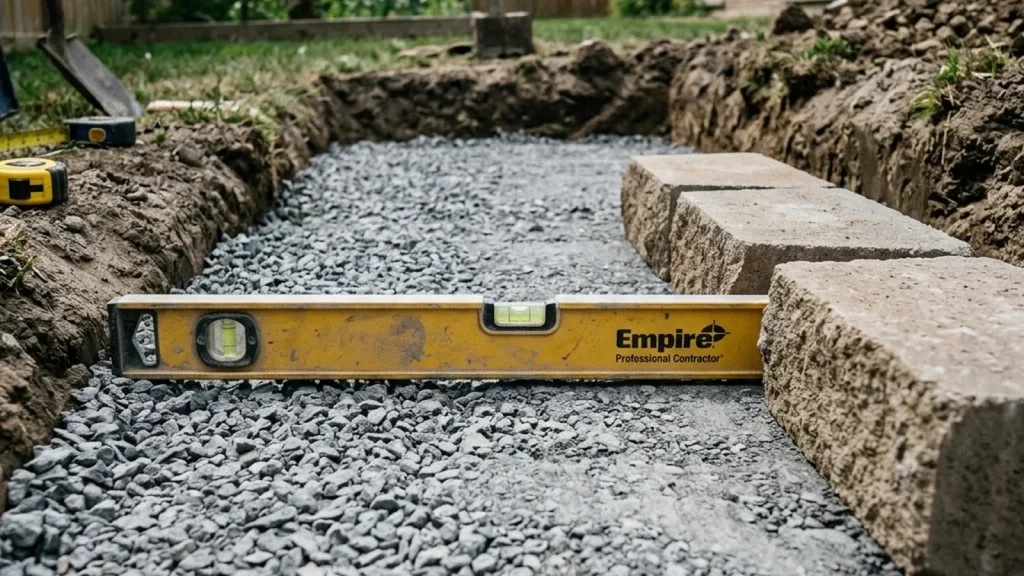
Minimum base preparation for a planter or low garden wall: excavate below the frost-sensitive zone where practical, compact a base of clean crushed gravel or limestone screenings to at least 4 to 6 inches, and level the first course carefully, since every course above follows the alignment of the first. A wall built directly on unprepared native soil, even a low one, will settle unevenly as the ground beneath it freezes and thaws.
Soil Contact and Drainage for Raised Planters
A raised planter built from block holds soil in direct contact with the block for the full growing season, which is different from a garden border that only defines an edge. Sustained soil contact and the moisture that comes with regular watering and rainfall mean even a modest raised planter benefits from some drainage consideration.
For raised planters specifically: a layer of clean gravel behind the block wall, even a modest 4 to 6 inch zone, gives water somewhere to go other than pressing directly against the block face. This is a smaller-scale version of the same principle that applies to full retaining walls: water trapped against the back of a wall face causes more problems through freeze-thaw cycling than the wall’s structural load ever does.
FAQ: Planter Wall Blocks in Winnipeg
Can I build a planter wall taller than 2 feet without engineering?
Once you move above roughly 2 feet, particularly if the wall is retaining a meaningful soil slope rather than just holding a raised planter bed, the structural demands increase, and the project starts to fall into retaining wall territory rather than planter block territory. At that point, the drainage system, granular backfill, geotextile fabric, and weeping tile become important, and depending on height and any surcharge load, engineering review may be required. See our retaining wall guide for the specifics once your project crosses this threshold.
Do I need to line the inside of a block planter before adding soil?
A liner is not strictly required, but a layer of landscape fabric or a thin gravel layer against the block face helps prevent fine soil particles from washing through gaps between blocks over time, and supports the basic drainage function described above. This is a minor addition compared to the fabric and drainage requirements of a full retaining wall.
What is the difference between planter block and the cap block used on top of a retaining wall?
Cap block is a finishing product, a smooth, flat unit installed as the top course of a retaining wall or planter wall to create a clean, finished edge and, on a seat wall, a comfortable sitting surface. Planter wall block refers to the structural units that make up the body of the wall itself. Most planter and low wall projects use both: standard block for the wall body and cap block for the top course.
Order Planter Wall Block at Ditchfield
Ditchfield stocks planter and garden wall block from Barkman and Belgard for raised beds, borders, and low walls. For full retaining wall projects and installation, Lawn ‘N’ Order handles design and construction across Winnipeg.
Browse Wall Block Products
Call 204-889-6268