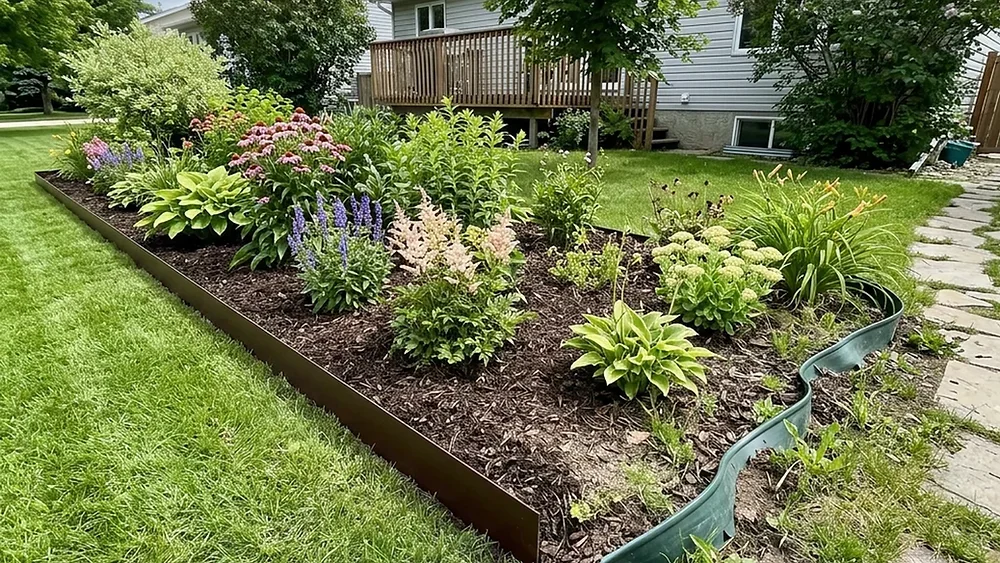
- Frost heave is the defining performance factor for landscape edging in Winnipeg: any material not properly installed at adequate depth will shift, heave, or crack within two to three winters.
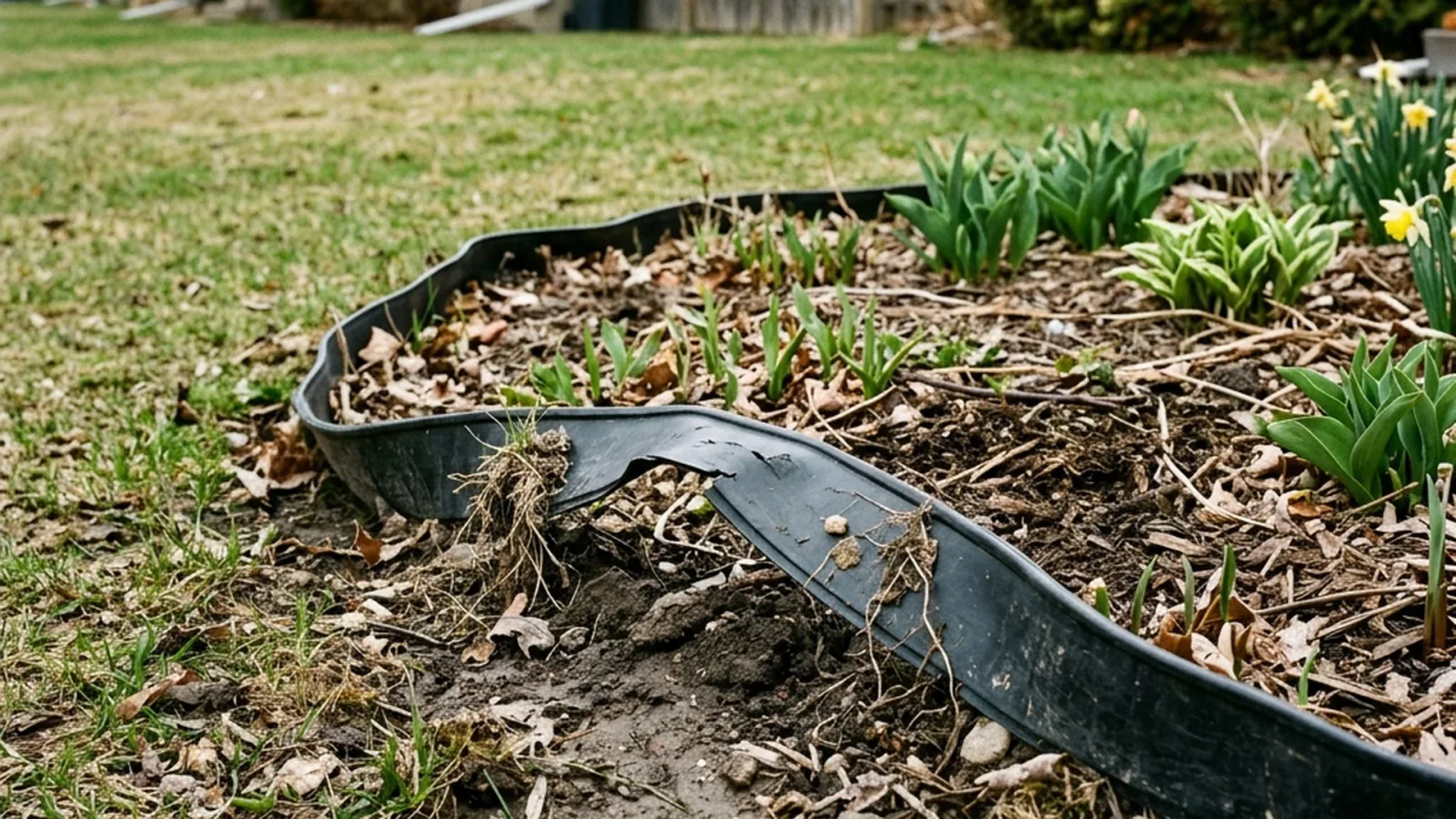
- Cheap plastic edging is the worst performer in Winnipeg’s clay and freeze-thaw conditions: it heaves out of the ground, becomes brittle in cold, and typically fails within two to three years.
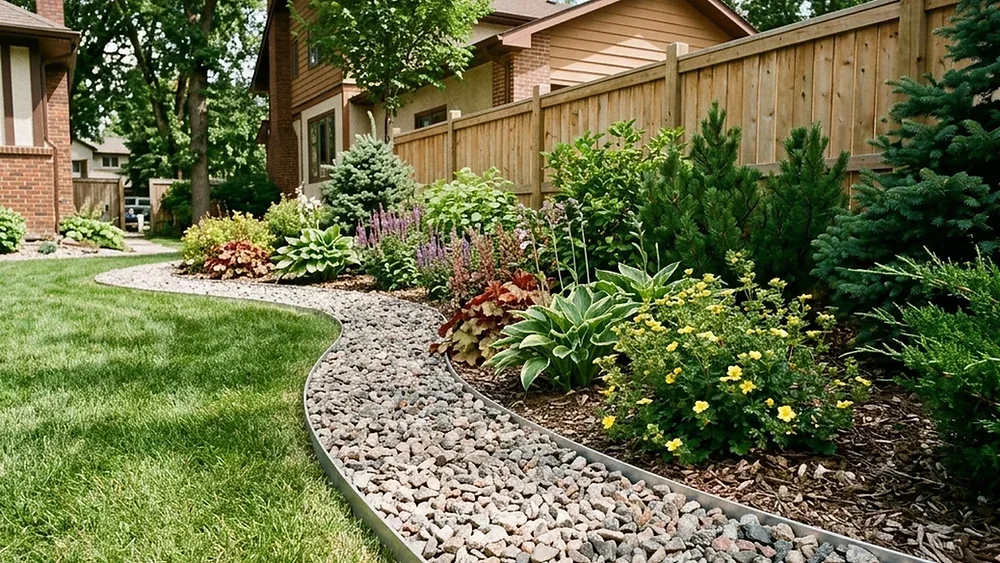
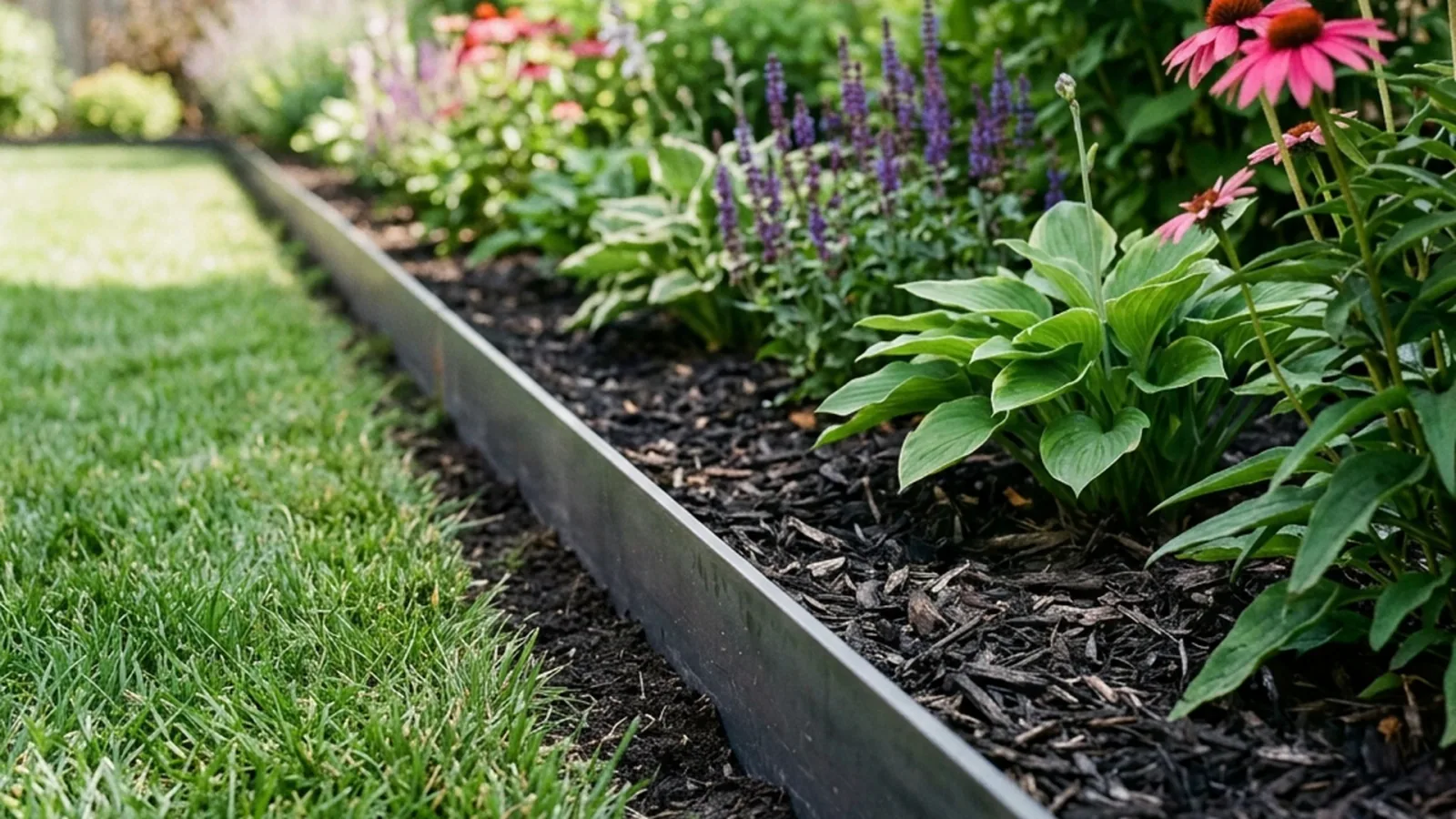
- Steel edging is the best DIY metal option: it holds depth through freeze-thaw better than aluminum or plastic, and its weight and rigidity resist lateral movement.
- Concrete curbing provides the most permanent edging solution but requires proper compacted base installation to resist heaving.
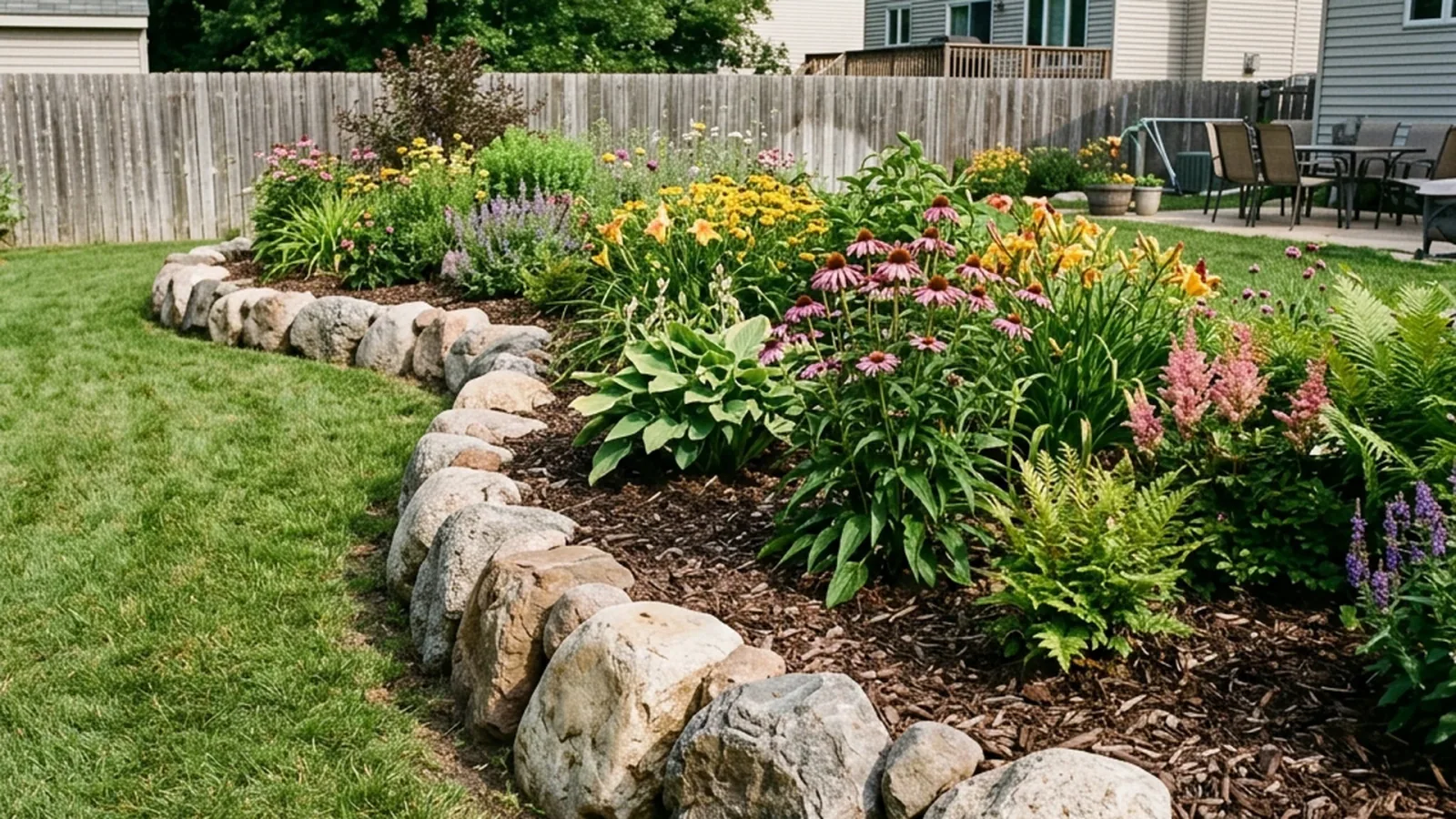
- Natural stone edging is long-lasting but depends on installation depth and mass to stay in place through winter.
Why Frost Heave Makes Edging a Winnipeg-Specific Decision
Walk any established Winnipeg neighbourhood in spring, and you will see the evidence: plastic edging pushed up and out of planting beds, wavy and uneven. Thin aluminum strips that have buckled. Concrete curbing that has cracked and shifted. These are not installation failures in the usual sense. They are the result of choosing materials and installation depths that work in milder climates but fail in Winnipeg’s freeze-thaw conditions.
Winnipeg’s clay soil is the compounding factor. Clay expands significantly when it absorbs moisture and freezes. The lateral and vertical pressure exerted on a shallow-installed edging product through 60-plus freeze-thaw cycles per year is substantial. Materials that are not installed deep enough, heavy enough, or rigid enough to resist this pressure will move.
The right edging choice for Winnipeg is not the same as the right choice for southern Ontario or the American Midwest. This guide evaluates each material type specifically for how it performs in freeze-thaw clay conditions.
Plastic Edging: The Worst Choice for Winnipeg
Plastic edging dominates the garden centre shelves and produces consistently disappointing results in Winnipeg’s climate. Most plastic edging products are installed with 2 to 3 inches in the ground and 1 to 2 inches above grade. This depth is sufficient to stay in place in stable soil conditions. In Winnipeg’s clay, it is not sufficient. The clay beneath the edging freezes and expands, exerting upward pressure on the shallow-installed strip. After one to two winters, the edging is visibly raised above its original position. After three winters, it has shifted enough to lose its visual function entirely.
The problem is compounded by cold brittleness. Plastic becomes brittle at low temperatures. Edging struck by a snow blower or frozen soil movement cracks rather than flexing. Repairs require replacement sections that rarely match the original profile exactly.
When plastic edging is acceptable: Plastic edging installed deeper at 4 to 6 inches with stakes at close intervals performs somewhat better. For a temporary or season-to-season bed definition in a low-visibility area, plastic edging is acceptable. For any application where long-term stability and appearance matter, it is not.
Metal Edging: Steel vs Aluminum
Steel Edging: The Best DIY Metal Option for Winnipeg
Steel edging, typically 3/16 inch thick and 4 to 6 inches wide, is significantly more resistant to Winnipeg’s freeze-thaw conditions than plastic or aluminum. Its weight and rigidity make it harder for frost pressure to move. Properly installed at 3 to 4 inches below grade with the top 1 to 2 inches above grade as a visible border, steel edging can last 10 to 15 years in Winnipeg conditions before showing significant movement.
The installation depth is critical. Steel edging installed at 2 inches below grade will heave. Steel edging installed at 4 inches below grade in Winnipeg clay, with stakes every 18 to 24 inches, resists heave significantly better. The additional installation effort pays off in longevity. Steel does rust over time; powder-coated steel extends the rust timeline significantly.
Aluminum Edging: Lighter Weight, Less Frost Resistance
Aluminum edging is lighter than steel, which makes installation easier but reduces its resistance to frost heave. Aluminum’s lighter mass means it moves more readily than steel when clay soil pressure acts on it from below. In milder climates, aluminum edging performs well. In Winnipeg, it is a middle-ground option: better than plastic, not as stable as steel.
Concrete Curbing: The Most Permanent Solution
Professionally installed concrete curbing is the highest-performing and longest-lasting edging option for Winnipeg landscapes. Unlike the DIY material options, concrete curbing is poured in place by a machine that creates a continuous profile with a properly compacted base below the frost influence zone.
Concrete curbing that is simply poured onto grade without adequate base preparation will crack and heave in Winnipeg’s freeze-thaw conditions. The base must be prepared with compacted granular material below the frost line to prevent differential movement. Professional concrete curbing installation includes this base preparation as a standard step. When properly installed, concrete curbing is essentially permanent. It provides a clean, defined edge that holds its position through decades of freeze-thaw cycling, does not rust or become brittle, and requires no seasonal adjustment. It is also the only edging option that creates a physical barrier between lawn and bed that a lawn mower can ride along, eliminating the need for hand edging.
For full detail on concrete curbing as a landscaping feature, see the Concrete Curbing Winnipeg guide from Lawn ‘N’ Order. Ditchfield Supplies carries concrete curbing base material and aggregate through our limestone and aggregate product line.
Professional concrete curbing installation in Winnipeg typically runs $8 to $12 per linear foot installed, depending on profile complexity and site conditions. Over a 20-year horizon where plastic edging has been replaced three to four times and metal edging potentially once, the lifecycle cost comparison narrows significantly.
Natural Stone Edging: Durable with Proper Installation
Natural stone used as edging, whether irregular fieldstone, cut granite, or tumbled limestone, can be highly durable in Winnipeg conditions if installed with adequate mass and depth.
Small, lightweight stone set at grade level will heave and shift with clay movement. Large, heavy stone set with one-third of its mass below grade resists heave because the clay pressure required to move a 15 to 20 kg stone is significantly higher than the pressure required to move a plastic strip. Installation guidelines for frost-stable stone edging in Winnipeg: use stones with a minimum weight of 10 to 15 kg each for perimeter edging. Set each stone so the bottom third is below grade. Tightly pack the soil or aggregate around the base of each stone. Gaps between stones will fill with soil and plant material over time; this is normal and does not destabilize the edging.
River stone in larger sizes (4 to 6 inches and above) works well for informal garden edging. Larger granite and limestone pieces from Ditchfield’s decorative stone inventory provide durable edging material in multiple sizes. See riverstone and coloured granite for current product options.
Material Comparison: Frost Heave Performance in Winnipeg
| Material | Frost Heave Risk | Lifespan (Winnipeg) | Install Depth Required | Cost per Lin. Ft. |
|---|---|---|---|---|
| Cheap plastic edging | Very High | 2 to 4 years | 4 to 6 inches (often installed shallower) | $0.50 to $2 |
| Aluminum edging | Moderate | 5 to 10 years | 3 to 4 inches | $2 to $5 |
| Steel edging (powder coated) | Low to Moderate | 10 to 15 years | 4 inches minimum | $3 to $7 |
| Natural stone (large, properly set) | Low | 20+ years | One-third of stone below grade | $5 to $20+ |
| Concrete curbing (professional) | Very Low | 20 to 40 years | Proper compacted base | $8 to $12 installed |
Where to Buy Landscape Edging in Winnipeg
Ditchfield carries landscape edging and related installation materials for Winnipeg projects. Product profiles, package sizes and availability can change, so review the current options online or call the yard at 204-889-6268 before visiting.
Edging and Related Materials
- Landscape edging. Steel, aluminum and plastic options for defining beds and containing stone or mulch.
- Installation accessories. Stakes, connectors, landscape fabric, polymeric sand, adhesives and sealers for landscape and hardscape projects.
- Decorative stone. Riverstone, coloured granite and other bulk stone options can create natural borders. Bulk decorative stone is sold by volume; manufactured stone edgers and packaged accessories use different units.
- Base material. Crushed limestone is available for projects that require a compactable aggregate base.
Pickup and Delivery
Pickup is available at 2929 Sturgeon Road during current yard hours. Ask the yard what vehicle is suitable for the specific product. Bulk decorative stone and crushed limestone require a suitable truck or trailer that can safely contain and secure the load.
Delivery is available throughout Winnipeg and the surrounding area. The delivery address determines the applicable zone and rate, and fuel is included in that rate. If your order includes several material types, contact the yard to confirm whether they can be combined in one delivery.
How to Measure and Order
- Measure the full linear footage of the bed or border, including curves, corners and any allowance needed for joining sections.
- Review landscape edging product information and current edging options in the Ditchfield Square store.
- Choose pickup or delivery during checkout. The yard reviews availability and confirms the pickup or delivery details before the order is staged or loaded.
Use the material calculator to estimate cubic yards for bulk stone or base material. Edging itself is measured by linear footage or by the unit shown in the product listing.
FAQ: Landscape Edging in Winnipeg
Where can I buy landscape edging in Winnipeg?
Ditchfield carries landscape edging and related installation accessories at 2929 Sturgeon Road in Winnipeg. Review current product information online, shop edging options through the Ditchfield Square store, or call 204-889-6268 to confirm availability before visiting. Pickup and delivery options are available.
Why does my plastic edging keep popping up every spring?
Frost heave. The clay below the edging freezes and expands, pushing the shallow-installed edging upward. Each freeze-thaw cycle moves it slightly more. The fix is either installing it much deeper at 5 to 6 inches with anchoring stakes every 12 to 18 inches, or switching to a heavier material that resists the upward pressure. In most cases, repeated plastic edging replacement over 10 years is less cost-effective than switching to steel or concrete curbing once.
Can I install concrete curbing myself?
Not in the traditional sense. Concrete curbing is produced by a specialized machine that extrudes a continuous concrete profile. It is not something that can be replicated with poured concrete forms without specialized equipment. Some homeowners use pre-cast concrete edging blocks as an alternative; these perform better than plastic but require adequate base preparation and are more labour-intensive to set level and stable.
What is the best edging for a vegetable garden raised bed?
For raised beds, the edging is typically the frame of the bed itself rather than a lawn-to-bed edge. For paths between raised beds, crushed limestone or decomposed granite with a steel or concrete edging border on the outer perimeter provides a clean, low-maintenance definition that holds through Winnipeg winters. See our raised garden beds guide for the full build details.
Shop Landscape Edging at Ditchfield
Compare landscape edging and related accessories, then check current options in the Ditchfield Square store. Pickup is available at 2929 Sturgeon Road, with delivery across Winnipeg and the surrounding area.
View Edging Product Info
Shop Edging in Square
Call 204-889-6268
For professional concrete curbing installation, visit Lawn ‘N’ Order.