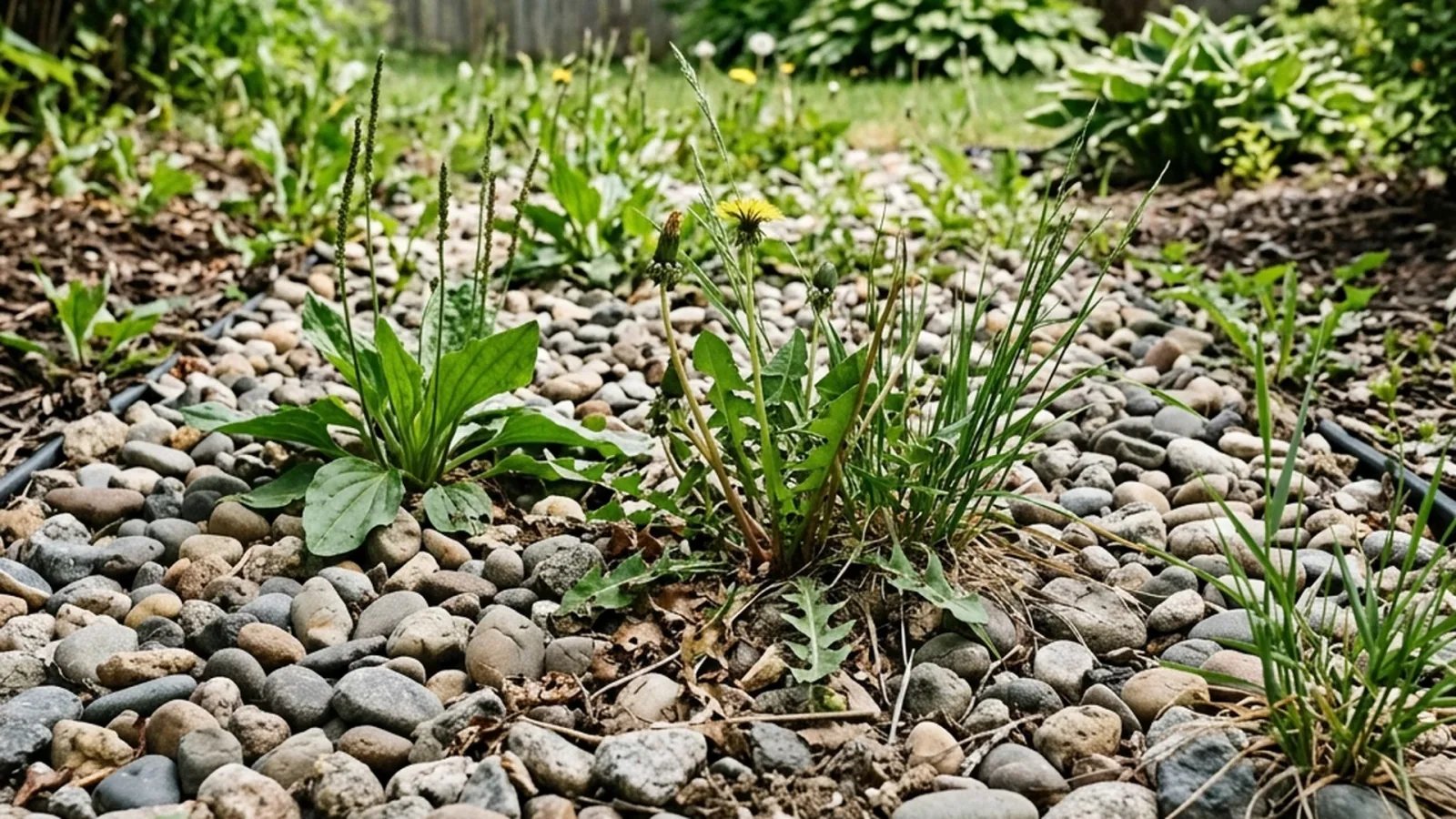
- Weeds do not grow through gravel from underneath; they germinate in the gravel itself from accumulated dust, organic debris, and windblown seed that settles into the stone over time.
- Landscape fabric under decorative rock typically fails within 3 to 5 years: it tears, soil accumulates on top of it, and weeds germinate in that surface layer regardless of the fabric below.
- Stone depth matters significantly: 3 or more inches over a properly prepared base prevents far more weed establishment than a thin 1 to 2 inch layer.
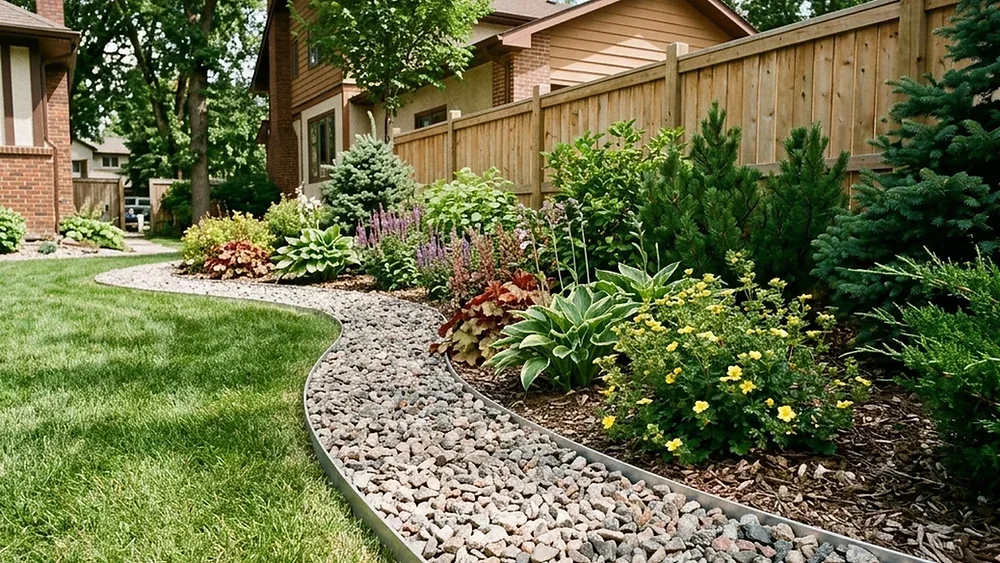
- Edge restraint that prevents soil migration into the rock area from adjacent lawn or beds is as important as the rock depth itself.
- Corn gluten meal, the common pesticide-free pre-emergent for lawns, does not work the same way in decorative rock applications because the germination mechanism is different.
The Misunderstood Mechanism: Weeds Do Not Grow Through Rock
A common assumption about weeds appearing in a gravel or decorative rock bed is that they are pushing up through the stone from roots or seeds in the soil below. This is rarely what is actually happening. Weeds that appear in a properly installed rock bed are almost always germinating in the rock itself, not growing through it from underneath.
What actually happens: Over time, every gravel or decorative rock installation accumulates a thin layer of organic material — windblown dust, leaf litter, seed heads carried by wind or birds, and decomposing plant debris from surrounding vegetation. This accumulated material settles into the spaces between stones and, combined with moisture from rain, creates a viable germination medium directly within the rock layer. A weed seed does not need to push through three inches of stone from the clay below; it only needs to land on top of the stone, get covered by a thin layer of accumulated debris, and find enough moisture to germinate right there.
This distinction matters because it changes what actually solves the problem. If the assumption is that weeds are pushing up from below, the instinct is to add a barrier (landscape fabric) to block that path. But if the real mechanism is germination within the accumulated surface debris, the barrier underneath does very little, and in some cases makes the problem worse over time.
Why Landscape Fabric Under Rock Fails
Landscape fabric, sometimes called weed barrier fabric, is installed under decorative rock with the intent of preventing weed growth. In practice, fabric installations in Winnipeg’s climate have a consistent failure pattern.
The 3 to 5 Year Breakdown
Most landscape fabrics, particularly the lighter-weight woven and non-woven products commonly used in residential applications, begin to degrade from UV exposure and the physical stress of stone weight and foot traffic within 3 to 5 years. The fabric becomes brittle, develops tears, and loses its structural integrity. Once torn, it no longer functions as a barrier at all, but it remains in the bed, creating a layer that complicates any future renovation of the area.
Soil Accumulation on Top of the Fabric
Even while the fabric is intact, it does nothing to prevent the surface accumulation problem. Dust, organic debris, and windblown seed settle on top of the stone, and the fabric below does not affect this surface layer. After several seasons, there can be enough accumulated soil-like material sitting on top of the fabric that it functions as a thin soil layer, perfectly capable of supporting weed germination regardless of whether the fabric below is intact or degraded.
Root Infiltration Through Failure Points
Once the fabric tears, plant roots from any weeds that have established can grow through the tear and into the soil below, anchoring the plant more firmly and making removal more difficult. At that point, the fabric has gone from providing no benefit to actively complicating weed removal, because pulling the weed may also tear the fabric further or leave root fragments that regrow.
What Actually Reduces Weed Establishment in Rock Beds
Depth: The Most Significant Factor
Stone depth is the single most impactful variable in weed suppression for decorative rock applications. A thin layer of 1 to 2 inches allows light to reach any soil or organic material at the base relatively easily and provides minimal physical barrier to germination. A properly installed depth of 3 inches or more over a prepared base substantially reduces the light and moisture conditions that support germination, and makes any weeds that do establish significantly easier to remove because their root systems have less depth to anchor into.
| Stone Depth | Weed Establishment Risk | Notes |
|---|---|---|
| 1 to 2 inches | High | Minimal barrier; light and moisture reach base easily |
| 3 inches | Moderate | Meaningful improvement; the practical minimum for most residential applications |
| 4 inches or more | Low | Best performance; appropriate for high-visibility or high-priority weed control areas |
Proper Base Preparation
Before placing decorative rock, the base should be prepared by removing existing vegetation and organic topsoil, then compacting the subgrade. Some installers add a compacted layer of crushed limestone or similar angular aggregate beneath the decorative top layer, which improves drainage and provides a stable base that resists settling and gaps that allow weeds easier establishment conditions. This is a different approach than fabric: rather than trying to block growth from below with a barrier, it removes the organic material that growth would need in the first place.
Edge Restraint
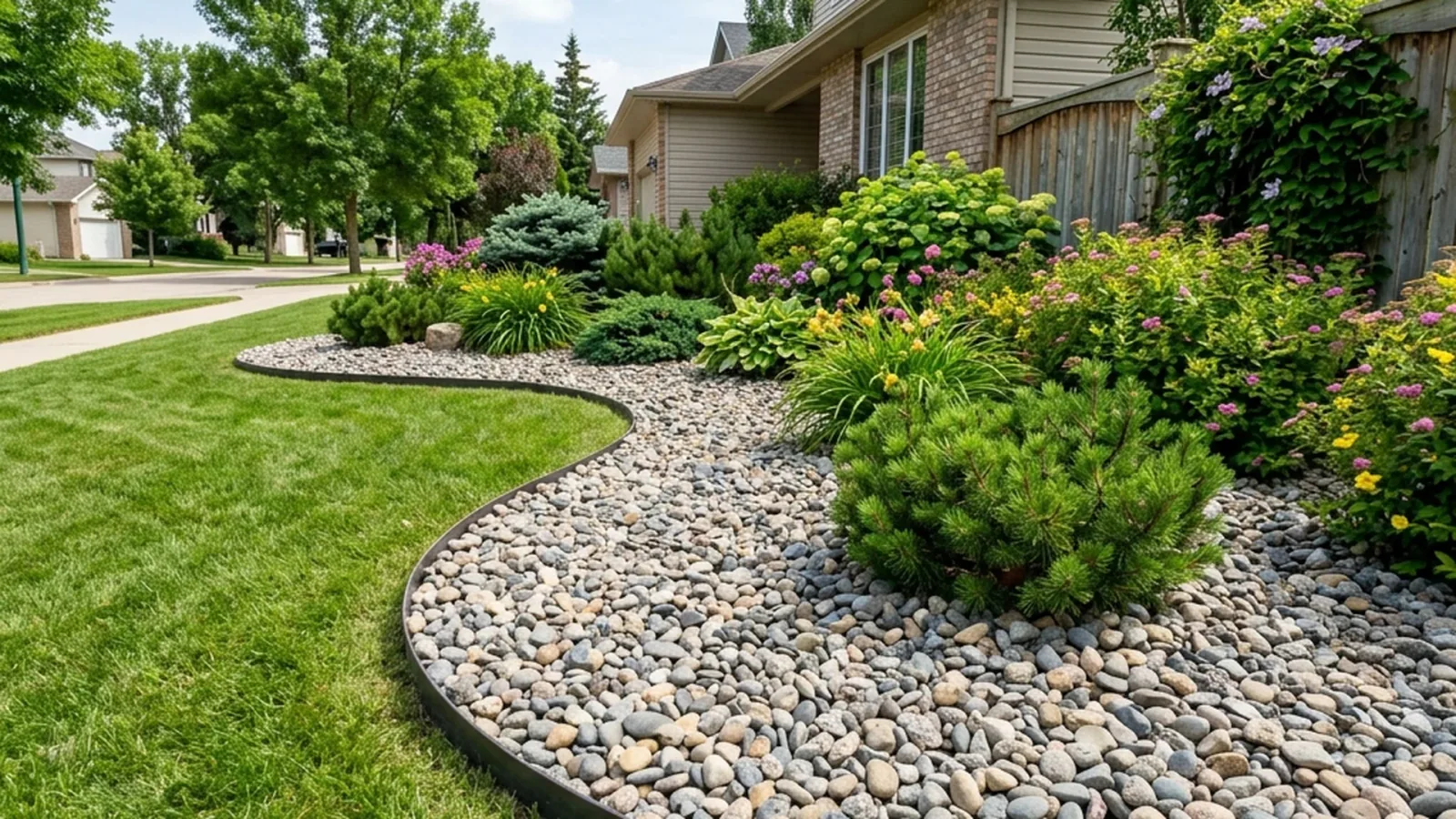
A rock bed without a defined, stable edge allows soil from adjacent lawn or garden beds to migrate into the rock area over time, particularly through rain runoff, lawn mower activity, and natural soil creep. This migrated soil is a direct contributor to the weed germination problem, providing exactly the organic growing medium that windblown debris alone takes longer to accumulate. Steel, concrete, or properly set stone edging that creates a clean physical boundary significantly reduces this soil migration pathway. See our landscape edging materials guide for options suited to Winnipeg’s freeze-thaw conditions.
Pre-Emergent Options for Rock Beds
Pre-emergent herbicides prevent weed seed germination and are a useful tool for rock bed maintenance, though the application context differs from lawn use.
Why Corn Gluten Meal Does Not Work the Same Way Here
Corn gluten meal, commonly used as a pesticide-free pre-emergent for lawn crabgrass control, works by inhibiting root development in germinating grass and broadleaf seeds within soil. In a decorative rock application, the germination is happening in a thin surface layer of accumulated organic debris rather than in soil at depth, and the corn gluten meal product is formulated and tested for soil application rather than the specific surface conditions present in a rock bed. It is not a reliable substitute for proper pre-emergent products formulated for hardscape and rock bed use.
Granular Pre-Emergent for Rock Beds
Pre-emergent products labelled specifically for use around ornamental beds, walkways, and rock areas are formulated to be applied directly to the rock surface and remain effective at preventing germination in the surface debris layer. Apply in early spring before weed seeds begin to germinate, following label instructions. Reapplication is typically needed annually.
Spot Treatment for Established Weeds
For weeds that have already established in a rock bed, a non-selective herbicide applied directly to the plant or manual removal by hand are the two practical options. Because there is no turf to protect in a rock bed application (unlike a lawn), a non-selective product can be used without the risk of damaging desired vegetation, provided it is kept away from any ornamental plants growing within or adjacent to the rock bed.
When to Remove and Reset vs Spot Weed
A rock bed with scattered, occasional weeds is well served by spot treatment or hand removal as needed. A rock bed where weeds have become pervasive, where significant organic accumulation has occurred, or where landscape fabric has failed and is now tangled with established root systems, is a candidate for full removal and reset.
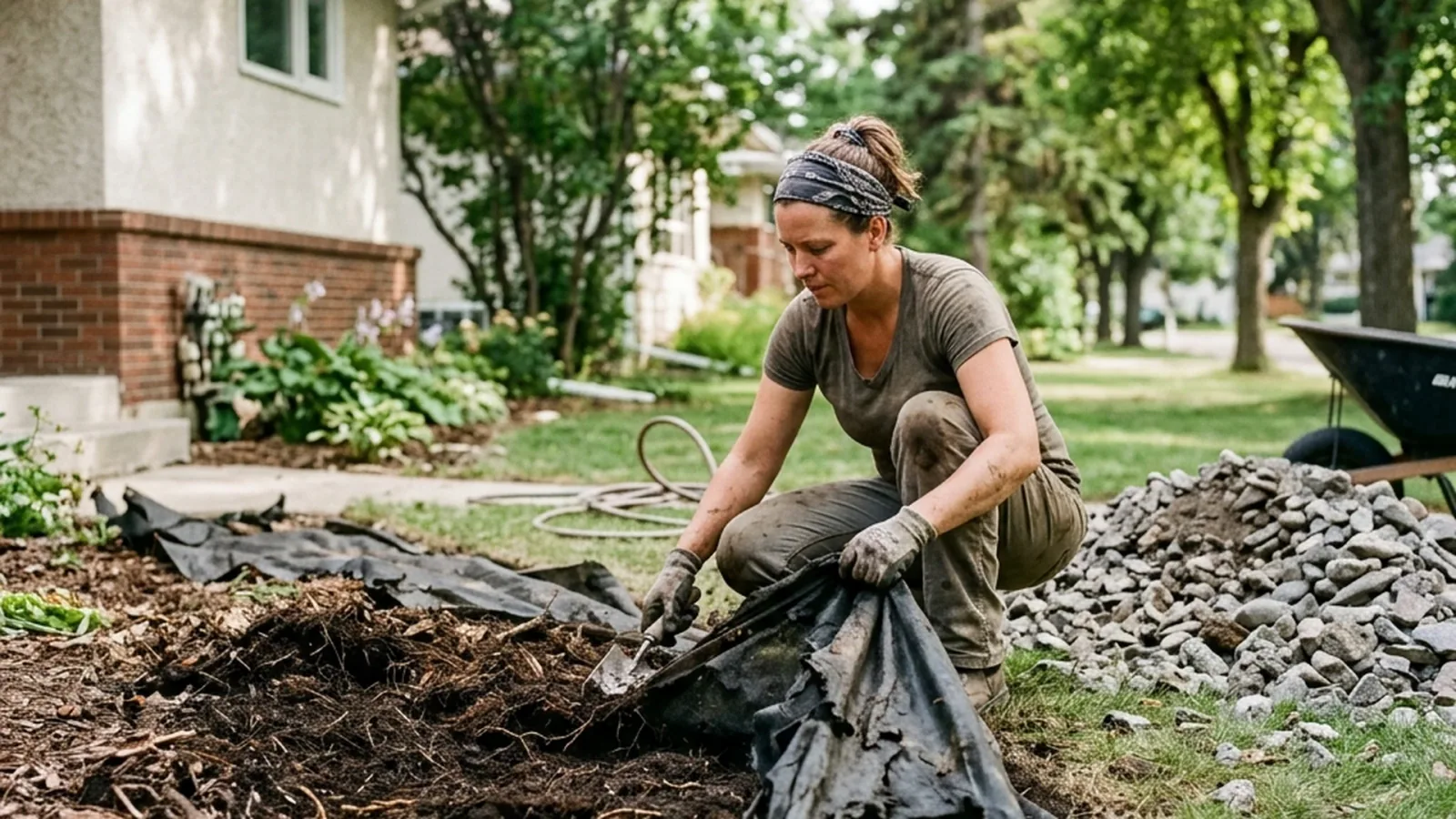
Full reset involves removing the existing rock, removing any degraded fabric, clearing accumulated organic material and any established weed roots, re-preparing the base, and installing fresh rock at adequate depth with proper edge restraint. This is more labour-intensive than ongoing maintenance but addresses the accumulated problem directly rather than continuing to manage symptoms in a bed whose underlying conditions now favour weed growth.
FAQ: Weeds in Gravel and Decorative Rock
Should I remove old landscape fabric or leave it under new rock?
If you are doing a full reset of a rock bed, remove old landscape fabric rather than leaving it and adding new rock on top. Degraded fabric tangled with roots and accumulated debris does not provide any ongoing benefit and complicates future maintenance. Starting with a clean, properly prepared base without fabric, relying on depth and edge restraint instead, produces better long-term results.
How often do I need to top up a rock bed to maintain weed suppression?
Decorative rock does not break down the way mulch does, so depth loss over time is much slower. However, settling, displacement from foot traffic or snow removal, and gradual organic accumulation mean most rock beds benefit from a light inspection and top-up every 3 to 5 years to maintain the protective depth and address any areas where the layer has thinned.
Does a thicker rock layer mean I never have to weed?
No installation eliminates weeding. Proper depth, base preparation, and edge restraint significantly reduce the frequency and severity of weed establishment, but windblown seed and accumulated debris are ongoing processes that will eventually produce some germination even in a well-installed bed. The goal is a manageable, infrequent maintenance task rather than a constant problem, not a zero-maintenance surface.
Get the Right Materials for Your Rock Bed
Ditchfield supplies decorative rock, base aggregate, and edging materials for properly installed rock beds. Browse options or call to discuss quantities and base material for your project. Pickup at 2929 Sturgeon Road or delivery across Winnipeg.
Browse Decorative Rock
Call 204-889-6268