- Mulch in Winnipeg breaks down faster than in milder climates: freeze-thaw cycling fractures wood fibres, wet springs accelerate decomposition, and dry summers compact what remains.
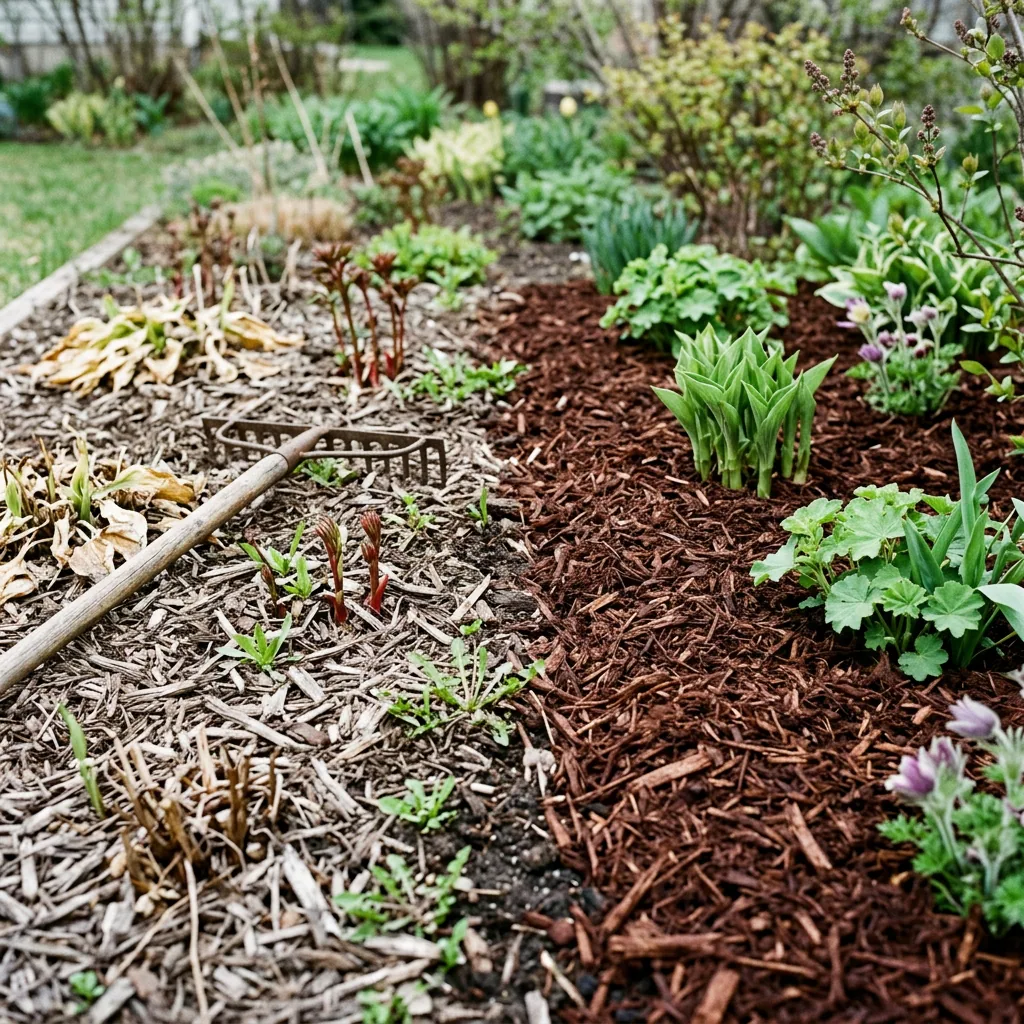
- The visual signs that mulch needs refreshing: depth below 2 inches, colour turned grey or brown, weed pressure increasing, and visible bare soil between plants
- Topping up (adding 1 to 1.5 inches of fresh mulch over existing) is appropriate when the base is still structurally sound, and depth is the main issue.
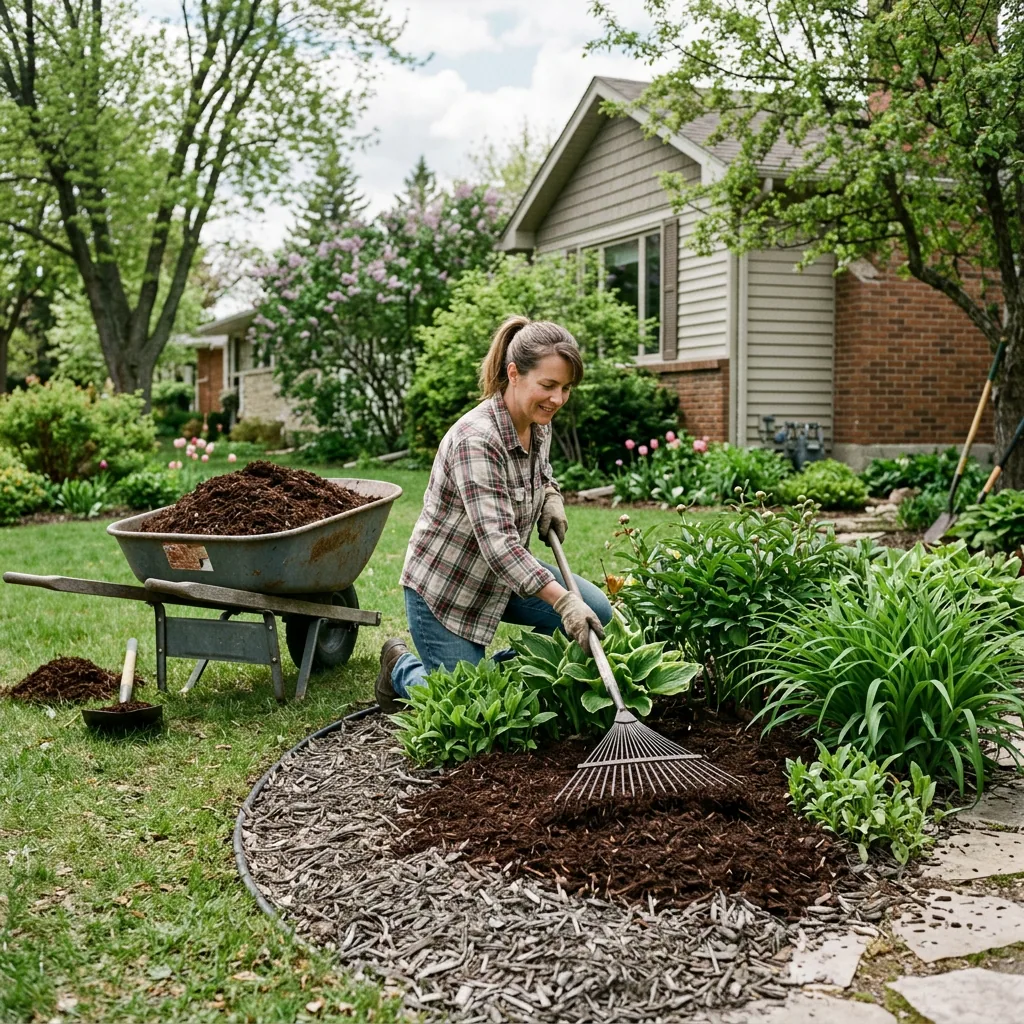
- Full strip and replace is appropriate when old mulch has compacted into a dense mat, when fungal issues are present, or when switching from wood to rock.
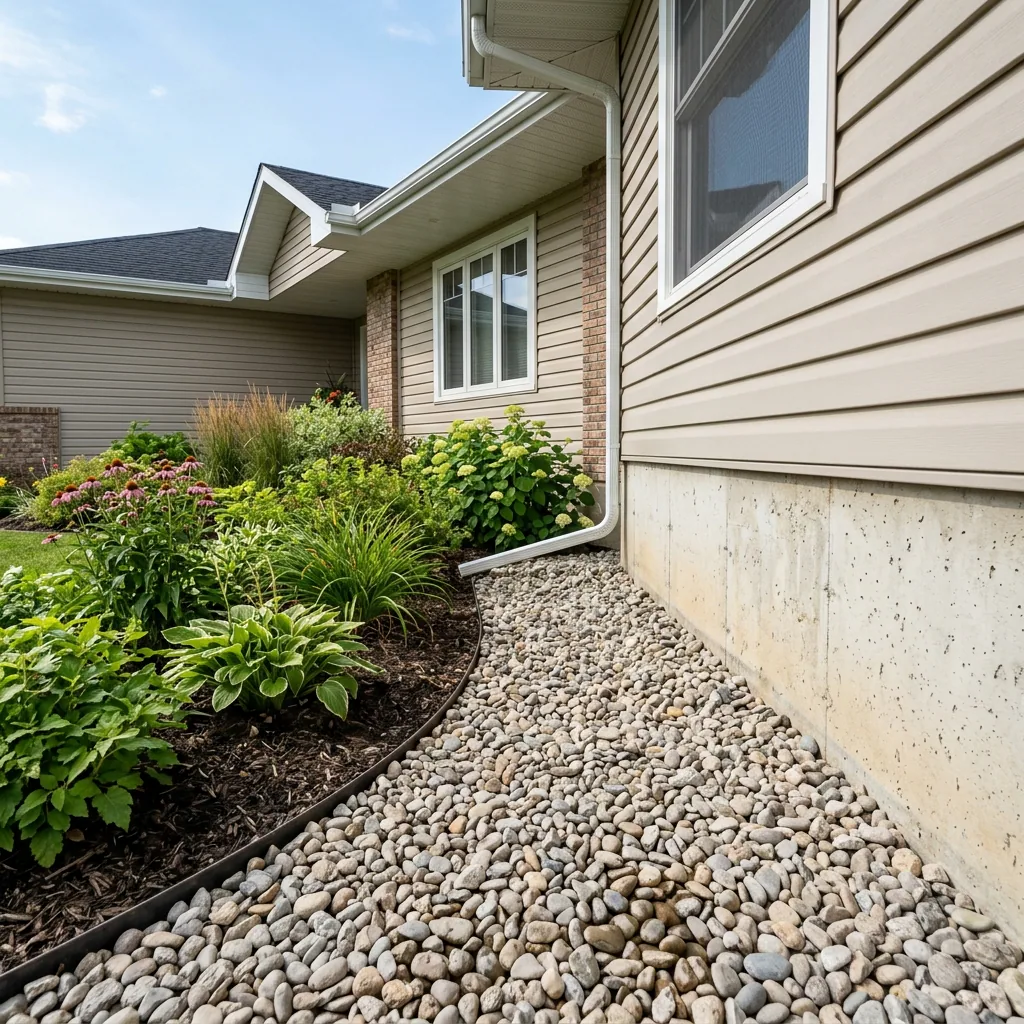
- Switching to decorative rock is the right choice for slopes, foundation borders, and areas where wood mulch washes out or blows away repeatedly.
Why Mulch Breaks Down Faster in Winnipeg
A gardening guide written for coastal British Columbia or the American Midwest describes mulch that lasts two to three years before needing significant refresh. In Winnipeg, that timeline is shorter, and understanding why helps you plan your refresh cycle correctly.
Freeze-Thaw Cycling
Winnipeg averages more than 60 freeze-thaw cycles per year through the shoulder seasons. Each cycle puts the mulch through expansion and contraction. Wood fibres that have partially decomposed fracture more readily with each cycle. By spring, mulch that went on at 3 inches in the fall is often visually thin, fragmented, and partially integrated into the soil below — the decomposition doing its job, but the protective depth is gone sooner than expected.
Wet Springs
Winnipeg springs are wet. The combination of snowmelt and spring rainfall keeps moisture levels high for weeks. This accelerates microbial decomposition in the mulch layer, which is biologically productive but means the mulch is losing volume and structure faster during this period than in a drier spring climate.
Dry Summers
After the wet spring, Winnipeg summers are characteristically dry. Mulch that has partially decomposed and lost volume compacts in dry conditions. What started as loose, aerated wood chips or shredded bark becomes a compressed layer that sheds water rather than absorbing it — eventually developing a surface that actually repels rain from reaching the soil below.
The Visual Signs: When Does Mulch Need Attention?
Depth Below 2 Inches
The functional minimum. Below 2 inches, moisture and temperature regulation diminish. Below 1 inch, weed suppression is essentially lost. Check by pressing a pencil straight in at several locations.
Colour Change to Grey
Fresh mulch is brown to dark brown. Grey indicates the material is in its later stages of decomposition and its organic contribution is largely spent. Grey plus depth under 2 inches: refresh time.
Increasing Weed Pressure
If weed pressure is increasing despite regular removal, the mulch layer has thinned below the suppression threshold. The weeds are responding to more light and less barrier depth. Refresh rather than just weed.
Hydrophobic Surface
After rainfall, press your hand on the mulch. If it is dry below and water beads on top, the mulch has compacted into a hydrophobic layer — now preventing moisture from reaching plant roots. Break up the layer before topping up.
Refresh vs Replace: Which Does Your Bed Need?
| Condition | Right Response |
|---|---|
| Depth at 1.5 to 2 inches, colour faded but structure okay | Top up with 1 to 1.5 inches of fresh mulch |
| Depth below 1 inch, significant grey colour, some weeds | Top up with 2 inches of fresh mulch |
| Compacted into dense mat, hydrophobic surface | Break up existing layer, then top up or replace |
| Fungal issues present (artillery fungus, slime mould) | Full strip and replace; do not top up over active fungal growth |
| Material mixed into soil, effectively gone | Full replacement to 3 inches |
| Repeatedly washing out on slope | Switch to decorative rock; wood mulch is wrong product for this location |
| Foundation border where wood mulch contacts house | Switch to decorative gravel with setback from foundation |
Topping Up: How to Do It Correctly
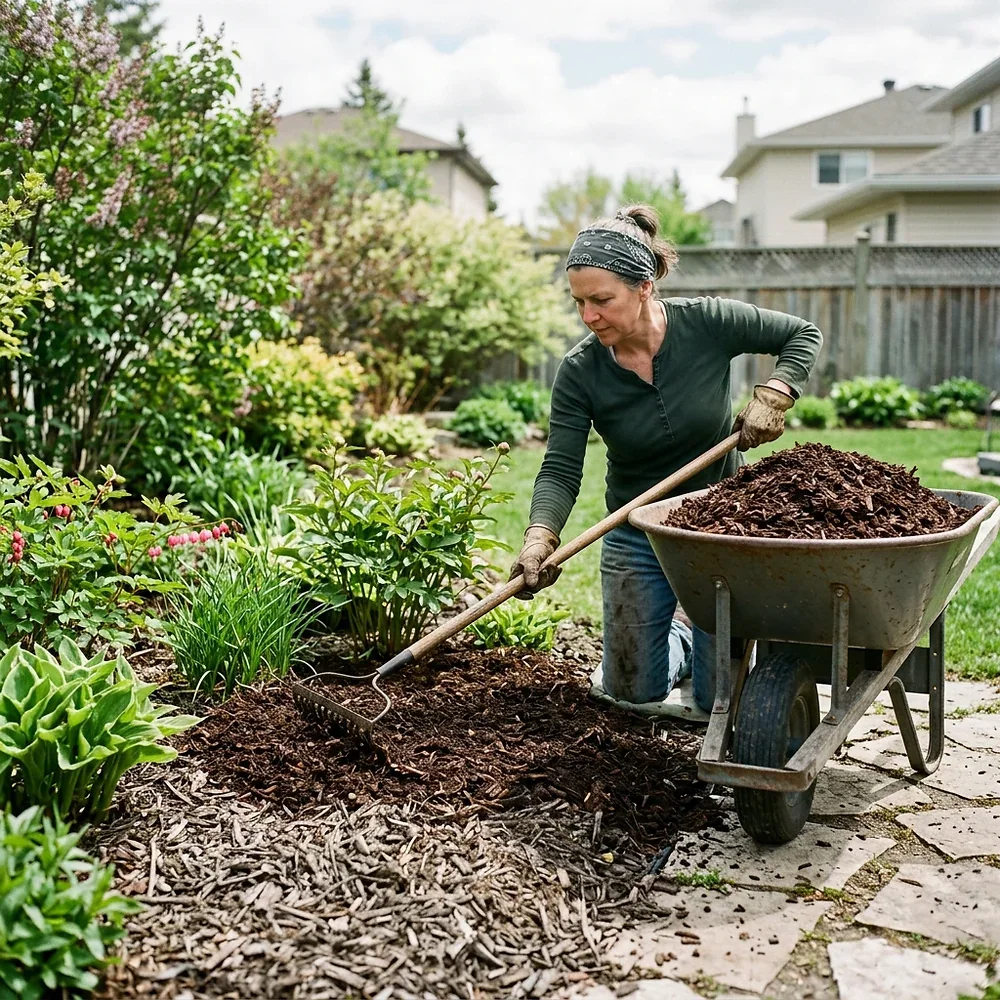
Topping up is adding fresh mulch over existing mulch to restore depth. It is appropriate when the existing layer is structurally sound, and the issue is simply depth and colour.
Rake the existing mulch lightly first. This breaks up any surface compaction and allows the new material to integrate with the existing rather than sitting on top of a sealed layer.
Add 1 to 1.5 inches of fresh mulch, which is typically sufficient to restore depth to 3 inches without burying plant crowns or creating excessive depth.
Keep fresh mulch pulled back 2 to 3 inches from plant stems and tree bases. Mulch piled against crowns and trunks traps moisture against the bark, creating conditions for rot and pest damage.
Apply after the soil has warmed in spring, not before. Mulching over cold, wet soil in early April locks in the cold. Wait until soil has warmed — typically mid to late May in Winnipeg.
Full Strip and Replace: When Is It Worth It?
Full strip and replace is more labour-intensive but sometimes necessary. Compost the stripped material or use it as a base layer in a raised bed; do not pile it against the house or leave it to decompose in a heap.
The situations that warrant full replacement rather than topping up:
- Artillery fungus: a common wood mulch problem where the fungus shoots sticky spores onto light-coloured surfaces. Once established, it does not respond to treatment. Removing the host material and switching to cedar mulch (more resistant) or decorative rock (immune) is the only effective response. Topping up over active fungal growth makes it worse.
- Compacted mat over 3 years old: old mulch that has formed a dense, nearly solid layer at the soil surface is better removed than topped up. The mat prevents water and air movement, and fresh material on top will not integrate productively with it.
- When switching from wood to rock: the transition requires removing the existing wood mulch rather than placing rock on top of it. Rock on top of decomposing wood creates a habitat for insects and holds moisture unevenly.
When to Switch from Wood Mulch to Decorative Rock
Wood mulch is not the right product for every application. Several common Winnipeg situations consistently produce poor results with wood mulch and are better served by decorative rock.
Slopes and Erosion-Prone Areas
Wood mulch on a slope washes out during Winnipeg’s heavy spring runoff and summer rain events. If you have refreshed the mulch on a sloped bed more than twice and it continues to wash to the bottom, the slope is telling you something. River stone or crushed granite holds position on slopes where wood mulch does not.
Foundation Borders
Wood mulch against a foundation border creates a moisture trap and a pest habitat that works against the foundation. The correct installation is a 12-inch gravel setback from the house, with clean crushed limestone or river stone that allows drainage away from the foundation. This also makes the annual mulch maintenance task disappear entirely.
Areas Where Maintenance Is Minimal
Under established trees, along fences, and in utility areas where refreshing mulch annually is not practical, decorative rock is a permanent solution. The initial material cost is higher than wood mulch; the labour cost over 10 years is significantly lower because the material does not need seasonal refreshing.
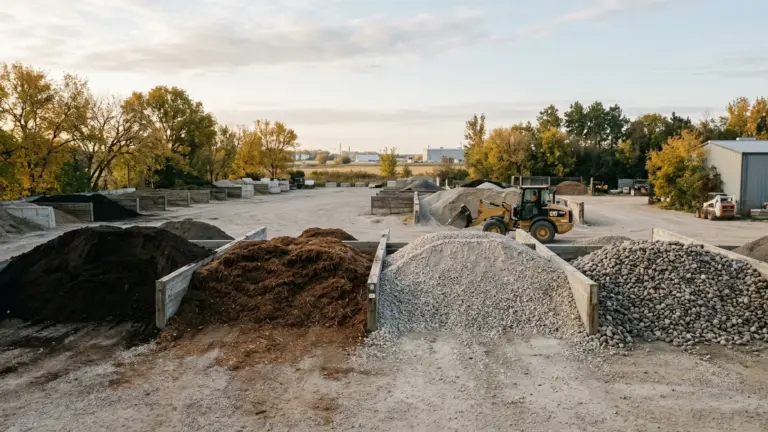
For wood mulch types and coverage calculations, see our Winnipeg Mulch Guide. For decorative rock options including river stone and black granite for areas where wood mulch is underperforming, see ditchfieldsoils.ca/riverstone-coloured-granite.
FAQ: Mulch Maintenance in Winnipeg
How often should I refresh mulch in Winnipeg?
Most Winnipeg beds benefit from a mulch refresh every one to two years. Front beds that are visible and receive full weather exposure typically need annual topping up. Protected rear beds and areas under established trees may go two years between refreshes. Check depth each spring after the soil has warmed and add material wherever depth has dropped below 2 inches.
Is it better to mulch in spring or fall in Winnipeg?
Spring is the better timing for most applications. Spring mulching after soil has warmed suppresses summer weed germination, retains spring moisture through the dry summer period, and gets you through the full growing season. Fall mulching is appropriate for winter protection of marginally hardy plants where insulating the crown is the goal, but general garden bed mulching done in fall often washes or blows before providing the full season benefit.
What depth is too much?
More than 4 inches of wood mulch in an established planting bed creates problems. Excess depth keeps soil overly wet, restricts oxygen exchange at the root zone, and can create conditions for crown rot on perennials. The target is 2 to 3 inches maintained consistently, not accumulation. If you have been topping up without removing old material, check the total depth and consider a partial strip if it exceeds 4 inches.
Order Mulch at Ditchfield Supplies
Ditchfield carries brown, black, and cedar mulch in bulk, plus decorative rock for areas where wood mulch is underperforming. Pickup at 2929 Sturgeon Road or delivery across Winnipeg.
Order Mulch Online
Call 204-889-6268