Quick Takeaways
- Pea gravel is small, smooth, rounded stone. Its rounded shape makes it attractive and comfortable underfoot, but it also prevents the material from compacting into a stable structural base.
- It works best in contained garden paths, decorative beds, between large stepping stones, and selected surface-drainage features.
- It should not be used as a compacted base beneath pavers, sheds, patios, driveways, or other load-bearing structures.
- Loose pea gravel shifts underfoot, so it is not a good choice for a main entrance route or anywhere a firm, accessible surface is required.
- Most decorative applications use a 2- to 3-inch layer, but playground surfacing requires a separate safety assessment and substantially different installation specifications.
- Solid edging is essential. Without a physical border, pea gravel gradually migrates into lawns, planting beds, and adjacent pavement.
What Pea Gravel Is
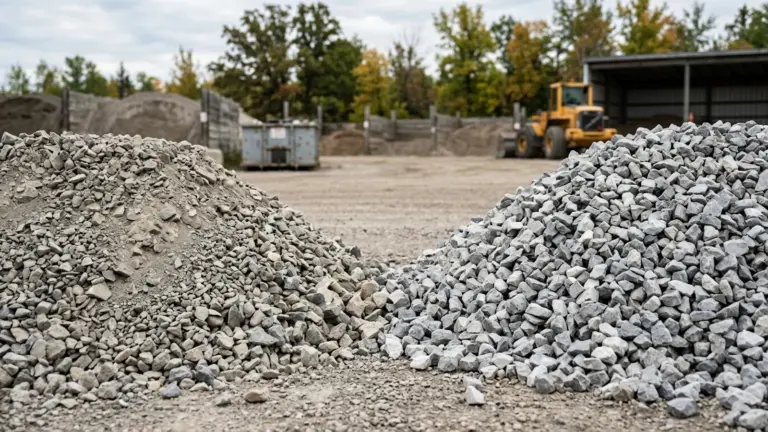
Pea gravel consists of small, naturally rounded stones rather than mechanically crushed aggregate. Individual stones are generally smooth, with natural variations in tan, brown, grey, and muted earth tones.
The rounded shape explains both the advantages and limitations of the material.
Pea gravel is visually softer than crushed limestone and does not have sharp, angular edges. It drains freely and works well as a decorative surface. However, its rounded particles slide past one another instead of locking together. That means the material remains loose even after repeated traffic or mechanical compaction.
Understanding that difference helps prevent the most common mistake: using pea gravel where a compacted, load-bearing aggregate is required.
Where Pea Gravel Works Well
Contained Garden Paths
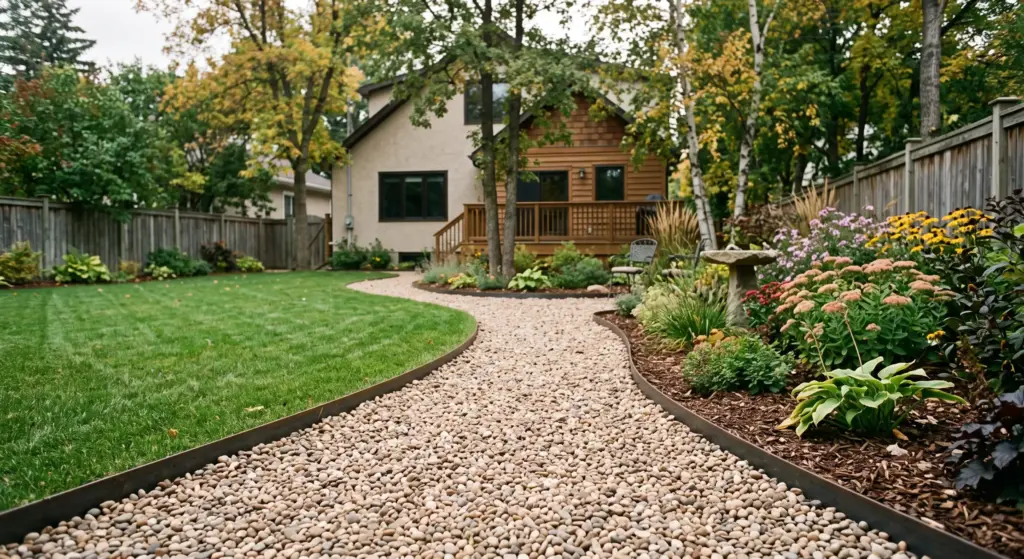
Pea gravel can create an informal pathway through a garden, side yard, or low-traffic landscape area. It follows curved and irregular routes easily and provides a natural appearance that works well with planting beds and traditional landscapes.
A compacted crushed-stone base beneath the pea gravel creates a firmer walking surface than placing loose gravel directly over soil. Keep the pea gravel finish layer relatively shallow and contain it with steel, aluminum, concrete, stone, or another solid edge.
Because the surface remains loose, it is better suited to casual garden paths than primary entrances or accessible routes.
Decorative Beds and Ground Cover
Pea gravel can be used as a long-lasting decorative surface in planting beds, foundation borders, tree circles, and other contained landscape areas.
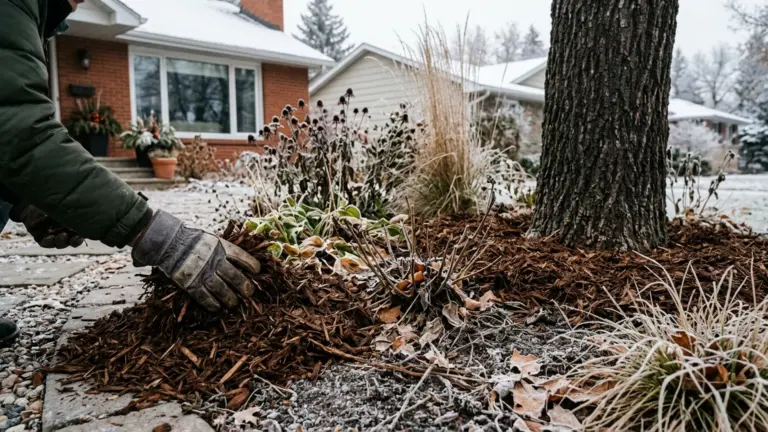
Unlike wood mulch, stone does not decompose and require regular replacement. The tradeoff is that it does not improve the soil, and stone-covered beds can become warmer in direct summer sun. Around plants that need cooler, moisture-retentive soil, organic mulch may be the better choice.
Install decorative stone over a properly prepared surface and use woven landscape fabric when separation from the soil is needed. Fabric reduces soil and stone mixing, but it does not eliminate future weeds.
Between Flagstone and Stepping Stones
Pea gravel can fill spaces between large flagstones or stepping stones, creating a clean transition without planting groundcover in every joint.
Keep the gravel surface slightly below the top of the stones. This helps the stones remain the primary walking surface and reduces loose gravel being kicked onto them.
The stepping stones themselves still need an appropriate base. Pea gravel is the visible joint material, not the structural layer beneath the stones.
Decorative Drainage Features
Pea gravel can work in visible surface-drainage features where appearance matters, including shallow decorative swales, dry-creek accents, and splash areas.
It should not automatically replace larger drainage stone in a French drain, retaining-wall drainage system, or engineered drainage installation. Those projects depend on pipe configuration, aggregate size, filter fabric, soil conditions, outlet location, and project specifications.
For a downspout area, the final grade and outlet must continue directing water away from the building. A decorative gravel bed beside the foundation does not correct a downspout that discharges too close to the house.
Dog Runs
Pea gravel can work in a contained dog run when the area has suitable drainage and the owner is prepared for regular maintenance.
The surface can be raked and rinsed, but it is not maintenance-free. Solid waste must be removed promptly, urine management depends on drainage and the layers below the gravel, and active dogs will move the stone toward the edges.
Plan for periodic raking, cleaning, and top-ups. A secure border helps keep the gravel inside the run.
Residential Play Areas
Pea gravel may be used as impact-absorbing loose-fill material in some residential play areas, but decorative installation depths do not apply beneath elevated play equipment.
Required depth depends on the equipment’s fall height, the actual material, containment, drainage, compaction, displacement, and applicable safety guidance. Loose material must also be inspected and replenished because children naturally move it away from swings, slides, and high-traffic landing areas.
Do not assume that a 2- or 3-inch decorative layer provides suitable fall protection. Confirm the surfacing requirements for the specific play equipment before installation.
Where Pea Gravel Does Not Work
Not as a Structural Base
The base beneath pavers, patios, sheds, walkways, and other structures must compact into a dense and stable layer.
Pea gravel cannot do this. Its rounded particles rearrange and roll instead of locking together. A structure placed over an unsuitable loose base can shift, settle, or become uneven.
Use the crushed aggregate specified for the project. In many Winnipeg landscape applications, this means properly graded crushed limestone installed and compacted in lifts.
Read Ditchfield’s patio base material guide before choosing material for a structural base.
Not as Unspecified Retaining Wall Backfill
Retaining-wall drainage and backfill must follow the wall manufacturer’s instructions or the project’s engineering specification.
Many systems call for clean, washed aggregate that maintains drainage voids behind the wall. Do not substitute pea gravel simply because both products appear to drain. Aggregate size, particle shape, filter fabric, drainage pipe, soil pressure, and wall design all matter.
For a structural or engineered wall, use the material named in the approved specification.
Not for Driveways or Vehicle Traffic
Pea gravel is a poor choice for driveways, parking pads, and regular vehicle routes.
Vehicle weight and turning tires displace the rounded stone, producing ruts, bare areas, and gravel migration toward lawns, sidewalks, and the street. Adding more material does not correct the lack of particle interlock.
Vehicle surfaces require an angular aggregate designed to compact and remain stable under load.
Not for Main Accessible Routes
Loose pea gravel moves under feet, wheels, walkers, and stroller tires. It can increase effort and reduce stability, especially when installed too deeply.
A primary entrance path or required accessible route should have a firm, stable, and slip-resistant surface. Loose pea gravel normally does not provide those characteristics unless it is part of a specifically designed stabilization system.
Use a more stable surface where daily access, snow clearing, or mobility needs are important.
Not a Complete Weed-Control System
Landscape fabric beneath pea gravel can reduce soil mixing and slow weeds emerging from below. It does not prevent seeds from landing on top of the stone.
Over time, dust, leaves, grass clippings, and other organic material collect between the stones. Windblown seeds can then germinate in that surface layer.
A successful gravel area still needs occasional debris removal and weed maintenance. Fabric is a separation layer, not a permanent weed guarantee.
How Much Pea Gravel Do You Need
Use this formula to estimate cubic yards:
Length in feet × Width in feet × Depth in inches ÷ 324 = Cubic yards
Typical Depth Guidelines
| Application | Starting depth | Important note |
|---|---|---|
| Decorative bed surface | 2 to 3 inches | Use edging and prepare the surface below |
| Casual garden path | 2 to 3 inches | A deeper loose layer can feel less stable underfoot |
| Dog run | Approximately 3 to 4 inches | Confirm drainage and plan for movement and top-ups |
| Between stepping stones | To the required joint depth | Keep the gravel slightly below the walking surface |
| Play equipment area | Project-specific | Follow equipment fall-height and safety requirements rather than decorative-depth guidance |
These depths are starting points, not universal construction specifications. The prepared base, subgrade, drainage, edging, and intended use can change the required installation.
Pea Gravel Calculation Example
For a garden path measuring 20 feet long, 3 feet wide, and 3 inches deep:
20 × 3 × 3 ÷ 324 = 0.56 cubic yards
The calculated amount is a starting estimate. Irregular edges, an uneven subgrade, displacement, and future top-ups may increase the quantity required.
Use Ditchfield’s landscape material calculator and confirm the final amount before placing a large order.
Pea Gravel Installation Tips
Install Solid Edging
Edging is the most important detail in a pea gravel installation. Rounded stone migrates each time it is walked on, raked, shoveled, or disturbed by water.
Steel, aluminum, concrete, stone, or another solid border can keep it contained. Set the edging securely and make sure the final gravel height does not allow material to spill over the top.
Excavate to the Planned Depth
Remove enough existing soil to accommodate the full installation rather than spreading gravel directly over the current grade.
If the finished gravel surface sits too high, it will spill into adjacent lawns and beds. Excavation also creates room for any required base, separation fabric, and finish layer.
Prepare the Base for the Intended Use
A low-traffic decorative bed may need only surface preparation and separation fabric. A regularly used path benefits from a compacted crushed-stone base beneath the pea gravel.
The pea gravel remains the decorative finish. The prepared angular base provides the stability.
Use Fabric for Separation
Woven landscape fabric can help keep gravel from sinking into soft soil and reduce soil migrating upward into the stone.
Overlap seams and secure the fabric according to the product instructions. Do not use fabric as a substitute for proper grading, drainage, or base construction.
Plan for Maintenance
Pea gravel gradually moves and settles. Paths, dog runs, and high-traffic areas may need raking and occasional replenishment.
Remove leaves and organic debris before it breaks down between the stones. This reduces the growing medium available to windblown weeds.
Pickup and Delivery in Winnipeg
Pea gravel and other decorative stone are heavy bulk materials. A cubic yard may exceed the payload capacity of many light-duty pickup trucks, depending on the material’s moisture content and actual bulk density.
Before pickup, verify the material weight against the vehicle’s door-jamb payload label, tire limits, trailer rating, and secure-load requirements. Ditchfield requires an appropriate truck or trailer that can safely contain and secure bulk material.
For larger quantities, delivery is often the more practical option.
Browse Ditchfield’s current landscape materials and contact the yard to confirm:
- Current pea gravel availability and sizing
- Estimated quantity
- Pickup suitability
- Delivery address
- Delivery zone and rate
- Available scheduling
Delivery is available throughout Winnipeg and surrounding areas. Delivery pricing is based on the destination zone, with fuel included in the zone rate.
Frequently Asked Questions About Pea Gravel
Can pea gravel be used beneath a shed
No. A shed requires a properly prepared base that remains stable under load. Loose, rounded pea gravel does not compact or interlock sufficiently for this purpose.
Use the compacted aggregate and installation depth specified for the shed and site conditions. Pea gravel can be used decoratively around a completed pad, but it should not replace the structural base.
Does landscape fabric stop weeds in pea gravel
It helps separate the gravel from the soil and can reduce weeds growing from below. It cannot stop seeds from landing and germinating in organic debris that accumulates on top of the gravel.
Fabric remains useful for separation, but routine surface maintenance is still required.
Is pea gravel good for a main walkway
It can work on a casual garden path, but it is usually not the best choice for a primary entrance or frequently used route.
The loose surface shifts underfoot and can be difficult for wheelchairs, walkers, strollers, and snow-clearing equipment. A compacted or paved surface is more appropriate when firmness and accessibility matter.
How does pea gravel handle Winnipeg winters
The stone itself does not decompose during winter, but the surface remains loose. Snow shovels and snowblowers can catch and scatter small stones into surrounding lawns and planting beds.
Pea gravel is better suited to areas that do not need frequent winter clearing. Use edging and expect some spring raking and repositioning.
Is pea gravel suitable for a dog run
It can be suitable when installed over a well-drained base and contained with solid edging. Regular waste removal, rinsing, raking, and occasional replenishment are still necessary.
The suitability of the surface also depends on the dog’s size, behaviour, paw sensitivity, and tendency to dig or eat loose materials.
Can pea gravel be used under play equipment
Only when the material, installed depth, containment, maintenance, and equipment fall height satisfy the appropriate safety guidance.
A standard 2- or 3-inch decorative layer should not be presented as protective playground surfacing. Check the equipment instructions and applicable safety requirements before installation.
Order Pea Gravel in Winnipeg
Browse Ditchfield’s decorative stone and landscape materials or visit the Ditchfield online store for current purchasing options.
Pickup is available at:
Ditchfield Supplies
2929 Sturgeon Road
Winnipeg, Manitoba R2Y 2L9
Check the current yard hours before visiting because seasonal hours can change.
Call 204-889-6268 to confirm current stock, material sizing, pickup requirements, or delivery options before placing a large order.