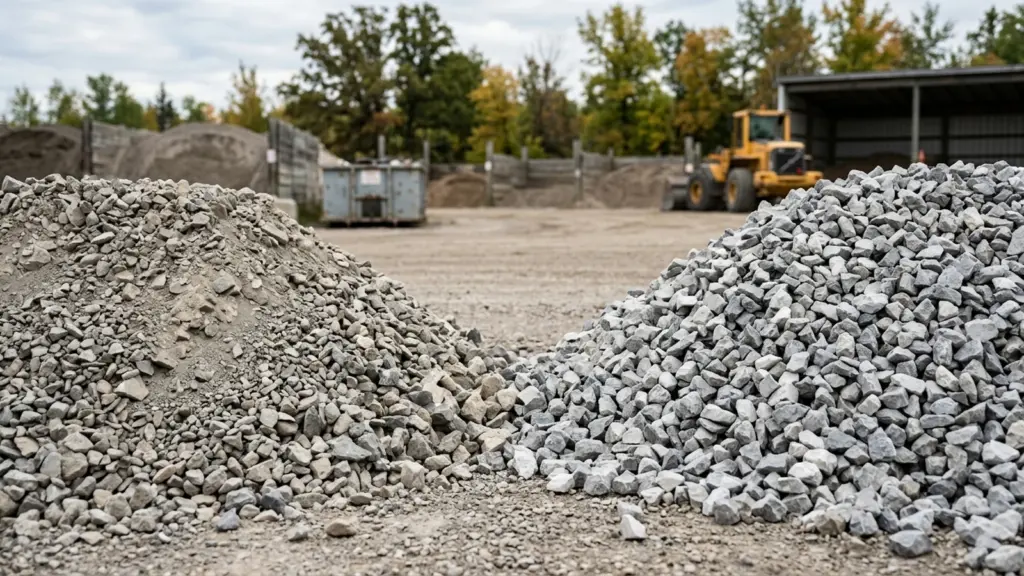
Crushed limestone and clear stone can look similar in a pile, but they perform very differently once they are installed. The deciding factor is usually fines: the small particles that fill the spaces between larger pieces of stone.
If your project needs a firm, load-bearing base, you will usually want a graded crushed material that contains fines. If the goal is to move water, you will usually want a clean, washed stone with open spaces between the pieces.
Quick Takeaways
- For a compacted base: choose crushed limestone or another graded base material that contains fines.
- For drainage: choose clear stone or another clean, washed aggregate with minimal fines.
- For projects that need both support and drainage: use separate layers, with a compacted base below and clean drainage stone only where the design requires it.
- Before ordering: confirm the required size, whether the material is washed, and current availability.
The Main Difference Is Fines
Fines are the smaller particles mixed through an aggregate. When crushed limestone with fines is watered and compacted, those particles fill the gaps between the larger stones. The result is a dense layer that resists movement and spreads loads.
Clear stone is screened or washed so that most of the fines are removed. The open spaces between the stones allow water to pass through more easily. That makes clear stone useful for drainage, but it does not create the same tightly packed surface as a graded base material.
Names can vary between suppliers, so do not order by product name alone. Ask three questions:
- What is the stone size?
- Does it contain fines, or is it clean and washed?
- Is the material intended for compaction or drainage?
Crushed Limestone: Best for Load-Bearing Bases
Crushed limestone with fines is commonly used where the finished surface needs a stable foundation. Typical applications include:
- Paver and patio bases
- Driveway bases
- Walkways and shed pads
- Compacted fill beneath slabs or landscape features
Winnipeg’s freeze-thaw cycles make base preparation especially important. A properly selected material still needs to be installed at the correct depth, compacted in manageable lifts, and matched to the soil, drainage conditions, and load above it.
For a closer look at other compactable base materials, read our Winnipeg guide to screenings and stone dust.
Clear Stone: Best for Drainage
Because clear stone contains very few fines, it leaves pathways for water to move through the aggregate. Common uses include:
- Behind retaining walls
- Around weeping tile and perforated drain pipe
- French drains and drainage trenches
- Drainage layers and dry wells
Behind a retaining wall, clean drainage stone helps direct water toward the drainage system instead of allowing pressure to build against the wall. The stone is only one part of the assembly; proper grading, filter fabric, drainage pipe, outlet placement, and wall construction still matter.
See our retaining-wall drainage guide for more information about what goes behind the blocks.
Crushed Limestone vs Clear Stone at a Glance
| Project Need | Typical Choice | Why |
|---|---|---|
| Patio, walkway, driveway, or shed base | Crushed limestone with fines | Compacts into a dense, stable layer |
| Behind a retaining wall | Clear stone | Allows water to move toward the drainage system |
| Around weeping tile or drain pipe | Clear stone | Maintains open space for water flow |
| Compacted structural fill | Specified graded base material | Fines help the material lock together under compaction |
What Happens If You Use the Wrong Material?
Using Clear Stone as a Patio or Driveway Base
Clear stone can drain well, but it does not lock together like a graded material with fines. If a project calls for a compacted base and clear stone is substituted without a proper design, the surface above may shift or settle.
Using Material with Fines in a Drainage Zone
Fines can migrate into drainage voids and reduce water flow. Behind a retaining wall or around a French drain, this can contribute to clogging and unwanted water pressure. Use the material specified for the drainage assembly and install suitable filter fabric where the design calls for it.
A Simple Way to Choose
Ask what the stone needs to do:
- Hold weight and create a firm base? Start with crushed limestone or another graded compactable material with fines.
- Let water move through? Start with clear stone or another clean, washed drainage aggregate.
- Do both jobs? Build the system in layers rather than expecting one aggregate to perform two opposite functions.
For structural, retaining-wall, or drainage work, follow the project drawings, manufacturer instructions, and applicable local requirements. If you are unsure, bring your dimensions and project details to the yard before ordering.
How Much Stone Do You Need?
A quick cubic-yard estimate is:
Length (ft) × Width (ft) × Depth (in) ÷ 324 = cubic yards
This is a starting estimate. Actual requirements vary with excavation, compaction, site conditions, waste, and the project specification. Many pedestrian base projects begin in the range of 4 to 6 inches, while vehicle loads and poor subgrades may require more.
Use the Ditchfield material calculator to estimate your project, then call us if you would like help reviewing the quantity.
Pickup or Delivery in Winnipeg
Bulk aggregate is heavy, so plan transportation before ordering. Pickup is available at 2929 Sturgeon Road, Winnipeg during current yard hours. Ditchfield also offers delivery across Winnipeg and surrounding areas, with delivery pricing based on the destination zone.
Call 204-889-6268 to confirm the right material, current grades and availability, pickup timing, or delivery details. You can also review our crushed limestone product information and delivery information online.
Frequently Asked Questions
Is clear stone the same as drain rock or washed rock?
Those terms are often used for similar clean drainage aggregates, but sizes and materials vary. Confirm the stone size, whether it is washed, and the intended use before ordering.
Can clear stone go over compacted crushed limestone?
Yes, some assemblies use a compacted base layer and a separate clean-stone drainage layer. The correct sequence and thickness depend on the project design, soil conditions, loading, and drainage outlet.
How deep should a compacted base be?
There is no single depth for every project. Pedestrian patios and walkways often begin around 4 to 6 inches of compacted base, but driveways, weak subgrades, freeze-thaw exposure, and manufacturer requirements may call for more. Compact the material in lifts rather than placing the full depth at once.
Does Ditchfield carry clear stone?
Products, sizes, and seasonal availability can change. Call 204-889-6268 before visiting so the team can confirm the best current option for your project.
Not Sure Which Aggregate to Order?
Tell us what you are building, the project dimensions, and whether the material needs to compact or drain. We will help you narrow down the right product and quantity. Call 204-889-6268. Shop Limestone Online