Quick Takeaways
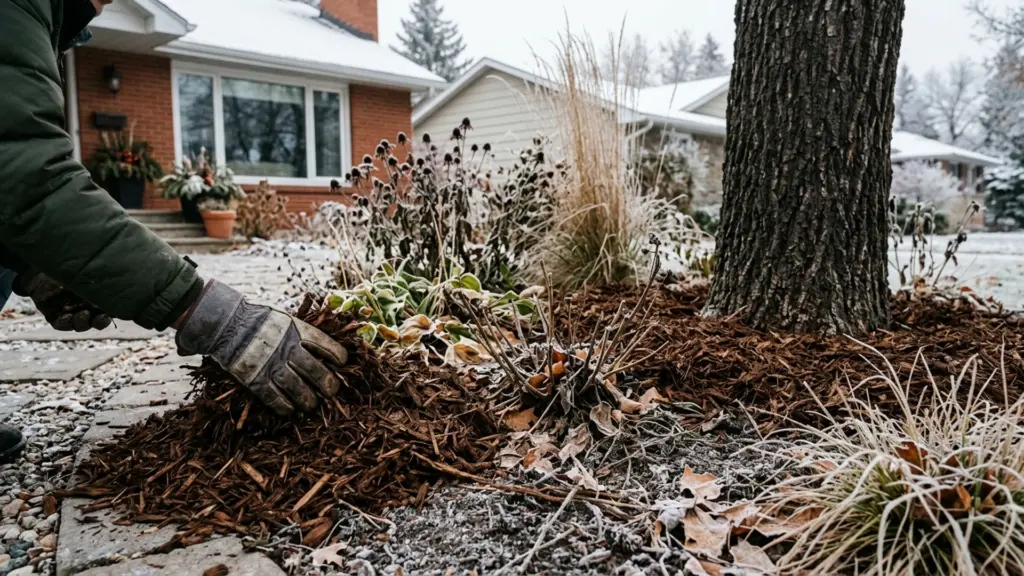
- Apply winter mulch after the ground has begun to freeze and plants have entered dormancy. Applying it too early can keep heat in the soil longer than intended.
- The goal is not to make the soil warm. It is to moderate temperature swings and reduce freeze-thaw movement that can lift shallow roots.
- For most winter-protection applications, aim for a total depth of about 3 to 4 inches of loose organic mulch, including any usable mulch already in the bed.
- Keep mulch away from perennial crowns, shrub stems and tree trunks.
- Established, locally hardy plants may not need extra winter mulch. Newly planted, shallow-rooted or marginally hardy plants usually benefit the most.
Why Winter Mulch Timing Matters in Winnipeg
A Winnipeg winter can produce extended cold, limited snow cover and repeated freeze-thaw cycles during fall and spring. The purpose of winter mulch is to help the soil remain more stable through those changes.
That is why timing matters.
If winter-protection mulch is applied while the soil is still warm, it may slow the normal cooling process. Plants need time to enter dormancy before they are covered for winter.
Wait until the garden has experienced several hard frosts and the upper layer of soil has begun to freeze. The ground should feel firm rather than soft and warm.
Once the soil has begun freezing, a loose organic mulch layer helps reduce sudden temperature changes around shallow roots.
What Winter Mulch Protects Against
It is easy to assume that winter mulch works like a blanket that keeps plants warm. Its more important function is temperature moderation.
During a mid-winter warm period or early spring thaw, exposed soil can warm and expand. When temperatures fall again, it freezes and contracts. Repeated movement can push shallow-rooted plants and newly planted material upward.
This process is commonly called frost heaving.
Once roots or crowns are lifted above the soil, they become more exposed to cold temperatures, dry winter winds and moisture loss. A winter mulch layer helps reduce those rapid changes.
Snow can provide similar insulation, but Winnipeg snow cover is not always early, deep or consistent. Mulch provides a more dependable protective layer when snow coverage changes.
When to Apply Winter Mulch in Winnipeg
Use ground conditions rather than a specific calendar date.
The best time is normally in late fall, after:
- plants have entered dormancy;
- the garden has experienced several hard frosts;
- the upper layer of soil has begun to freeze; and
- the ground feels firm underfoot.
A light snowfall does not necessarily mean it is too late. If the soil has started to freeze and you can still spread the material evenly, winter mulch can still be applied.
Avoid covering actively growing plants or applying a heavy winter layer while the soil remains warm.
How Much Winter Mulch Do You Need?
Aim for About 3 to 4 Inches
For most perennial beds and newly planted material, aim for a loose winter mulch depth of approximately 3 to 4 inches.
Measure the total layer, including mulch already present in the bed. If an existing layer remains loose, clean and evenly distributed, add only enough new material to reach the appropriate total depth.
Avoid creating an excessively deep or compacted layer. More mulch is not automatically better. Thick, wet or matted material can restrict airflow and hold moisture against plant crowns.
Keep Mulch Away From Crowns and Trunks
Placement is just as important as depth.
For perennial plants, spread mulch around the root zone while leaving the crown—the point where the stems emerge from the soil—uncovered.
For trees, maintain a mulch-free ring around the trunk. Mulch should form a broad, shallow doughnut shape rather than a mound or “volcano” against the bark.
For shrubs, keep mulch clear of the main stems and spread it across the surrounding root zone.
This reduces the risk of trapped moisture, bark damage and decay.
Which Plants Need Winter Mulch?
Not every established garden plant requires an additional winter layer.
Locally hardy plants growing in well-drained soil may perform well without extra winter protection. Established perennials and ornamental grasses can also benefit from leaving their stems standing through winter, where they can trap snow and provide winter interest.
Avoid placing thick, wet or tightly packed mulch directly over the crowns of plants adapted to dry conditions.
Winter mulch is most useful for:
- newly planted perennials;
- newly planted trees and shrubs;
- shallow-rooted perennials such as heuchera and astilbe;
- fall-planted bulbs;
- plants located in exposed or windy areas;
- plants that are only marginally hardy for the local climate; and
- beds where frost heaving has occurred before.
If you are uncertain about a particular plant, focus on protecting the surrounding root zone while keeping the crown uncovered.
Choosing a Winter Mulch Material
Several organic materials can provide effective winter protection.
Shredded Bark
Shredded bark is easy to spread, stays in place reasonably well and can continue serving as a landscape-bed mulch during the growing season.
Natural Wood Mulch
Natural wood mulch is suitable for perennial beds, shrubs and trees. Apply it loosely and keep it away from trunks, stems and crowns.
Wood Chips
Wood chips are useful around trees and larger shrub beds. Their larger particle size allows airflow and creates a durable surface layer.
Straw
Clean straw can provide lightweight seasonal protection for vegetable beds, bulbs and certain perennial plantings. Make sure it is free from weed seeds and remove or thin excessive material in spring.
Shredded Leaves
Dry, shredded leaves can work well when applied loosely. Whole leaves are more likely to mat together, so shredding them first improves airflow and reduces compaction.
For a broader comparison of landscape mulch materials, read our Winnipeg Mulch Guide.
You can also browse Ditchfield mulch products before selecting a material.
Removing or Adjusting Winter Mulch in Spring
Winter-protection mulch does not always need to be removed completely.
As temperatures moderate and new growth begins, inspect the beds and gently pull excess material away from plant crowns. Compacted or matted areas should be loosened to improve airflow.
Mulch around trees and shrubs can often remain in place as part of the regular landscape layer, provided it is not touching the trunks or main stems.
If the remaining material is still clean and evenly distributed, reuse it rather than automatically adding another full layer. Check the total depth before applying more.
Winter Mulch FAQ
What if I applied mulch before the ground froze?
You usually do not need to remove the entire layer. Check whether plants are still actively growing and make sure crowns, trunks and main stems are not buried.
If the layer is unusually deep or compacted, thin it and loosen the surface. Once the soil freezes, the remaining loose layer can continue providing winter protection.
Do I need winter mulch if my garden has good snow cover?
Consistent snow cover provides useful insulation, but it is not always dependable. Snow can arrive late, drift away from exposed beds or melt during warm periods.
Winter mulch provides a protective layer before consistent snow arrives and remains in place when snow coverage changes.
Can I use fallen leaves as winter mulch?
Yes, but shred them first and apply them loosely.
Whole leaves can mat together, hold excess moisture and reduce airflow around plant crowns. Shredded leaves form a lighter, more even layer.
Do all perennials need winter mulch?
No. Established plants that are well suited to the local climate and growing in well-drained soil may not require extra protection.
Newly planted, shallow-rooted, exposed or marginally hardy plants are generally the strongest candidates for winter mulch.
Should mulch touch a tree trunk?
No. Keep mulch away from the trunk and root flare.
Spread it in a broad ring over the root zone instead of piling it against the bark.
Order Winter Mulch at Ditchfield
Ditchfield Supplies carries bulk landscape mulch for pickup and delivery across Winnipeg and surrounding areas.
Before ordering, estimate the bed area and desired depth, then confirm the appropriate material and quantity with the yard.
Browse mulch products or shop mulch online.
For current availability, pickup requirements or delivery information, call 204-889-6268 or visit us at 2929 Sturgeon Road, Winnipeg, Manitoba.