- Winnipeg has a wide range of gravel and aggregate products — the right one depends on your specific application, not personal preference.
- The single most important distinction: angular stone compacts and locks together; round stone stays loose and shifts
- Vehicle traffic → angular limestone. Decorative beds and pathways → river stone or pea gravel. Modern landscape design → coloured granite. Drainage → clean limestone or river stone
- Delivery minimums, coverage, and product availability all vary — call Ditchfield Supplies at 204-889-6268 before ordering if you’re unsure.
- All products covered in this guide are stocked at 2929 Sturgeon Road and available for pickup or delivery across Winnipeg.
Type “gravel Winnipeg” into a search engine, and you’ll get a list of products that all look roughly similar in photos. Crushed limestone, pea gravel, river stone, granite: they’re all aggregate, they’re all sold by the cubic yard, and the photos on most supplier sites don’t make the differences obvious.
But put the wrong product in the wrong spot, and you’ll know it within a season. Pea gravel on a driveway migrates to the edges and leaves bare spots down the middle. Crushed limestone in a decorative garden bed looks industrial and doesn’t drain freely. River stone in a pathway rolls underfoot. Black granite in a drainage trench is expensive overkill.
After more than 40 years of supplying aggregate to Winnipeg homeowners and contractors, the most common mistake we see is choosing a product based on appearance alone without thinking about the application. This guide is a decision tree: it helps you figure out which category of product you need before you go deeper into the specifics.
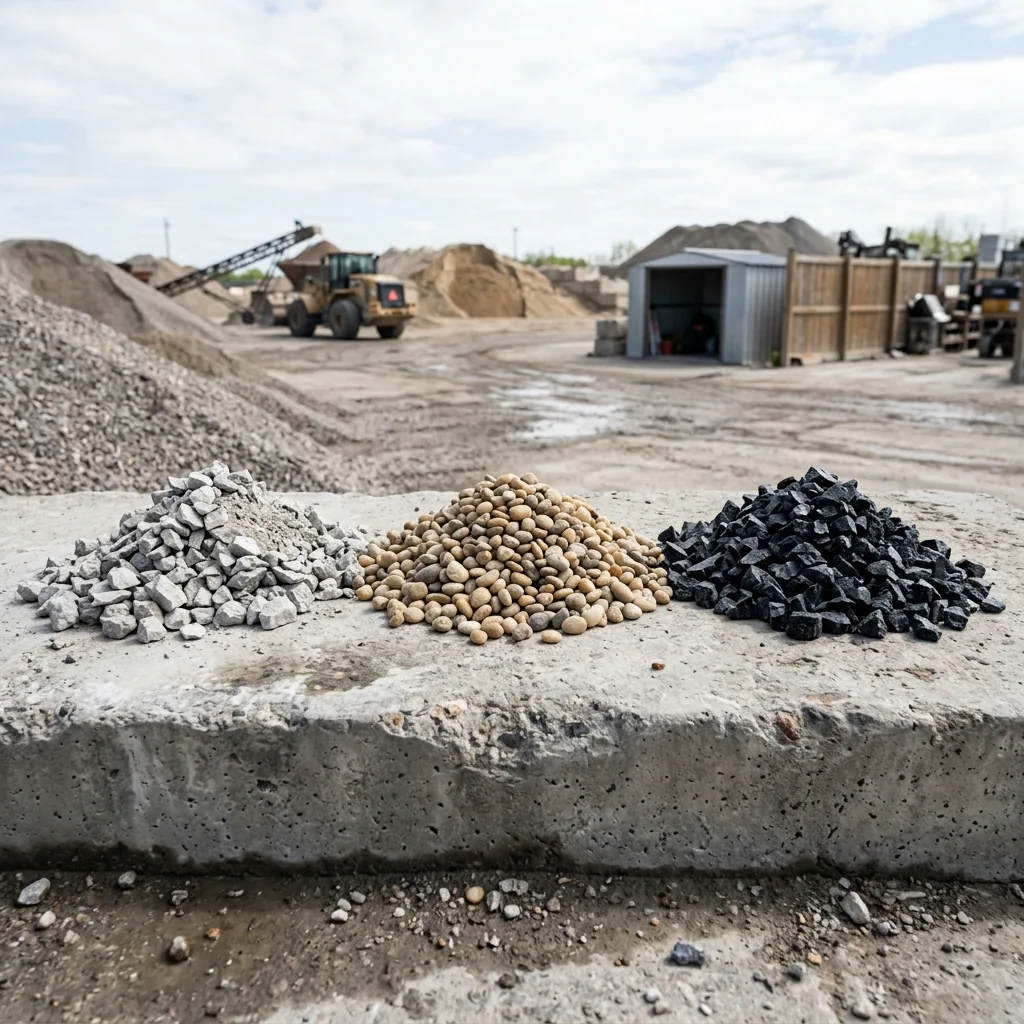
The Decision Tree: Start Here
This is the first and most important question. If a vehicle — car, truck, trailer — will ever drive on this surface, you need angular, compacted aggregate. Full stop.
Angular stone (crushed limestone in various grades) has irregular, jagged faces that lock together under compaction. The more load and traffic it receives, the tighter the matrix becomes. Rounded stone (pea gravel, river stone) has smooth faces that slide past each other under load. It migrates, ruts, and never stabilizes under vehicle weight regardless of how much you add.
If your project involves a driveway, parking pad, or any surface with vehicle access, see our gravel and aggregate delivery guide for the specific limestone grades used at each layer of a driveway base.
If the answer is no (pedestrian only), move to Question 2.
Drainage applications — French drains, perimeter drainage around foundations, drainage channels alongside retaining walls, soak pits — need aggregate that stays open and allows water to move freely. Clean limestone (washed, with fines removed) and larger river stone are the right products here. The open void space between particles is the point. Do not use material with fines (dust) in drainage applications: the fines clog the void space and defeat the purpose.
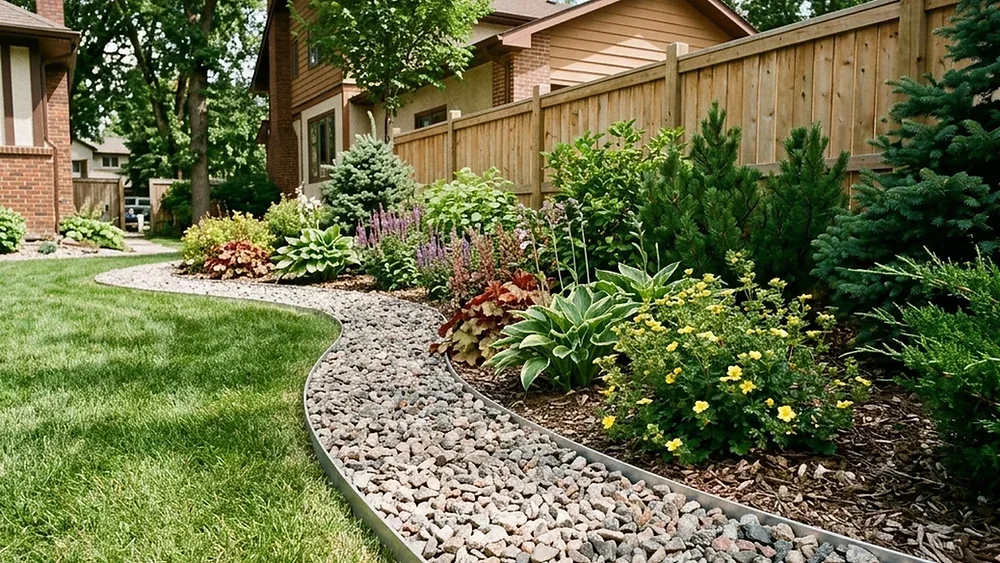
Decorative applications — garden beds, tree circles, pathway surfaces, groundcover under shrubs — are about appearance and weed suppression. Here, the choice is driven by the aesthetic you’re after and the look of your existing landscape.
Natural, warm, traditional look: River stone and pea gravel are smooth, rounded, and come in the warm tan-grey-brown palette of natural river rock. They complement wood features, traditional gardens, and older Winnipeg homes with brick or stone exteriors. They feel soft underfoot and look at home in cottage-style or naturalistic planting schemes.
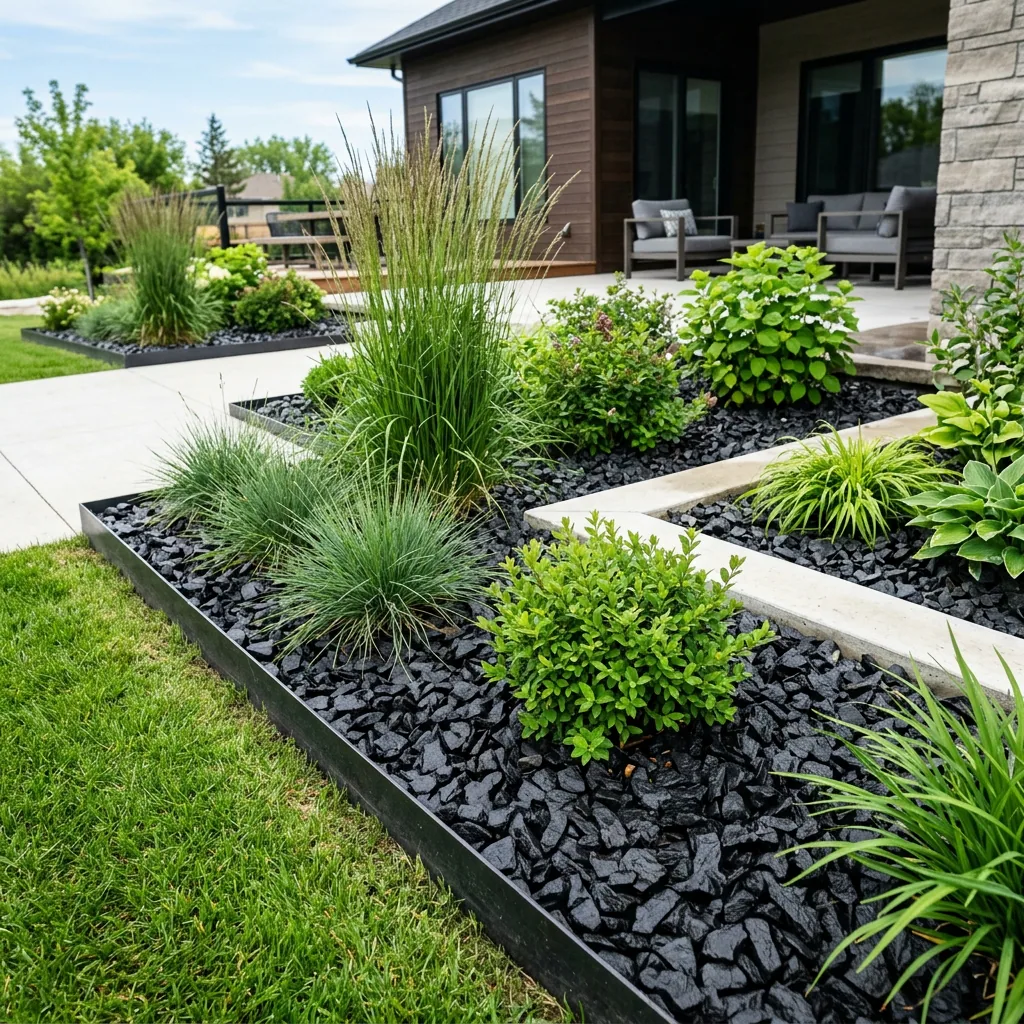
Modern, clean, contemporary look: Coloured granite — particularly black granite — provides high contrast against green plantings and light concrete, holds its colour better than limestone (which lightens over time), and pairs well with modern paving and clean architectural lines. It’s the product of choice for contemporary landscapes where the ground material is part of the design statement.
For full product details and coverage information, see our river stone and coloured granite guide.
Product Sizes: What to Order Once You Know the Category
River Stone Sizes
Once you’ve chosen river stone, size determines the application
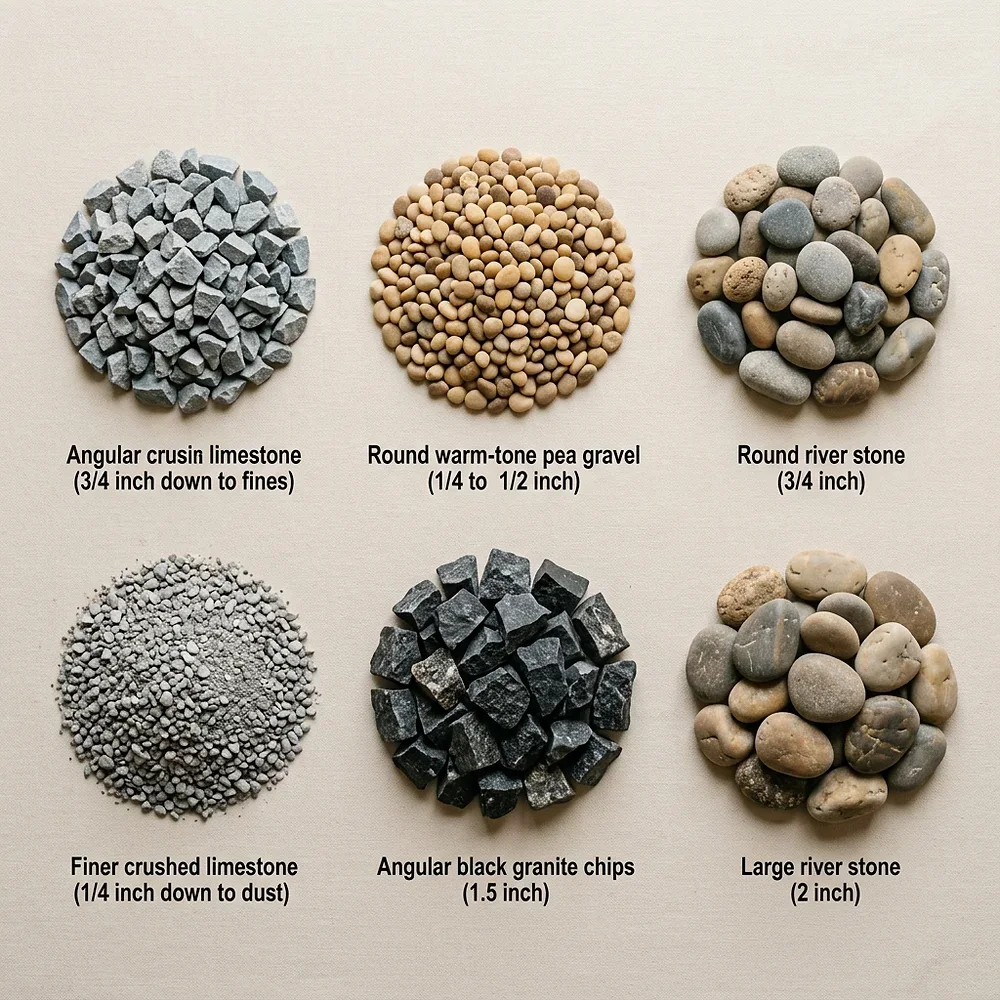
- Pea gravel (3/8″): Smallest, most comfortable underfoot. Best for pedestrian pathways and garden bed groundcover. Migrates more than larger sizes in wind and water flow.
- 3/4″ river stone: Most versatile size. Stays put better than pea gravel; works for garden beds, drainage borders, and tree circles. Still comfortable to walk on.
- 2″ river stone: Chunky and bold. Primarily for drainage channels, foundation borders where water needs to move quickly, and as a design accent where the stone itself is a feature.
Coloured Granite Sizes
Granite sizes match applications differently
- 1/4″ granite: Fine, angular, compacts to a firm surface. Use for pathways and compacted surfaces where a dark, clean finish is the goal.
- 1.5″ granite: Most popular size for garden beds and mulch replacement. Large enough to stay put in wind, small enough to look refined. Permanent alternative to wood mulch.
- 4 to 6″ granite: Large format for bold borders, retaining slope faces, and strong visual edging statements.
Limestone Grades
For driveways, sub-base, or drainage — grade depends on the layer
- 3/4 Down (road crush): Standard driveway and sub-base material. Angular, compacts firmly, hardens over time under traffic. Used as the main structural layer.
- 1/4 Down: Finer grade, compacts to a smoother surface. Used as a top-dress layer on driveways or for pedestrian pathways where a tighter finish is wanted.
- 3/4 Clean: Washed limestone with fines removed. Stays open, doesn’t compact. Used in drainage applications where water must move freely. See our limestone, shale and sand product guide for detailed specs and quantity calculations.
Which Gravel or Aggregate Should You Use? — Quick Reference
| Application | Right Category | Specific Product | Where to Learn More |
|---|---|---|---|
| Driveway or parking pad | Angular limestone | 3/4 Down + 1/4 Down top layer | Gravel & Aggregate guide |
| Patio or court sub-base | Angular limestone | 3/4 Down (8–12 inches compacted) | Gravel & Aggregate guide |
| French drain or perimeter drainage | Clean limestone or river stone | 3/4 Clean limestone or 2″ river stone | Limestone product page |
| Garden bed groundcover, natural look | River stone | Pea gravel or 3/4″ river stone | River Stone & Granite guide |
| Garden bed groundcover, modern look | Coloured granite | 1.5″ black granite | Types of Decorative Rock |
| Pedestrian pathway, natural | River stone | Pea gravel or 3/4″ river stone | River Stone & Granite guide |
| Pedestrian pathway, modern/compacted | Coloured granite | 1/4″ black granite | Types of Decorative Rock |
| Bold garden edging or accent border | Coloured granite or river stone | 4–6″ black granite or 2″ river stone | Types of Decorative Rock |
| Foundation drainage border | River stone or clean limestone | 2″ river stone or 3/4 Clean | Limestone product page |
The Volume Formula for Any Aggregate
Winnipeg-Specific Considerations for Any Aggregate
Angular Stone Performs Better Through Freeze-Thaw
Winnipeg’s freeze-thaw cycle — dozens of events per winter — affects aggregate differently depending on particle shape. Angular stone (limestone grades, granite) actually tightens through freeze-thaw as particles shift and relock. Round stone (pea gravel, river stone) migrates slightly with each cycle. For any application where stability over multiple seasons matters, angular stone is the more durable choice.
Landscape Fabric Under Decorative Stone
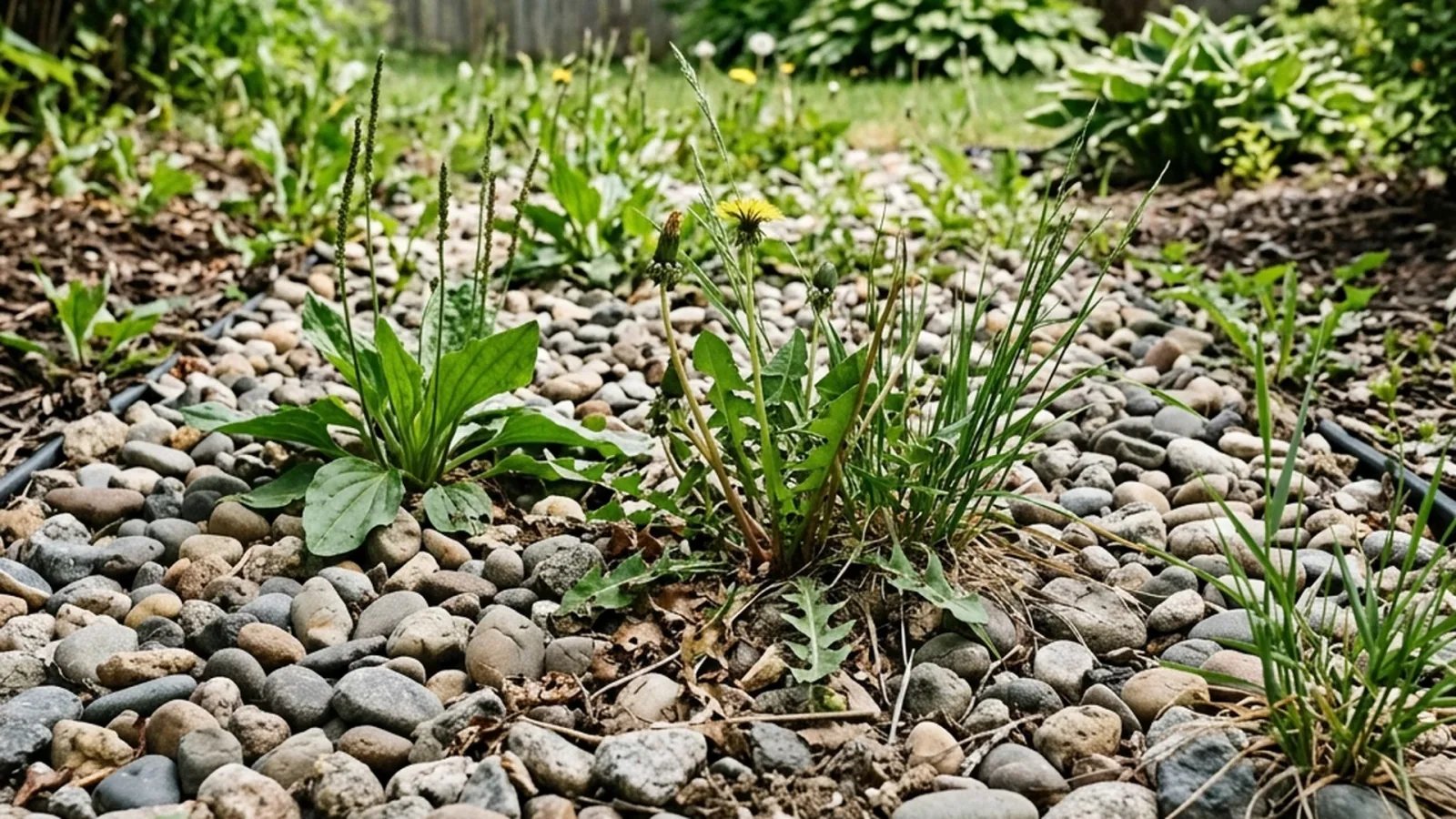
Without landscape fabric beneath decorative stone, the stone gradually mixes into the soil below over multiple seasons and needs to be replenished more frequently. A layer of landscape fabric beneath pea gravel, river stone, or granite beds extends the life of the installation significantly. For pedestrian pathways, fabric is strongly recommended. For garden beds where you’re planting through the stone, discuss with your installer.
Edge Restraints Prevent Migration
All loose aggregate migrates laterally over time without physical edge containment. Plastic or aluminum landscape edging, concrete curbing, or natural stone borders along all edges of a gravel area prevent this. A driveway or pathway without edging will spread noticeably within two to three seasons. Build the edging into the project from the start.
FAQ: Choosing the Right Aggregate in Winnipeg
Can I mix different aggregate types in the same area?
You can, but it’s rarely a good idea aesthetically. Different products have different particle sizes, colours, and textures — a mixed aggregate area typically looks unfinished. The one common exception is using a coarse drainage aggregate (3/4 Clean limestone) as a base layer, topped with a finer decorative product (pea gravel, black granite). That’s a functional layer system, not a mix.
How do I stop weeds from growing through my gravel?
Landscape fabric beneath the aggregate is the primary defence. It doesn’t eliminate weeds — seeds that land on top of the aggregate and germinate in dust that accumulates over time will still grow — but it prevents weeds from pushing up from below. For best results: fabric below, aggregate above, and periodic removal of any surface-germinating weeds before they establish roots through the fabric.
Is pea gravel suitable for a dog run?
Pea gravel is one of the most popular dog run surfaces. It drains well, doesn’t compact into a muddy mess, is comfortable on paws, and is easy to clean. The main management consideration is that dogs will inevitably move it around — plan on periodic raking and occasional top-ups. Depth of 3 to 4 inches provides enough material to handle movement without exposing the ground below.
Order at Ditchfield Supplies
Browse all limestone and aggregate products at ditchfieldsoils.ca/limestone-shale-sand and all decorative stone at ditchfieldsoils.ca/riverstone-coloured-granite. Pickup at 2929 Sturgeon Road or delivery across Winnipeg. Call 204-889-6268 to confirm product availability and delivery timing before ordering.
Order at Ditchfield Supplies
Call 204-889-6268