- Decorative rock lasts decades with no annual replacement like organic mulch.
- Coverage: 1 cubic yard covers ~100 sq ft at 3″ depth
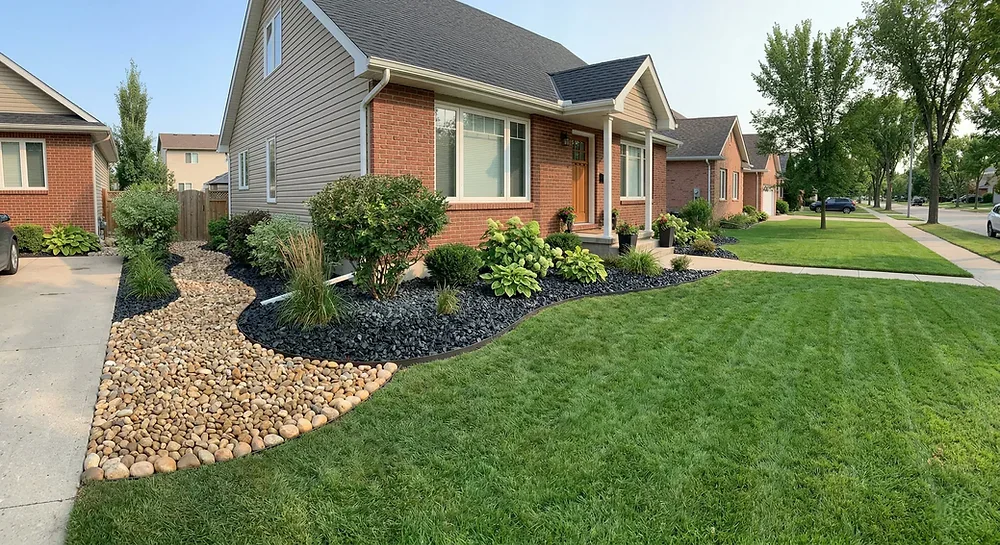
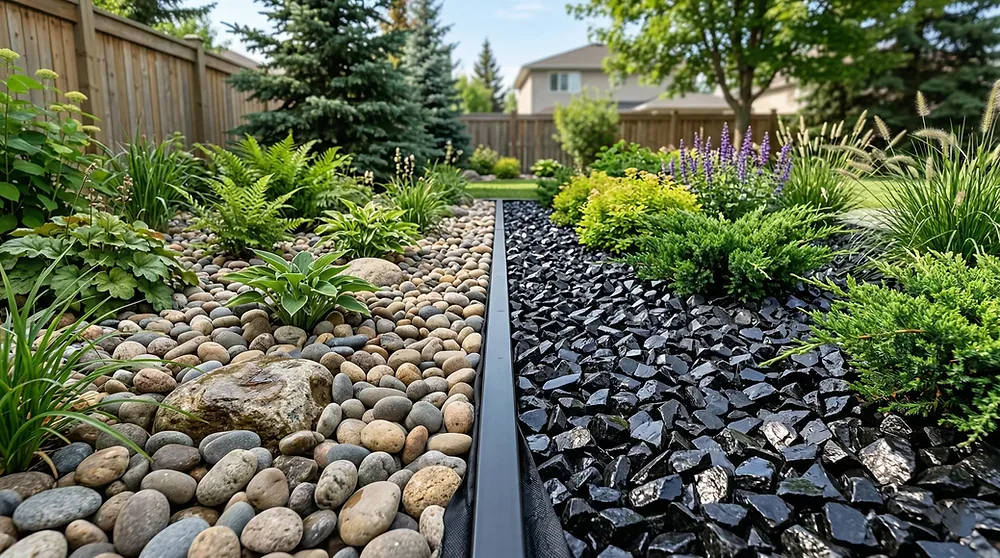
- River stone provides natural warmth; black granite creates modern drama
- Excellent drainage makes rock ideal for Winnipeg’s clay soil and spring runoff
- Higher upfront cost, but lower lifetime cost than mulch replacement cycles
Every spring, the same routine. Buy mulch. Spread mulch. Watch it fade over the summer. Watch it decompose over the winter. Repeat next year.
Organic mulch serves a purpose. But for many applications, decorative rock offers a permanent alternative that eliminates the annual replacement cycle. One installation. Decades of service. No ongoing material costs.
This guide covers the two most popular decorative rock options in Winnipeg: river stone and coloured granite. Each has distinct characteristics, applications, and aesthetics. Understanding the differences helps you choose the right material for your project.
Why Winnipeg Homeowners Are Switching from Mulch to Rock
The Annual Mulch Cycle
Organic mulch breaks down. That’s what it does. In Winnipeg’s climate, a fresh layer of mulch looks good for one season. By the following spring, it’s faded, compacted, and partially decomposed. Most properties need fresh mulch annually to maintain appearance.
Calculate the true cost: material, delivery, and labour every year for as long as you own the property. For a typical landscape with 500 square feet of mulched beds, you’re looking at $200–$500 annually in materials alone — before installation.
Permanent Beauty That Survives Manitoba Winters
Decorative rock doesn’t decompose. It doesn’t fade significantly. It doesn’t wash away in heavy rain or blow around in wind. Once installed, it stays put and looks essentially the same year after year.
Our harsh winters don’t affect rock negatively. Unlike mulch that gets matted and damaged under snow load, rock simply sits there. Come spring, a quick rinse removes any accumulated debris, and it looks fresh again.
Better Drainage for Clay Soil Properties
Winnipeg’s clay soil struggles with drainage. Add organic mulch that holds moisture, and you compound the problem. Decorative rock promotes drainage, allowing water to flow through to the soil below rather than pooling on the surface. For properties dealing with spring runoff and saturated soil, rock ground cover can actually improve conditions rather than making them worse.
River Stone: Natural, Smooth, Timeless
What Is River Stone?
River stone is naturally tumbled rock. Water flow over thousands of years smooths rough edges, creating rounded, organic shapes. The result is a material that looks and feels natural because it is natural.
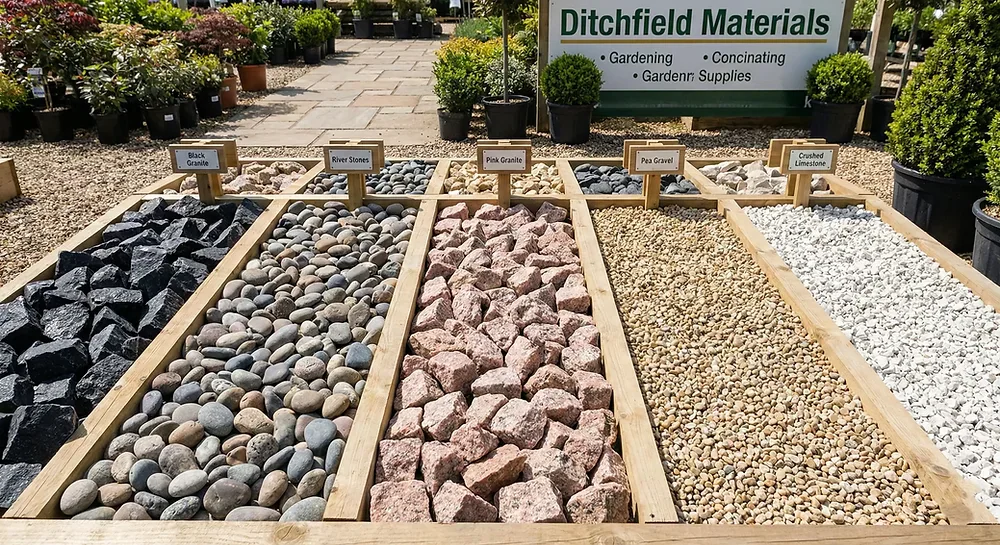
Colours run the spectrum of earth tones: grays, tans, browns, and mixed combinations. The natural variation means no two stones are identical, creating visual interest and an organic appearance.
Available Sizes
- ¾” (small): Fine texture, good for pathways and tight spaces
- 1.5″ (medium): Versatile for most ground cover applications
- 2–4″ (large): Bold appearance, good for borders and accents
- 4″+ (boulders): Feature pieces and structural accents
Best Applications for River Stone
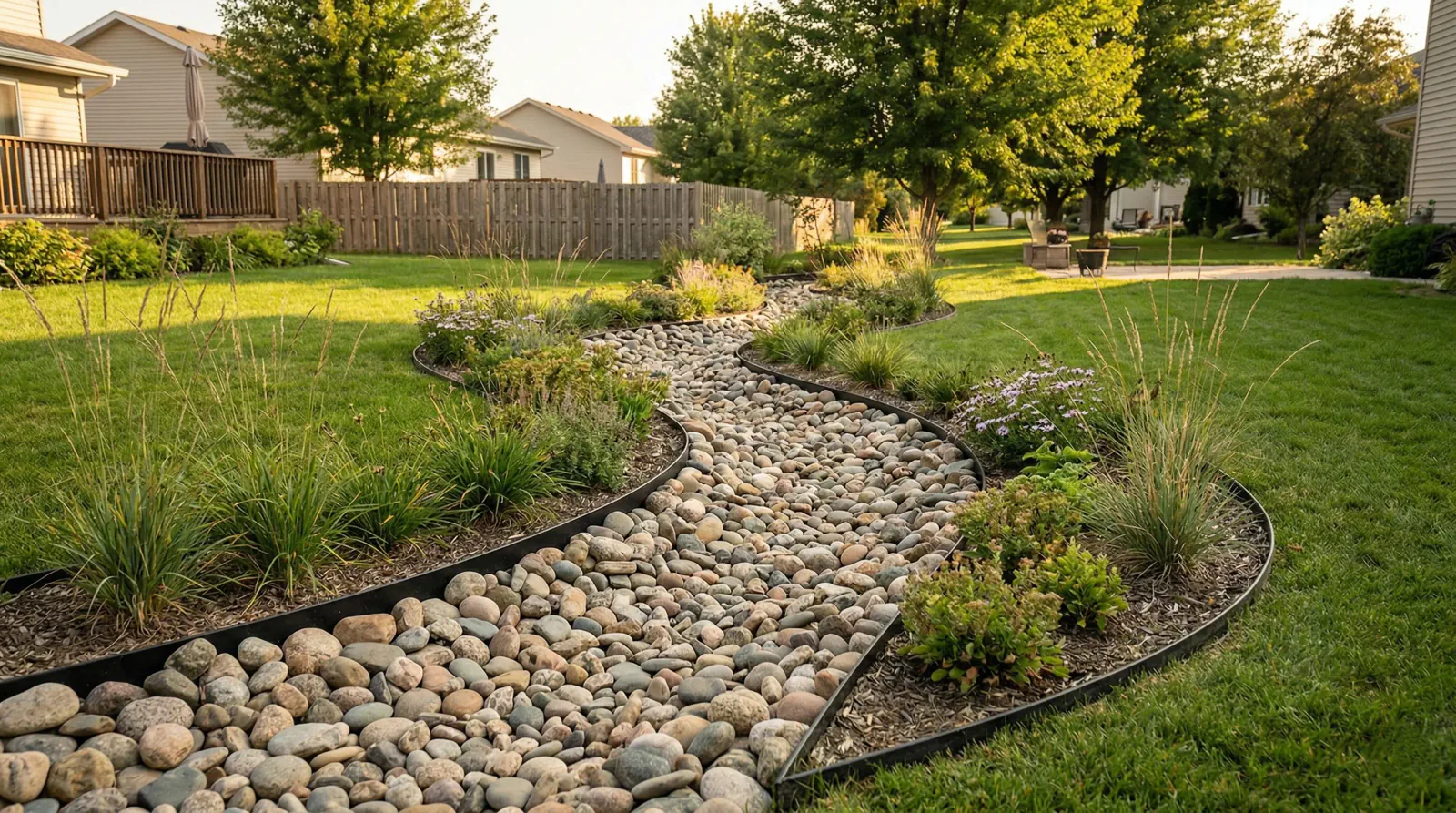
- Dry creek beds and drainage swales
- Garden bed borders and edging
- Ground cover in low-traffic areas
- Water features and pond edges
- Natural, organic landscape designs
Drainage Performance
River stone’s rounded profile creates larger void spaces between stones. Water flows easily through these gaps, making river stone excellent for drainage applications. It’s commonly used as the visible top layer over French drains and in areas where water management is important. For properties with drainage challenges, river stone can be part of the solution — not just decoration.
Coloured Granite: Bold, Modern, Distinctive
River Stone
Natural earth tones, rounded profiles. Organic warmth. Best with traditional landscape designs, water features, drainage applications.
Black Granite
Deep and dramatic when wet, distinguished charcoal when dry. High contrast with greenery. Best for modern architecture, contemporary designs, commercial properties.
Black Granite
Black granite makes a statement. When wet, it’s deep and dramatic. When dry, it shifts to a distinguished charcoal gray. The contrast against green plants or light-colored structures creates striking visual impact.
Best for: Modern landscape designs, high-contrast plantings, contemporary architecture, commercial properties.
Pink and Red Granite
Pink and red granite adds warmth to landscapes. The colour comes from natural mineral content, meaning it won’t fade or wash out over time. These tones complement greenery beautifully and add unique character to any property.
Best for: Gardens, decorative borders, accent areas, properties seeking a distinctive personality.
Performance in Winter Conditions
Granite performs exceptionally well in areas exposed to road salt, de-icing products, and salt sand runoff. Unlike some materials that deteriorate or discolour from salt exposure, granite maintains its appearance and structural integrity season after season. This makes it an excellent choice for front yards, boulevard plantings, and areas near driveways that see winter maintenance traffic.
Contractors and commercial installers often prefer granite for large-scale projects. The consistent sizing and colour uniformity make installation more predictable, and the material’s durability reduces callback risk.
Choosing Between River Stone and Granite
| Factor | River Stone | Coloured Granite |
|---|---|---|
| Appearance | Natural, organic | Modern, dramatic |
| Colors | Earth tones | Black, pink, red |
| Drainage | Excellent | Very good |
| Heat absorption | Moderate | Higher (esp. black) |
| Best with | Traditional designs | Contemporary designs |
| Salt resistance | Good | Excellent |
How Much Decorative Rock Do You Need?
The same formula as topsoil — the number 324 converts square feet and inches into cubic yards.
Recommended Depth
- Ground cover: 3–4″ minimum (4″ recommended)
- Drainage applications: 4–6″
- Decorative accent areas: 2–3″
The 3–4″ range is the sweet spot for most applications. Shallower than 3″, and you’ll see fabric showing through and have weeds breaking through more easily. Deeper than 4″ is usually unnecessary expense.
Quick Reference
- 100 sq ft at 3″ depth = ~1 cubic yard
- 200 sq ft at 3″ depth = ~2 cubic yards
- 500 sq ft at 3″ depth = ~5 cubic yards
Installation: Getting It Right the First Time
Landscape Fabric: Non-Negotiable
Landscape fabric under decorative rock is essential. It prevents weeds from growing up through the rock while allowing water to drain through. Skip the fabric, and you’ll be fighting weeds indefinitely.
Use commercial-grade woven fabric, not the thin material from big-box stores. Quality fabric costs more upfront but lasts much longer and performs better — this is where many DIY rock installations fail.
Edging: Keeping Rock Where It Belongs
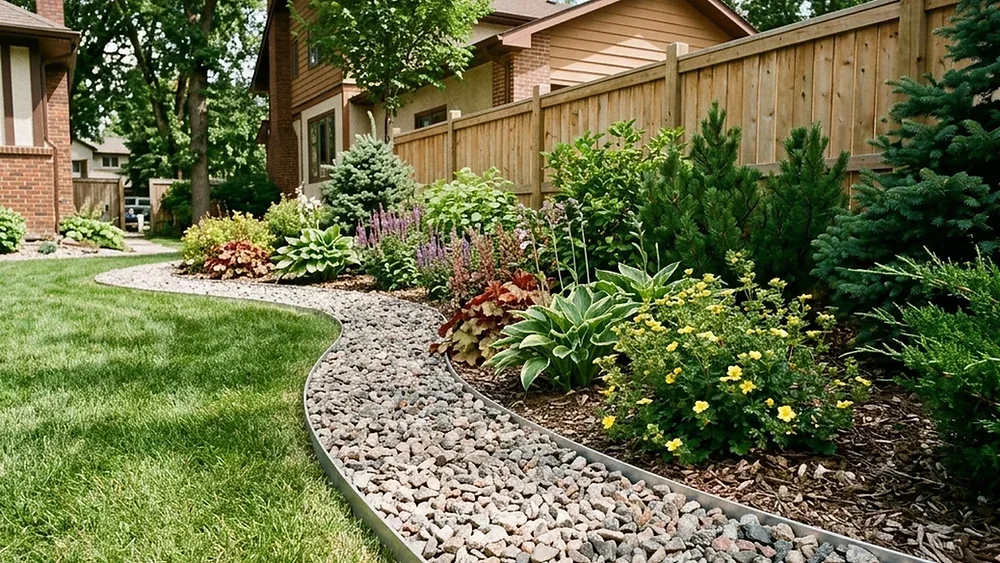
Without edging, decorative rock migrates. It ends up in the lawn. It spreads into adjacent beds. It becomes a maintenance headache. Metal, plastic, or stone edging creates defined borders that contain the rock. This small detail makes a significant difference in long-term appearance and maintenance.
Proper Depth
For most applications, 3–4 inches provides adequate coverage that looks good and performs well. Too shallow and fabric shows through; too deep wastes material and money. Use a straightedge or rake to achieve consistent depth across the installation.
The True Cost: Rock vs. Mulch Over 10 Years
Consider a 300 sq ft bed area:
Mulch (Annual)
~$300–$400/year × 10 years, plus labour or time each season
Decorative Rock (Once)
Initial installation + minimal ongoing maintenance for the same 10 years
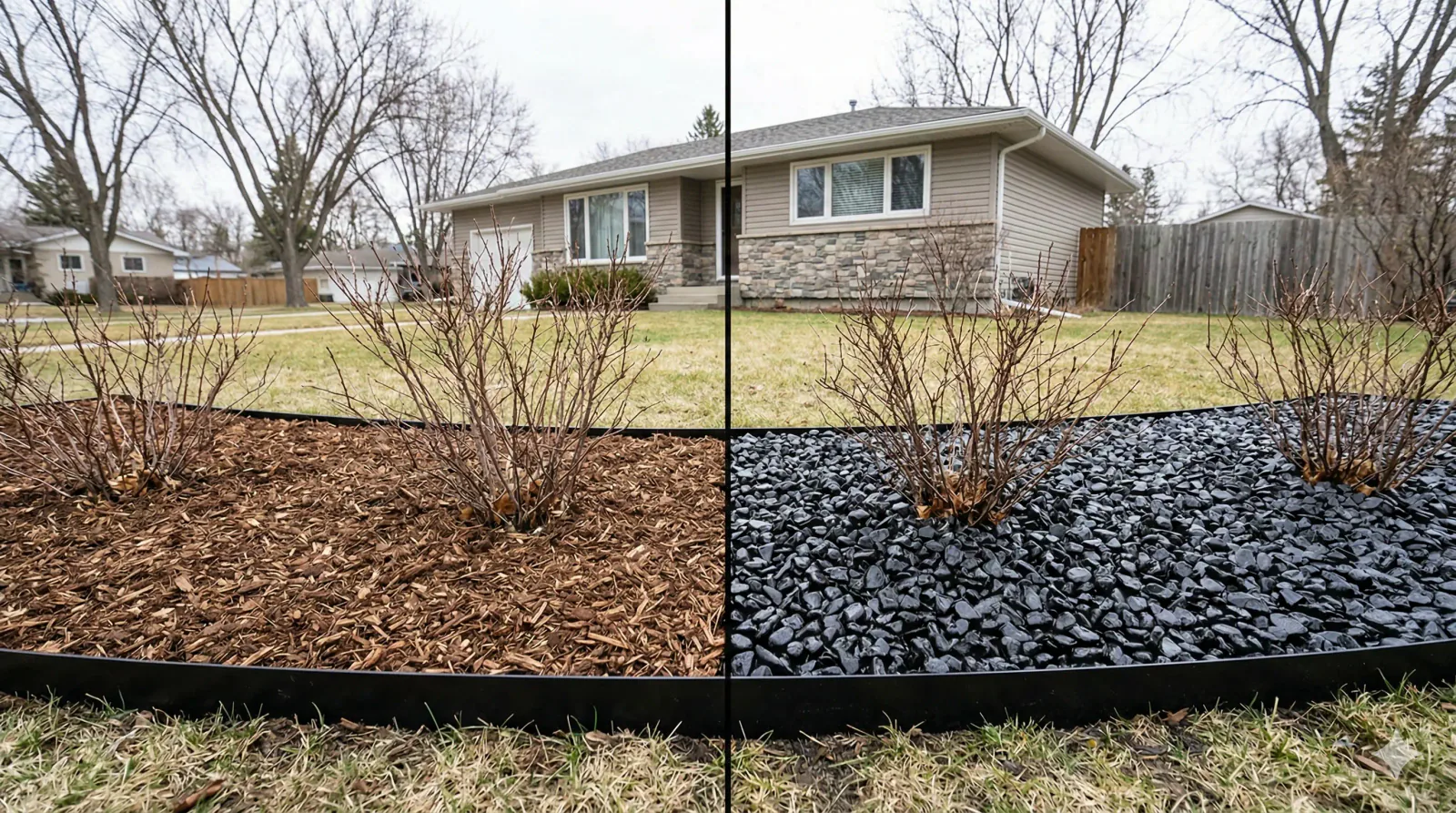
The math favours rock for permanent installations. Higher upfront cost converts to significant savings over time. Rock also adds value to property sales in ways that mulch doesn’t. For a detailed comparison of decorative rock options and installation guidance, see our complete decorative rock guide.
Keeping Your Rock Looking Fresh
Decorative rock requires minimal maintenance, but a little attention keeps it looking its best. In fall, use a leaf blower to clear accumulated leaves and debris before they break down and create a growing medium for weeds. Occasional raking redistributes rock that’s shifted and removes any organic buildup. A rinse with the garden hose in spring removes winter grime and restores colour — especially noticeable with black granite. These simple steps take minutes and keep your rock installation looking fresh for years.
Frequently Asked Questions
How long does decorative rock last?
Essentially forever. Rock doesn’t decompose. Over decades, you might need to top up a bit as some material settles or gets displaced, but properly installed decorative rock lasts the lifetime of the landscape.
Does rock attract or prevent pests?
Rock doesn’t attract pests the way organic mulch can. Organic material provides food and habitat for insects. Rock provides neither. However, rock-covered areas still need proper weed prevention, as weeds can still grow if fabric fails.
Can I install decorative rock myself?
Yes, for smaller areas. The key is proper preparation: good fabric, proper edging, and adequate depth. For large areas, the weight and volume involved make professional installation more practical.
What’s the best rock for drainage?
River stone, especially in the 1.5–2″ size range. The rounded profile creates larger void spaces for water flow compared to angular materials.
Will weeds grow through decorative rock?
With proper fabric underneath and adequate depth, weed growth is minimal. Some weeds may appear from seeds that land on top and root in accumulated debris. These are easily pulled and much less problematic than weeds in mulch beds.
Shop River Stone and Decorative Granite
Ready to make the switch to permanent, low-maintenance ground cover? We stock river stone and coloured granite in various sizes for any project size. Bulk delivery is available throughout Winnipeg and surrounding areas. Pickup is available at our yard.
Questions about which product suits your project? Contact us — we’ll help you choose the right material and calculate exactly how much you need.
Make the Switch to Permanent Ground Cover
Browse river stone and granite options online, or get in touch to discuss your project.