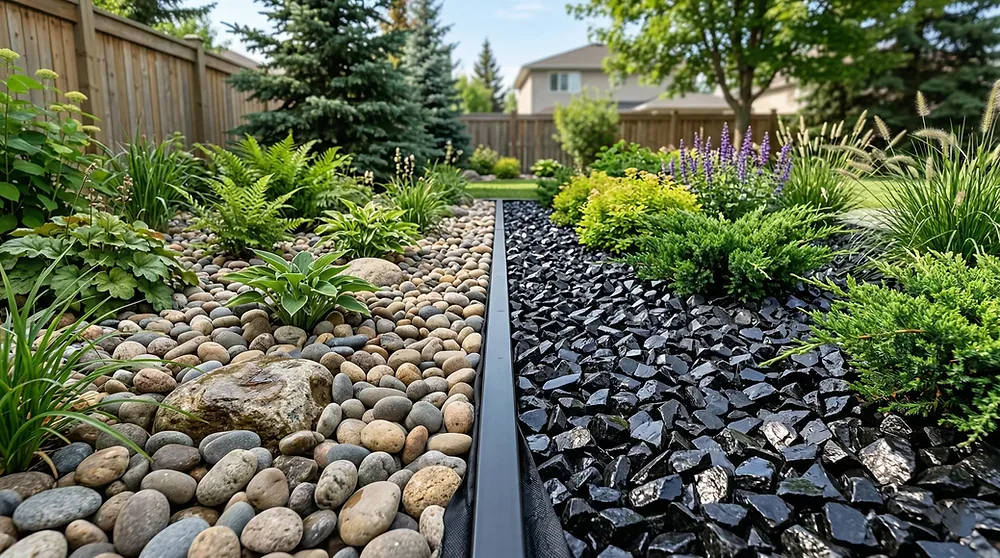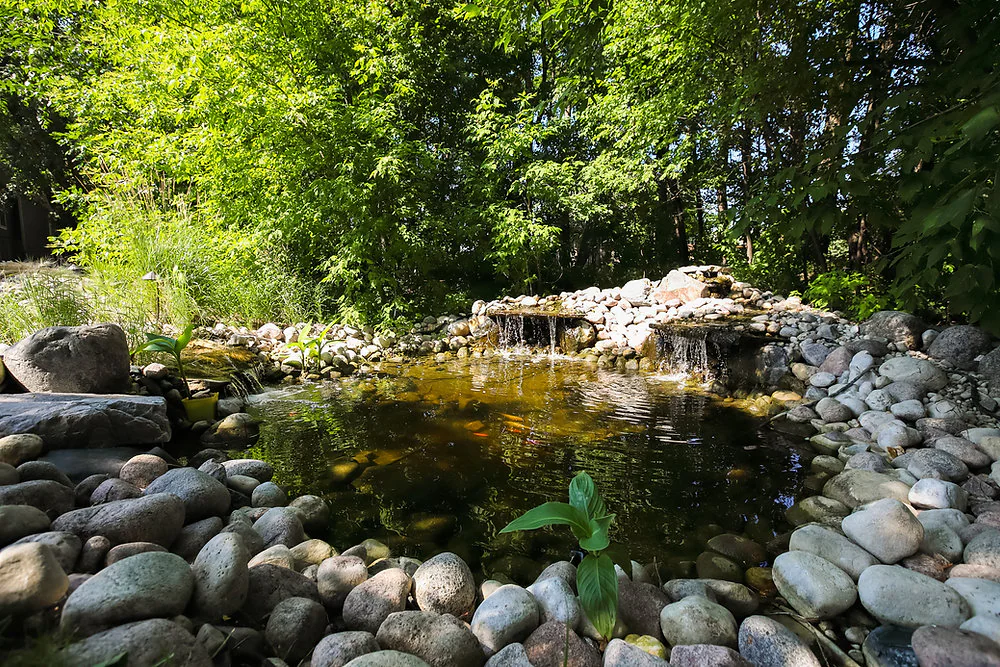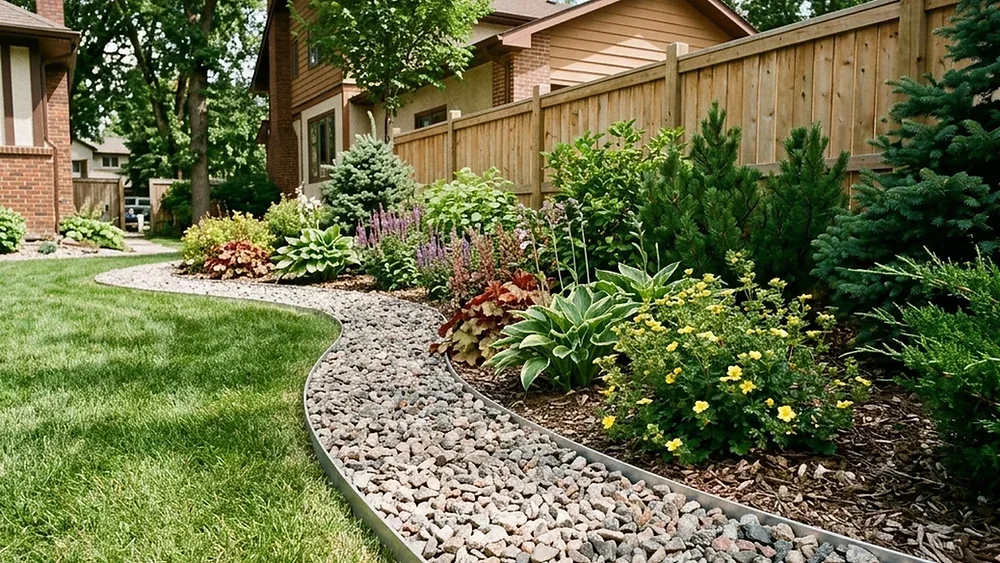
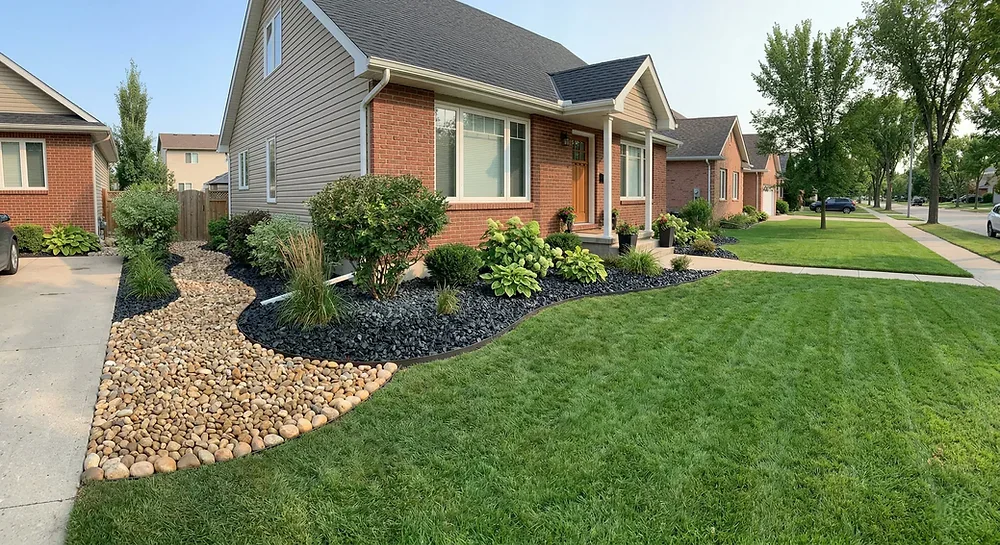
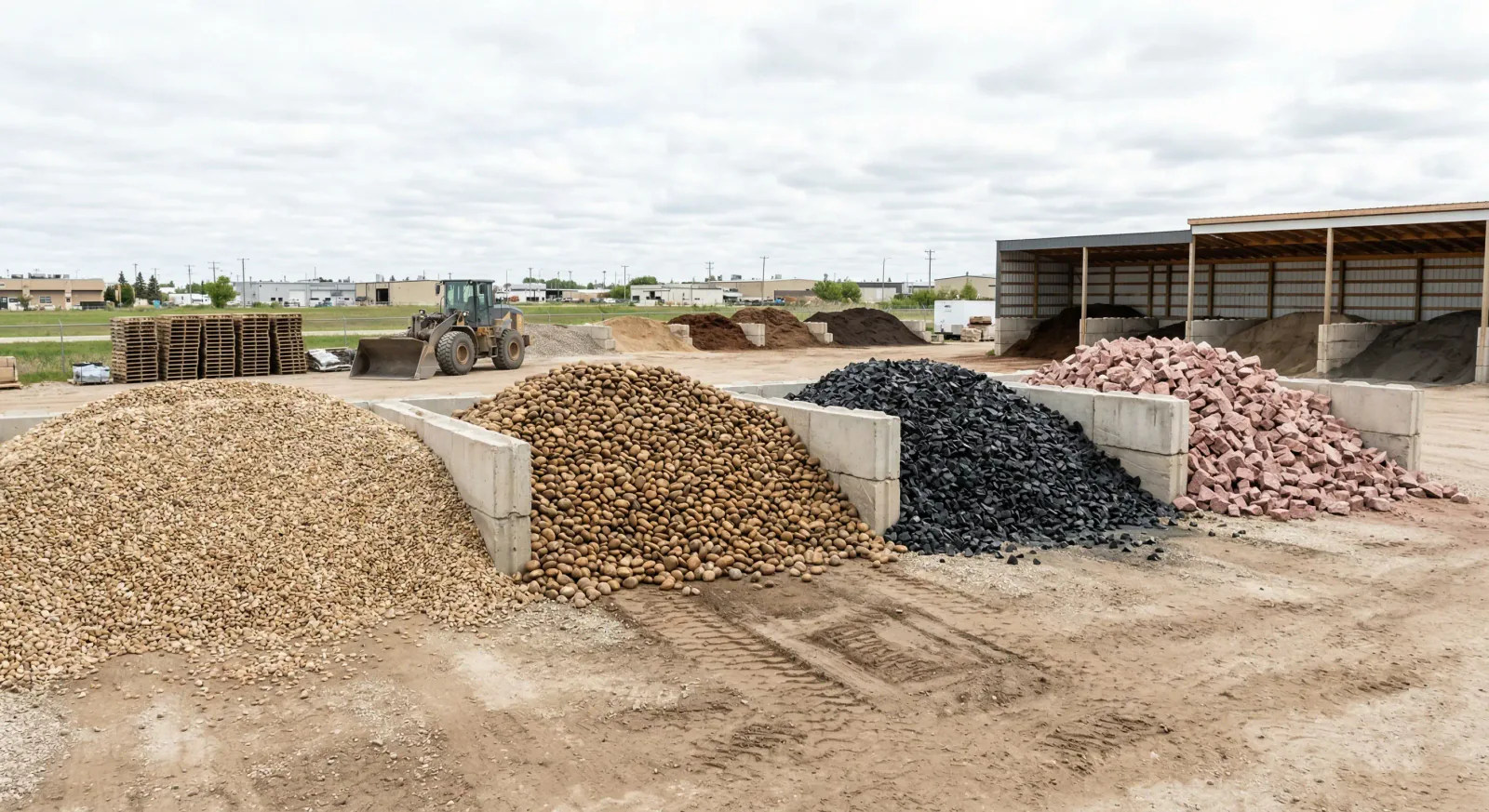
- Ditchfield carries pea gravel, ¾” riverstone, 2″ riverstone, and multiple granite options in black and pink. Browse current Riverstone sizes for beds, borders, and dry-creek features.
- Stone is a permanent, low-maintenance alternative to organic mulch — it doesn’t decompose or need annual replacement.
- Coverage formula: Length (ft) × Width (ft) × Depth (in) ÷ 324 = cubic yards
- Matching stone size and type to the application is what separates a polished result from a rough one.
- Order online or request delivery at ditchfieldsoils.ca
Not Sure Which Stone to Pick? Start Here.
There are a lot of options in the decorative stone range. If you just want a fast answer, here’s the short version:
- Natural, warm-toned garden beds: go with ¾” riverstone
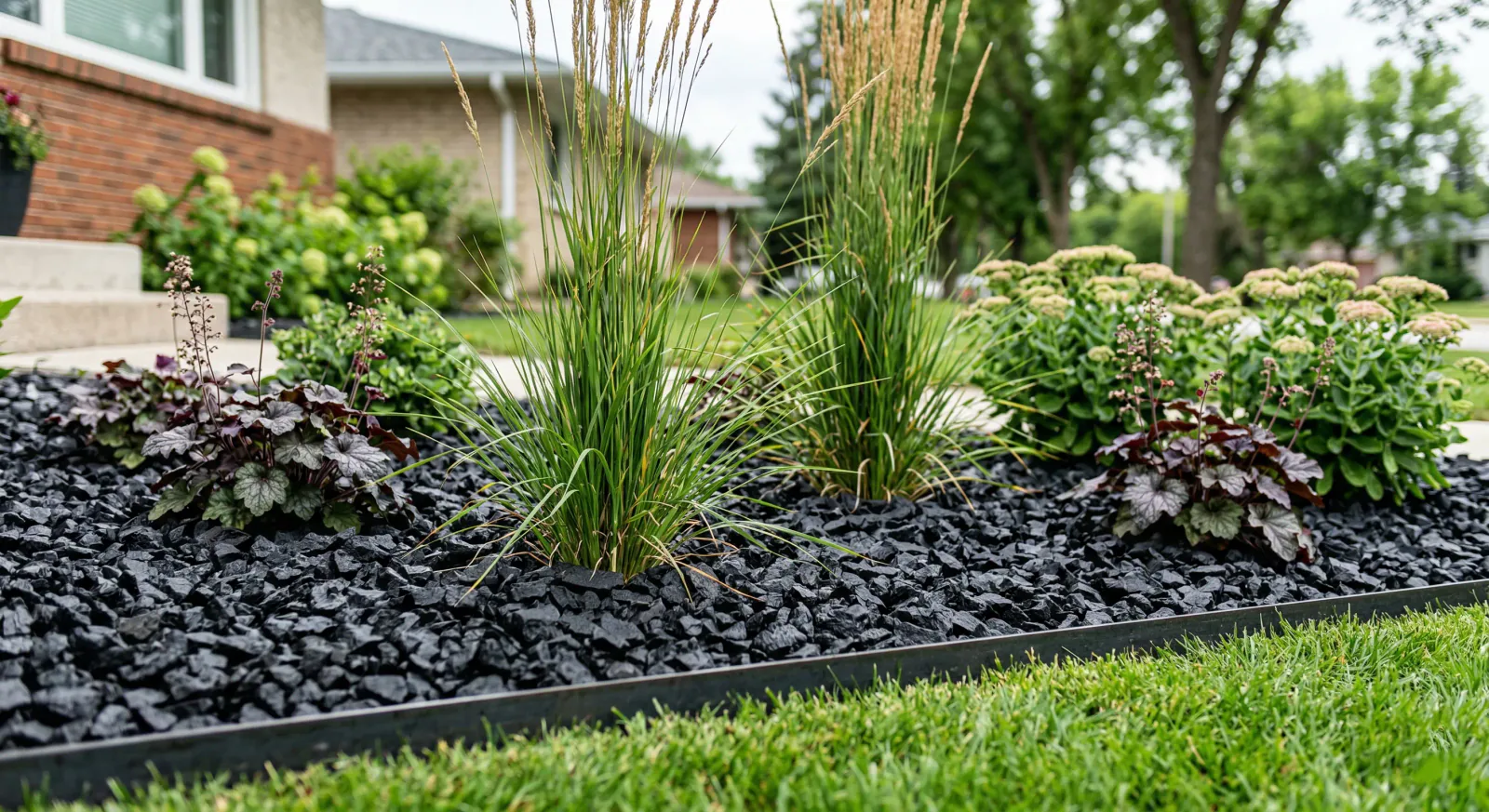
- Modern, high-contrast beds or edging: go with 1.5″ or ¾” black granite
- Kids’ play areas or soft walking paths: go with pea gravel
- Drainage channels, dry creek beds, or French drain surround: go with 2″ riverstone or drainage gravel
- Driveway edging or compacted pathways: go with ¼” or ¾” black granite
- Bold accent borders or erosion control on slopes: go with 4–6″ black granite
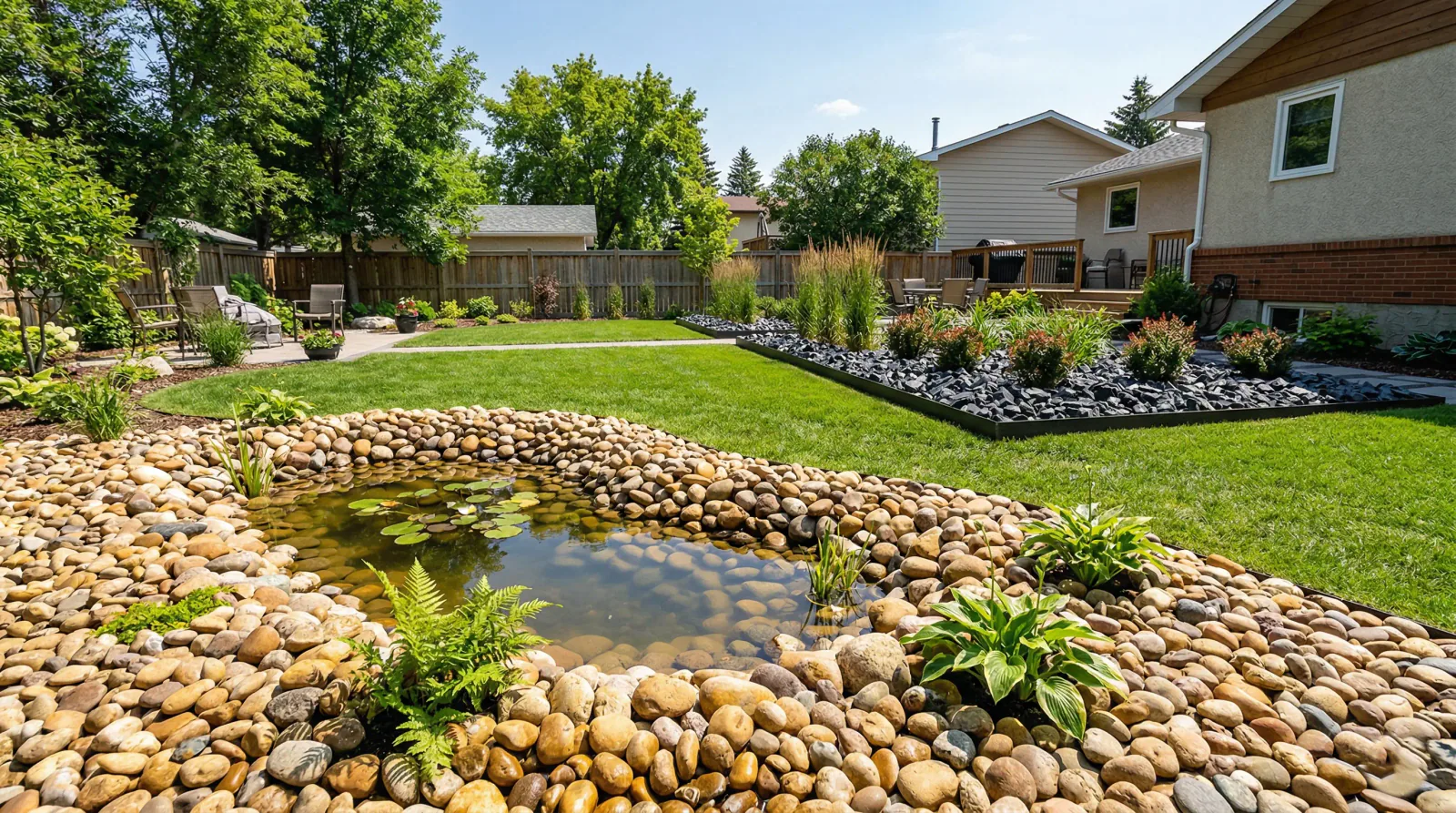
- Water features or naturalistic focal points: go with riverstone boulders
Why Decorative Stone Instead of Mulch?
Both mulch and decorative stone cover bare soil, reduce weeds, and give beds a finished look. The difference is longevity and maintenance. Organic mulch breaks down over one to three years and needs to be topped up regularly. Decorative stone doesn’t decompose. It stays in place, holds its colour, and keeps working without annual replacement.
The tradeoff is that stone doesn’t improve soil health the way organic mulch does. For beds where soil amendment is a priority, mulch is the better choice. For beds where low maintenance and visual consistency matter more, stone wins. Many Winnipeg yards use both strategically.
Stone also handles Winnipeg’s freeze-thaw cycles well. It doesn’t shift significantly with frost movement, doesn’t get matted down under snow load, and looks presentable from the first warm day of spring without any cleanup required.
The Product Line: What Ditchfield Carries
Pea Gravel (⅜” Riverstone)
Small, smooth, and rounded. The softest-feeling stone underfoot — natural choice for children’s play areas, casual walking paths, and naturalistic ground cover. Works best in contained areas with edging.
¾” Riverstone
The most versatile size in the riverstone range. Large enough to stay put without edging, small enough to fill gaps evenly. Warm brown tones work with almost any landscape style.
2″ Riverstone
Larger, heavier, and more dramatic. Well-suited for framing accent areas, lining foundation beds, directing water flow in drainage channels, and creating visual weight in garden designs.
1.5″ Black Granite
Angular, bold, and consistent in colour. Creates strong visual contrast against lawns, light pavers, and green plants. The angular shape packs tightly — practical for pathways and driveway edging under foot traffic.
¾” Black Granite
Medium-sized black granite. Works well for decorative edging, ground cover in high-contrast designs, and drainage beds where both appearance and permeability matter.
¼” Black Granite
Fine-crushed black granite with angular edges. Compacts well — suitable for pathways and compacted surface applications where you want a firm, dark-coloured surface rather than a loose decorative one.
4–6″ Black Granite
Large-format granite for bold applications. Retaining wall tops, dramatic garden edging, erosion control on slopes, and statement borders where size and weight are part of the design intention.
1.5″ Pink Granite
The warm-toned option in the granite range. Softer, more natural-feeling colour palette than black granite. Works well in traditional garden designs, around flower beds, and anywhere a warmer colour palette suits the planting scheme.
Riverstone & Granite Boulders
Individual boulders as focal points rather than ground cover. Riverstone boulders suit naturalistic and water feature designs. Black granite boulders suit modern landscapes. Pricing varies by size.
Which Stone for Which Application?
| Application | Recommended Product | Why |
|---|---|---|
| Garden bed ground cover | ¾” Riverstone or 1.5″ Black Granite | Good coverage, stays in place, visually clean |
| Children’s play area / soft pathway | Pea Gravel | Soft underfoot, easy to walk on |
| Modern low-maintenance beds | 1.5″ or ¾” Black Granite | High contrast, bold, zero maintenance |
| Drainage channel / dry creek bed | 2″ Riverstone or Drainage Gravel | Size and permeability direct water flow |
| Driveway edging/pathway surface | ¼” or ¾” Black Granite | Angular shape packs and holds under traffic |
| Foundation border/accent area | 2″ Riverstone or 4–6″ Black Granite | Visual weight, stays put, frames the house |
| Water feature surround | Riverstone Boulders or 2″ Riverstone | Natural look, complements water |
| Retaining wall top/erosion control | 4–6″ Black Granite | Mass and angular lock resist movement |
How Much Do You Need?
| Bed Area | At 2 Inches | At 3 Inches |
|---|---|---|
| 50 sq ft | 0.31 cu yd | 0.46 cu yd |
| 100 sq ft | 0.62 cu yd | 0.93 cu yd |
| 200 sq ft | 1.23 cu yd | 1.85 cu yd |
| 400 sq ft | 2.47 cu yd | 3.70 cu yd |
One Practical Note on Landscape Fabric
Unlike mulch, decorative stone works well with landscape fabric underneath. Because stone doesn’t decompose into a soil layer on top of the fabric, the fabric retains its effectiveness much longer under stone than under organic mulch. For beds where weed suppression is a high priority, and the planting is already established, installing landscape fabric before applying stone is worth doing.
Stone as Part of a Larger Landscape Project
Decorative stone isn’t just a standalone material order. It plays a role in most full landscape builds — as ground cover in garden beds, as drainage aggregate around weeping tile, as the surround for water features, and as edging material that defines the transition between hardscape and planted areas.
When Lawn N Order designs and builds a complete backyard, stone selection is part of the design conversation from the start. If you’re planning a larger project, the landscape design page explains how that process works. For water features specifically, decorative stone is almost always part of the installation — see the water features page for examples.
FAQ: Decorative Stone in Winnipeg
Does decorative stone hold up through Winnipeg winters?
Yes. Stone doesn’t degrade with freeze-thaw cycles the way organic materials do. It may shift slightly in areas with significant frost heave, but generally it performs better through Winnipeg winters than mulch. No annual replacement, no spring cleanup beyond a light raking if needed.
Can I mix stone types in one yard?
Yes, and many Winnipeg properties do. A common approach is riverstone in the naturalistic back garden and black granite for the modern front beds or driveway edging. Consistency within each zone looks intentional. Mixing stone types within a single bed tends to look accidental.
Is stone better than mulch for weed control?
With landscape fabric underneath, stone provides better long-term weed control than mulch. Without fabric, both perform similarly in the short term. Stone is harder to weed through than mulch if something does come up — worth knowing before you choose.
Order Your Stone
Browse and order at ditchfieldsoils.ca. If you’re comparing stone against mulch for specific beds, our wood mulch guide covers the mulch options and helps with the decision.