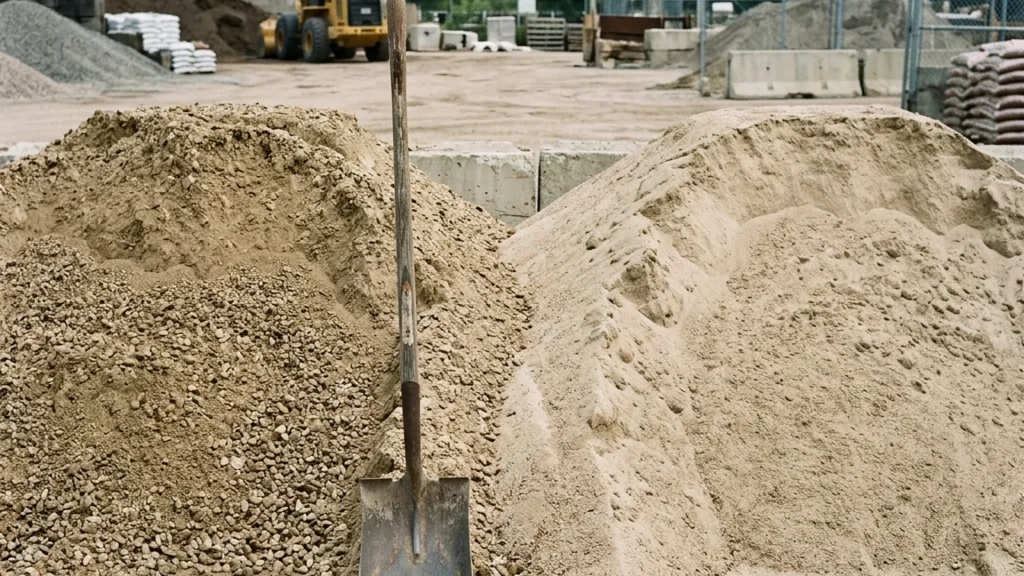
- Ditchfield stocks two sand products: Coarse Sand and Fine Sand. The right choice depends on whether your project needs drainage, compaction, or a soft fill.
- Coarse sand is the correct choice for drainage applications and backfill; concrete work and paver bedding call for washed concrete sand specifically, which may or may not be the same product Ditchfield stocks as Coarse Sand: confirm before ordering for those two uses.
- Fine sand suits applications where a smooth, soft texture matters more than drainage or load-bearing compaction, such as sandbox fill and some levelling or jointing uses
- The paver bedding layer should use washed concrete sand specifically, consistent with our screenings and stone dust guide: this post doesn’t re-cover base construction in detail.
- Confirm current stock and pricing on the Sand product page before ordering; this guide is a selection comparison, not a price reference.
Two Sand Products, Two Different Jobs
Sand looks like one material from a distance, but the particle size and shape differences between coarse and fine sand change how each performs once it’s actually doing a job in your yard. Ditchfield currently stocks two products for this: Coarse Sand and Fine Sand. Picking the right one for your specific application is mostly a question of what the sand needs to do once it’s in place: drain water, compact into a stable base, or simply fill a space softly.
Coarse Sand: Structure and Drainage
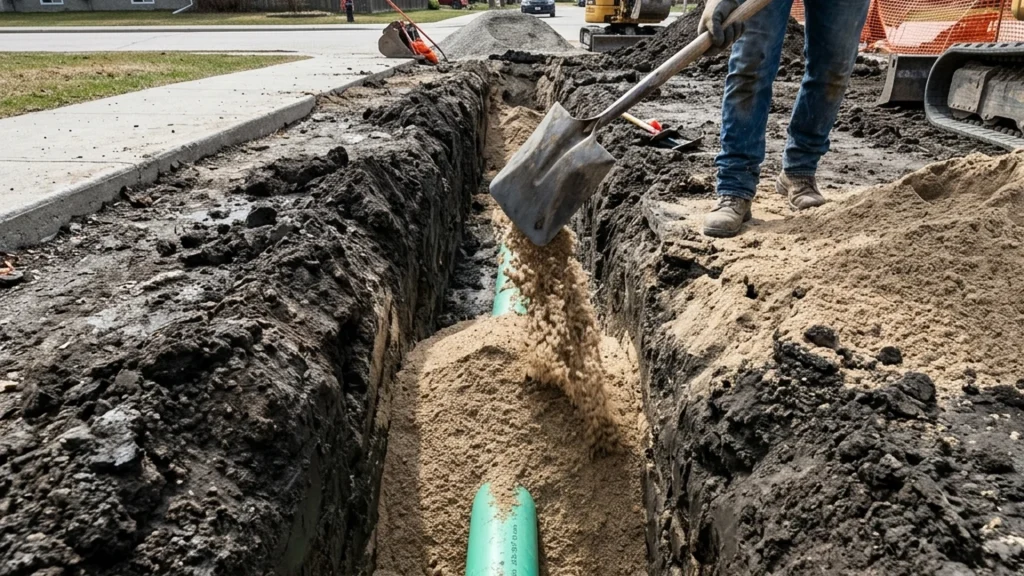
Coarse sand has larger, more angular particles than fine sand. That particle size and shape are what give it two properties that matter for construction applications: it compacts into a stable, load-bearing layer, and it drains water through itself rather than holding it.
Concrete Work
Concrete mixing calls for a specific washed, graded sand product (commonly specified to ASTM C33), not simply any coarse sand, since fines content and particle grading directly affect the strength and finish of the cured concrete. Whether Ditchfield’s Coarse Sand product meets this specification is worth confirming directly with the yard before ordering for a concrete application. For any concrete project, confirm with your concrete supplier or contractor that the specific sand grade matches what the mix design calls for.
Drainage Applications
Coarse sand’s ability to let water pass through it rather than holding it makes it useful in drainage contexts: as a component in a French drain system, around drain tile, or in other applications where the goal is moving water through the material rather than retaining it. Coarse sand is not a substitute for the clear stone or drain rock used behind retaining walls, which is a coarser aggregate again; for that specific application, confirm the correct product for your project.
Backfill
Coarse sand is a common backfill choice around underground utilities, pipes, and similar applications where a stable, well-draining material is preferable to native clay, which in Winnipeg’s Red River gumbo conditions holds water and compacts poorly around buried infrastructure.
Paver Bedding
The bedding course directly under interlocking pavers, the setting layer pavers are levelled into before compaction, calls for washed concrete sand specifically, a washed and graded product rather than any general coarse sand, since fines content in the setting layer can affect long-term paver stability. This is consistent with our screenings and stone dust guide, which covers the full base and bedding system for paver installations, including why the compacted sub-base uses limestone screenings while the thin setting layer above it uses washed concrete sand. Confirm with the Ditchfield yard whether the Coarse Sand product stocked is this washed concrete sand grade before using it for a paver bedding course; this guide won’t repeat the full base construction detail; see that post for the complete breakdown.
Fine Sand: Soft Fill and Smooth Texture
Fine sand has smaller, generally more rounded particles. It doesn’t compact into a load-bearing structural layer the way coarse sand does, and it doesn’t drain as freely. What it offers instead is a soft, smooth texture that suits applications where those coarse-sand structural properties aren’t what the project needs.
Sandboxes
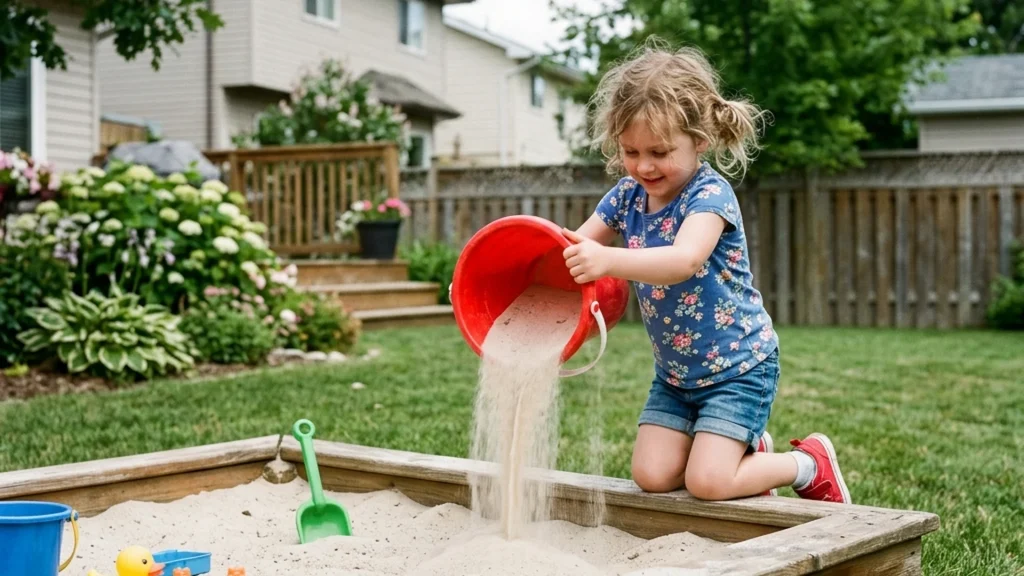
Fine sand is the standard choice for a children’s sandbox, where the priority is a soft, comfortable texture for play rather than compaction or drainage performance. Coarse sand’s larger, more angular particles are less comfortable for this use and less suited to the kind of moulding and shaping that makes a sandbox functional for play.
Levelling and Jointing Applications
Some levelling and joint-filling applications benefit from fine sand’s smoother texture and easier working properties, though for structural paver joints specifically, polymeric sand, a different product formulated with a binding agent, is generally the correct choice rather than a general fine sand product.
Confirm before ordering: the ASTM C33 concrete specification and the washed concrete sand grade for paver bedding are two applications where the general Coarse Sand product may or may not be the right match. A two-minute call to 204-889-6268 before a bulk order avoids using the wrong grade for a structural application.
Quick Reference: Which Sand for Which Job
| Application | Right Product | Why |
|---|---|---|
| Concrete mixing | Washed concrete sand | Structural aggregate component; drainage and strength properties |
| Drainage applications | Coarse sand | Drains rather than holds water |
| Backfill around utilities | Coarse sand | Stable, well-draining alternative to native clay |
| Paver bedding course | Washed concrete sand | Supports even paver setting; confirm this matches Ditchfield’s Coarse Sand product; see screenings guide for full base system |
| Sandbox fill | Fine sand | Soft, comfortable texture for play |
| General levelling / fill | Fine sand | Smoother working texture where drainage isn’t the priority |
Estimating Quantity
Sand quantity is calculated the same way as other bulk materials: length times width times depth (in inches) divided by 324 gives cubic yards.
For a paver bedding course, plan on roughly 1 inch of washed concrete sand depth before compaction and screeding. For a sandbox, depth depends on the structure, but 6 to 8 inches of fine sand is a common residential fill depth. Call 204-889-6268 if you’d like help confirming quantity for your specific project.
Pickup vs Delivery
Both coarse and fine sand are available for pickup at 2929 Sturgeon Road or delivery across Winnipeg. For smaller quantities, such as a single sandbox fill, pickup in a truck bed or trailer is often the more practical option. For larger volumes, such as backfill for a significant utility trench or bedding for a large patio, delivery is generally more efficient.
FAQ: Fine Sand vs Coarse Sand in Winnipeg
Can I use coarse sand for a sandbox if that’s what I have on hand?
It will technically fill the space, but it won’t provide the same soft, comfortable texture fine sand does, and the larger, more angular particles are less pleasant for children’s play and less suited to moulding and shaping. If the sandbox is the primary use, fine sand is worth sourcing specifically rather than substituting coarse sand out of convenience.
Is coarse sand the same as the sand used in playgrounds?
Playground sand specifications sometimes call for a specific washed and certified play-sand product depending on the facility and applicable safety standards, which may differ from either the coarse or fine sand stocked for general construction and residential use. For a commercial or public playground application, confirm the specific sand specification required before ordering, rather than assuming either general product applies.
Does the sand grade matter for a concrete project, or is any coarse sand fine?
It matters. Concrete mix designs specify a particular sand gradation and cleanliness, and using a sand product that doesn’t match can affect the cured strength and finish of the concrete. Confirm with your concrete supplier or contractor that the specific coarse sand product matches what your project’s mix design requires before ordering in bulk.
Order Sand at Ditchfield
Ditchfield stocks Coarse Sand and Fine Sand for pickup and delivery across Winnipeg. Confirm current stock, pricing, and quantity on the Sand product page, or call 204-889-6268 to discuss your specific project. Pickup at 2929 Sturgeon Road or delivery across Winnipeg.
Order Sand Online
Call 204-889-6268