- Topsoil is mineral soil: the right base material for large-volume applications like lawn installation, grading, and structural fill
- Compost is decomposed organic matter: not a standalone soil product, but the amendment that improves everything it is mixed into
- Four-Way Mix is a blended product combining topsoil, peat, compost, and sand: designed for direct planting where roots live in the imported material
- The most common mistake is using topsoil alone for garden beds, or compost alone as a planting medium: each product has its role
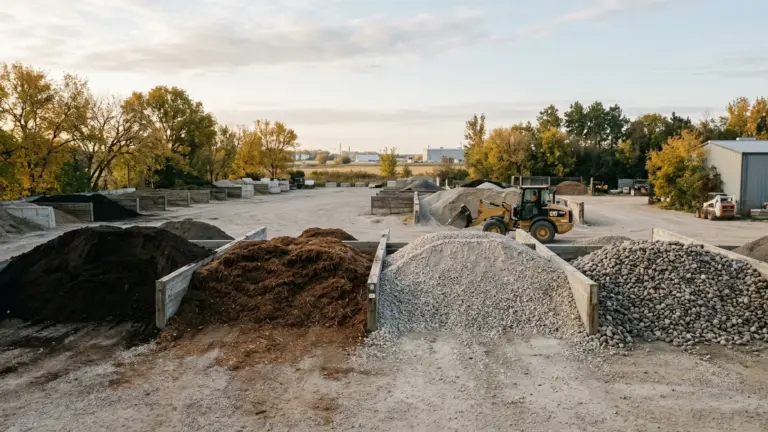
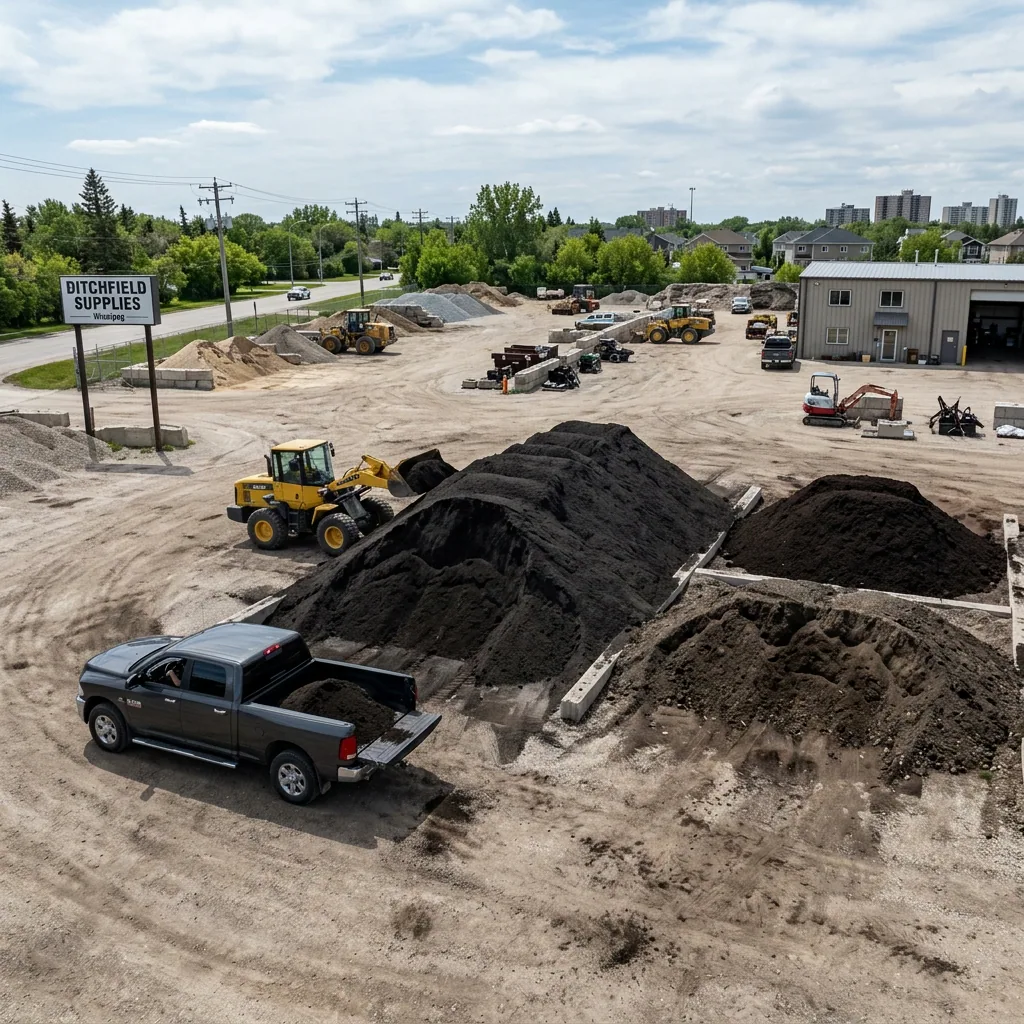
- Ditchfield Supplies carries all three products in bulk for pickup at 2929 Sturgeon Road or delivery across Winnipeg
The Question We Answer More Than Any Other
A customer calls or comes into the yard. They want to build a garden bed, fix a lawn, or top up a planting area. They know they need some kind of soil. What they are not sure about is whether they need topsoil, compost, or one of the blend products — and what the difference actually is.
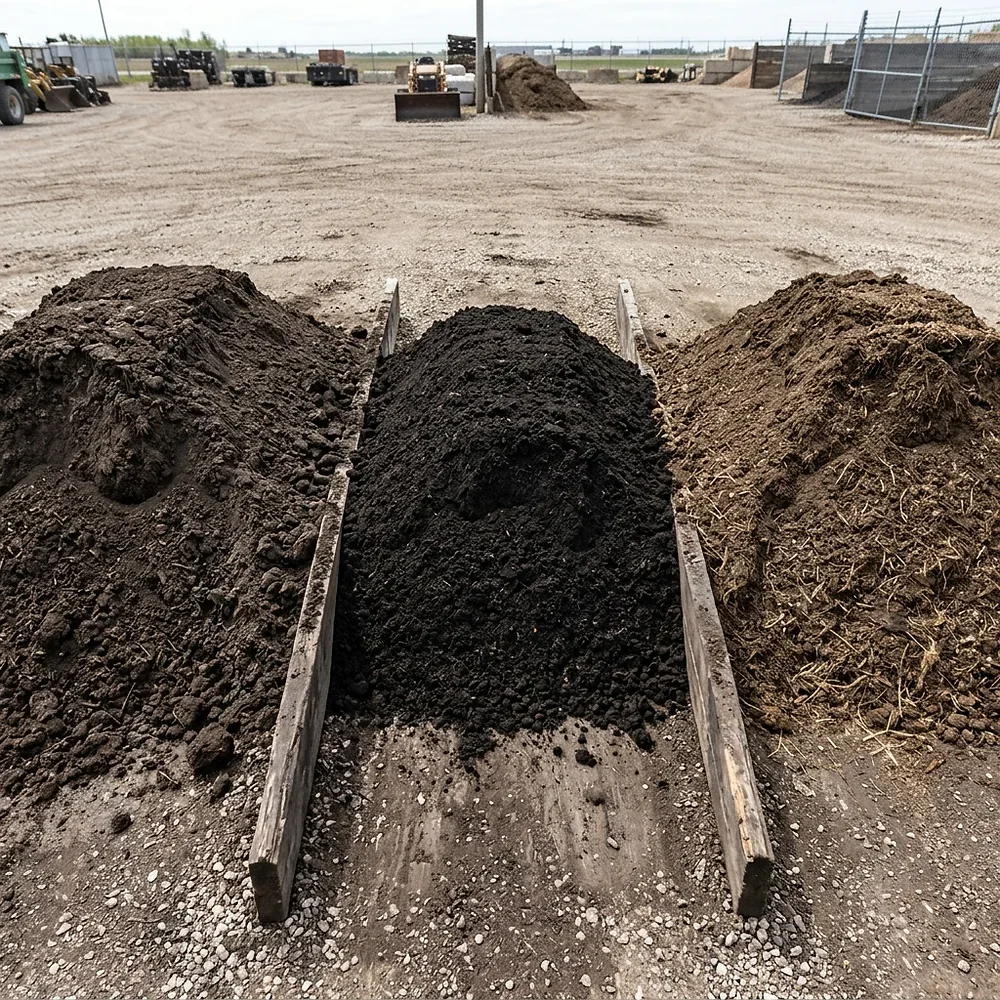
It is a reasonable question. At a glance, all three products look like dirt. They are all sold by the cubic yard. They all have legitimate landscaping uses. The confusion is also expensive when it leads to the wrong product choice. Topsoil used as a planting medium for a vegetable garden underperforms badly. Compost used as a volume fill product is cost-ineffective and does not provide the structural support needed. 4-way mix used as a large-volume lawn base costs significantly more than it needs to.
Each product has a specific job. Use it for that job, and it performs. Use it for the wrong job,b and you are either wasting money or setting up a disappointment.
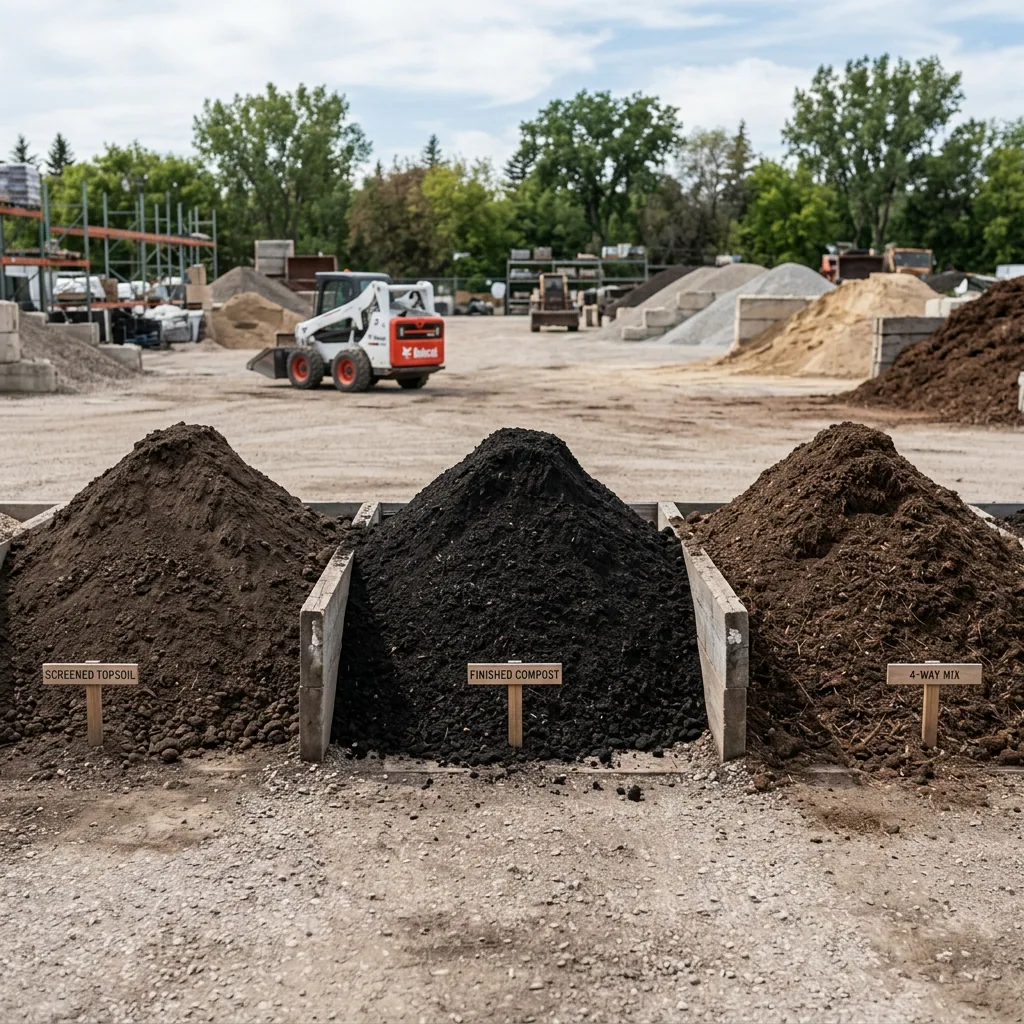
Topsoil: What It Is and What It Is For
Product Definition
Screened Topsoil
Topsoil is the upper layer of native mineral soil, screened to remove rocks, roots, clumps, and debris. It is primarily mineral particles: sand, silt, and clay in varying proportions. Screened topsoil has some baseline organic matter from the original soil profile, but not much. It does not have the drainage properties, aeration, or fertility of a product specifically designed for planting. In Winnipeg’s case, screened topsoil tends toward clay-heavy, which compounds the drainage and compaction issues of the native soil rather than solving them.
Use topsoil for:
- New lawn installation: the base layer that sod or seed roots into, applied at 3 to 4 inches over existing grade
- Grading corrections: filling low spots, building up grade around foundations, raising elevation over large areas
- Structural fill: anywhere you need volume at reasonable cost, and the finished surface will be covered by sod, hardscape, or a capstone layer of better soil
- Backfill behind retaining walls: where structural fill is the priority and planting is not happening directly in the material
Planted directly into topsoil without amendment, most vegetables and perennials will survive but not thrive. The roots hit compaction and drainage limitations that restrict growth and reduce yield.
Compost: What It Is and What It Is For
Product Definition
Finished Compost
Compost is fully decomposed organic matter: yard waste, food scraps, manure, and other organic materials broken down by microbial activity into a stable, humus-rich material. Good finished compost is dark brown, crumbly, earthy-smelling, and largely uniform in texture. It is not a soil product on its own; it is a soil amendment — meaning its primary role is to improve the properties of whatever soil it is mixed into.
Use compost for:
- Amendment mixed into existing garden beds: improves drainage in clay, adds organic matter, feeds microbial life, and increases fertility
- Top dressing for lawns: a thin annual application of compost worked into the surface improves clay-heavy Winnipeg lawns significantly over time
- Mixing with topsoil to create a planting medium: the standard ratio is 20 to 30 percent compost by volume
- Mulching around trees and shrubs: applied 2 to 3 inches deep, compost slowly feeds the root zone while suppressing weeds
Compost should not be used as a standalone volume fill product — it is too expensive per cubic yard for large-volume applications, compresses significantly as it continues to break down, and does not provide the mineral structure needed for stable grade support. Compost applied too early in spring, before soil temperatures rise above about 10 degrees Celsius, does not integrate effectively; in Winnipeg, mid-May is the right window for compost application to actively growing beds.
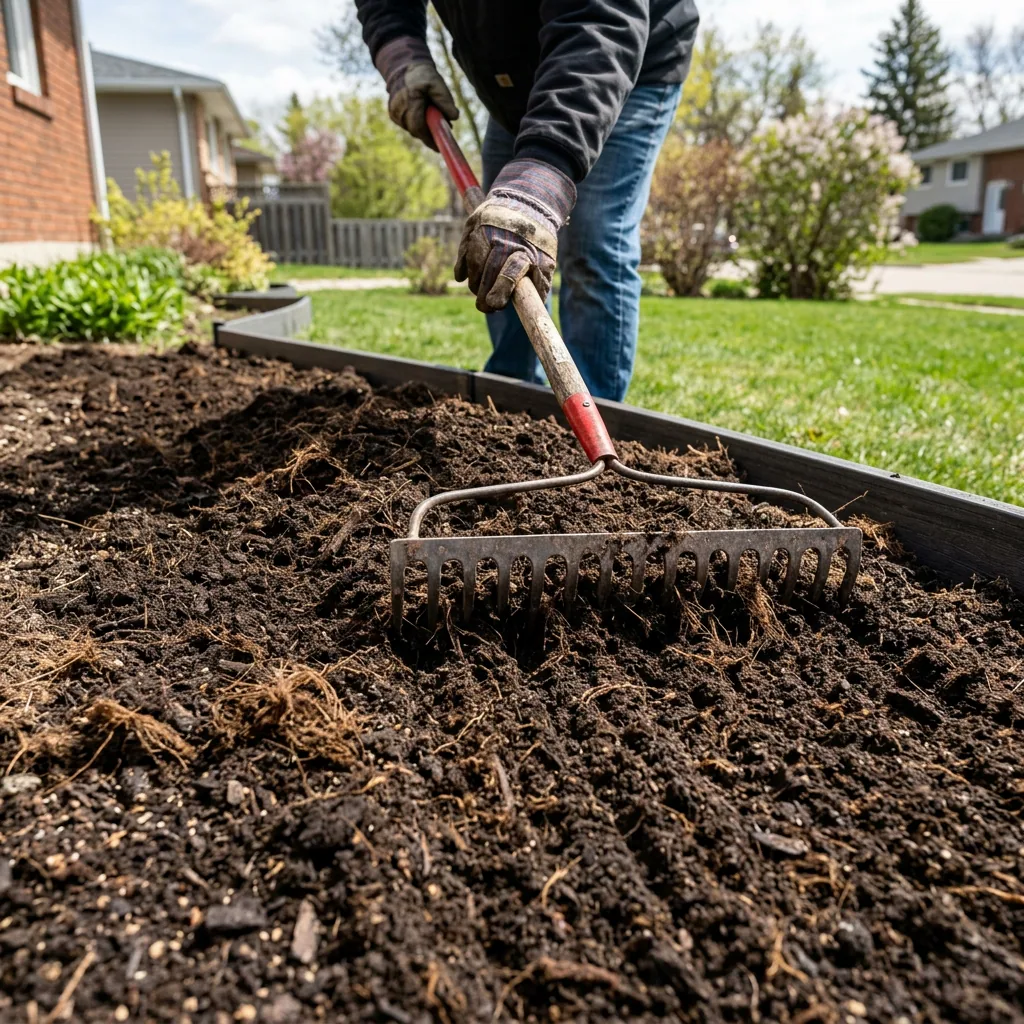
4-Way Mix: What It Is and What It Is For
Product Definition
4-Way Blend
A 4-way mix is a manufactured blend of four components. Each contributes something specific to the finished product:
| Component | What It Contributes |
|---|---|
| Screened topsoil | Mineral base, structural weight, trace nutrients |
| Peat moss | Water retention, aeration, opens heavy clay structure |
| Compost | Active nutrients, microbial life, organic matter for plant uptake |
| Sand | Drainage improvement, prevents compaction over time |
The result is a product that drains better than straight topsoil, holds moisture better than straight sand, feeds plants through its organic component, and provides enough mineral structure to stay stable. It is designed to go directly into planting beds where roots live in the imported material from day one.
Use 4-way mix for:
- New garden beds: direct planting medium for perennials, annuals, and shrubs
- Vegetable gardens: the fertility and drainage of 4-way mix significantly outperforms straight topsoil for food production
- Raised beds: where the entire root zone is contained in the imported material
- New lawn installation over clay: when used as the topsoil layer rather than plain topsoil, 4-way gives sod a better root environment
- Spring bed refreshes: adding 2 to 3 inches of 4-way to existing beds improves organic content and drainage structure
Which Product for Which Job: The Quick Reference
| Application | Right Product | Why |
|---|---|---|
| New lawn installation base layer | Screened topsoil | Volume application; cost-effective; sod adapts well |
| Garden bed (new, planting directly in) | 4-way mix | Immediate drainage, fertility, and structure for roots |
| Vegetable garden | 4-way mix | Fertility and drainage directly affect yield |
| Raised garden beds | 4-way mix | Full root zone in imported material; needs complete profile |
| Grading and filling low spots | Screened topsoil | Structural fill; cost-effective for volume |
| Improving existing garden beds | Compost mixed in | Amends existing soil; don’t replace, improve |
| Lawn topdressing | Thin compost layer | Gradual organic improvement; not a volume application |
| Large-volume backfill | Screened topsoil | Cost-effective; covers structural rather than horticultural need |
| Foundation planting (shrubs) | 4-way mix in planting hole | Root establishment in good medium even if surrounding soil is clay |
The Winnipeg Clay Factor
Critical Step Before Any Soil Import
Winnipeg’s native soil is Red River clay — one of the densest native soils in Canada. When you import any soil product and place it on Winnipeg clay, the two-layer system creates a drainage interface: water moves through the imported material and then hits the clay, which drains slowly. This interface can cause saturation even in well-chosen imported material. The best practice before placing any imported soil: loosen the clay below to 6 to 8 inches with a fork or tiller. This creates a transition zone that roots can penetrate, and water can move through, rather than a hard stop at the native clay surface. This step matters more than which specific product you choose.
FAQ: Compost, Topsoil and 4-Way Mix in Winnipeg
Can I mix compost and topsoil myself instead of buying 4-way mix?
Yes, and for many applications this is a practical approach. A 70/30 blend of screened topsoil and compost by volume performs similarly to a 4-way mix for most garden bed applications. The 4-way mix adds peat and sand to that base, which improves aeration and drainage further. For vegetable gardens and raised beds where growing conditions are a priority, the full 4-way blend is worth the additional cost. For general planting beds, a topsoil-compost blend is a reasonable alternative.
How much of each product do I need?
The standard volume formula: Length (ft) × Width (ft) × Depth (in) ÷ 324 = cubic yards. For garden beds, plan for 6 to 8 inches of 4-way mix. For lawn base layers, plan for 3 to 4 inches of topsoil. Add 10 to 15 percent to calculated volumes for settling and waste. Call 204-889-6268, and the Ditchfield team will help confirm quantities for your specific project.
Is there a difference in quality between bags and bulk?
Bagged products from garden centres are convenient for small applications but cost significantly more per cubic yard than bulk products. Bagged compost and topsoil are also often lower-quality than bulk landscape-grade material: lighter organic content, inconsistent screening, and sometimes more variable moisture. For any project requiring more than a few bags, bulk delivery from a reputable supplier is more cost-effective and typically better quality.
Order at Ditchfield Supplies
All three products are available in bulk at ditchfieldsoils.ca/soil-black-dirt-clean-fill. Pickup at 2929 Sturgeon Road or delivery across Winnipeg. Not sure which product or what quantity? Call 204-889-6268, and we will help you figure it out before you order. For complete garden bed installation including soil preparation and planting, Lawn ‘N’ Order handles full landscaping builds across Winnipeg.
Order at Ditchfield Supplies
Call 204-889-6268