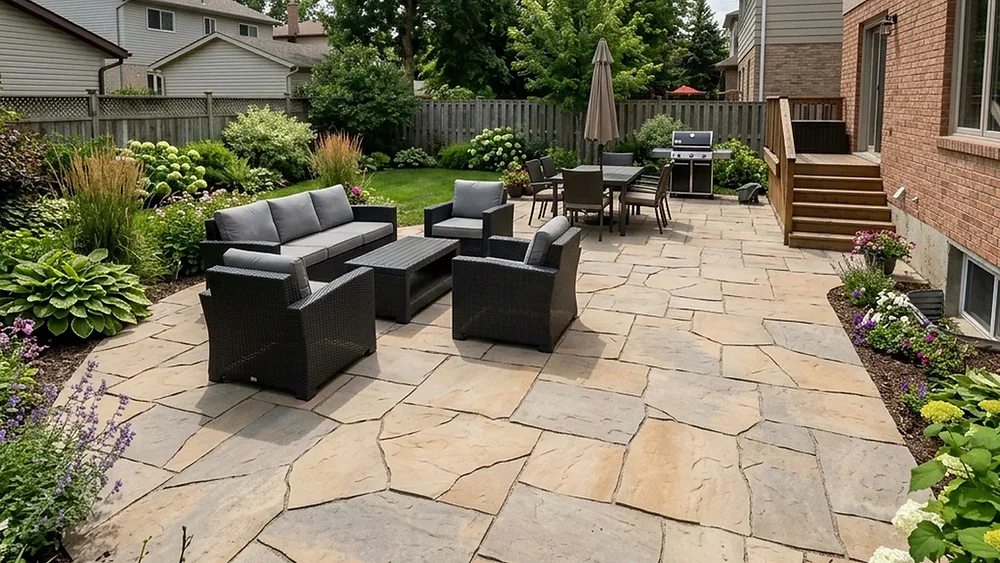
- Polymeric sand is the correct jointing material for interlocking paver installations: it hardens when activated with water, resisting erosion, weed germination, and ant intrusion better than regular sand.
- Winnipeg’s freeze-thaw cycle is the main failure cause for polymeric sand: water trapped in incompletely cured joints expands on freezing and breaks the bond.
- Timing of installation matters: polymeric sand should ideally be installed when temperatures are above 10 degrees Celsius, with a hard minimum of 0 degrees Celsius and no frost forecast during the cure window
- The most common installation mistake is insufficient joint filling before activation: joints must be filled to within 1/8 inch of the paver surface, not partially filled.
- Polymeric sand is not a permanent solution: most manufacturers rate it for 5 to 10 years before joints need refresh in normal conditions; Winnipeg’s climate compresses that timeline.
What Polymeric Sand Is and Why It Replaced Regular Sand
Standard sand-filled paver joints work initially but fail progressively over time. The sand erodes with rain and foot traffic, joints become shallow, and the void space allows weed germination, ant nest construction, and eventually paver movement, as the interlock stability depends on joint material.
Polymeric sand contains binding agents, typically polyurethane- or acrylic-based, that activate when wet and then cure into a flexible, hardened joint. The cured joint resists erosion, suppresses weed germination by eliminating the loose substrate weeds need, and deters ant excavation w, which is a significant problem in Winnipeg pavers. The joint also stabilizes the interlock by keeping pavers from shifting laterally. The tradeoff: polymeric sand requires correct installation to cure properly, and in Winnipeg’s climate, the correct installation window is narrower than in milder markets.
Why Winnipeg’s Freeze-Thaw Cycle Is the Main Failure Factor
Polymeric sand that has not fully cured before the first freeze will fail. The binding agents need a period of warm, dry conditions after activation to complete their cross-linking process. In Winnipeg, this means late September and October installations carry real risk: an early frost in the first week after activation can lock moisture into incompletely cured joints, which then expand on freezing and physically break the bond.
Even fully cured polymeric sand in Winnipeg’s climate experiences more stress than in milder markets. Sixty-plus freeze-thaw cycles per year, combined with the spring moisture surge when snowmelt saturates everything, create conditions that accelerate joint degradation. A polymeric sand installation that would last 8 to 10 years in southern Ontario may need refresh in 5 to 7 years in Winnipeg.
Winnipeg installation window: May through mid-September with confidence. Late September is marginal and requires careful 10-day forecast monitoring. October and onward is not recommended. The cure requires a minimum of 48 hours above 10 degrees Celsius with no frost forecast and no rain for at least 24 hours after activation.
The Correct Installation Process
Joint Preparation
Remove all existing joint material from the paver installation. Old sand, debris, vegetation, and any residue from previous polymeric sand applications must be cleaned out. A leaf blower on low-to-medium setting removes loose debris effectively. A pressure washer removes more stubborn residue but requires the pavers and base to dry completely before polymeric sand application. Check the base stability before proceeding: if any pavers are wobbly, settled, or higher than their neighbours, address these issues now. Levelling work after application requires breaking out the cured joint material and starting over.
Check Weather and Temperature
This is the most important pre-installation check for Winnipeg. Requirements: air temperature ideally above 10 degrees Celsius, with a minimum of 0 degrees Celsius and no frost forecast during the 48-hour cure window. The 10-degree target gives a meaningful safety margin against unexpected cold snaps. No rain forecast for at least 24 hours after activation.
Applying the Sand
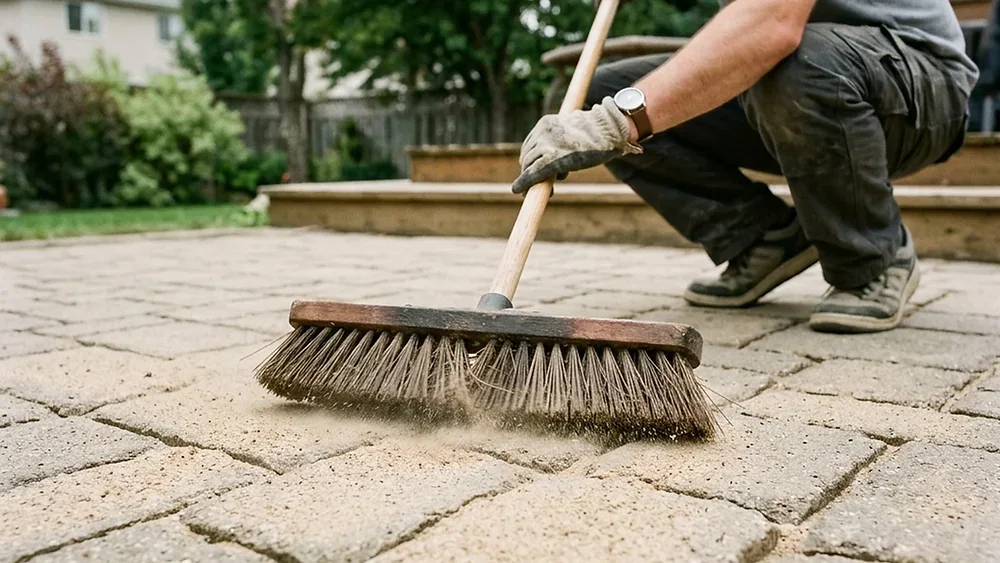
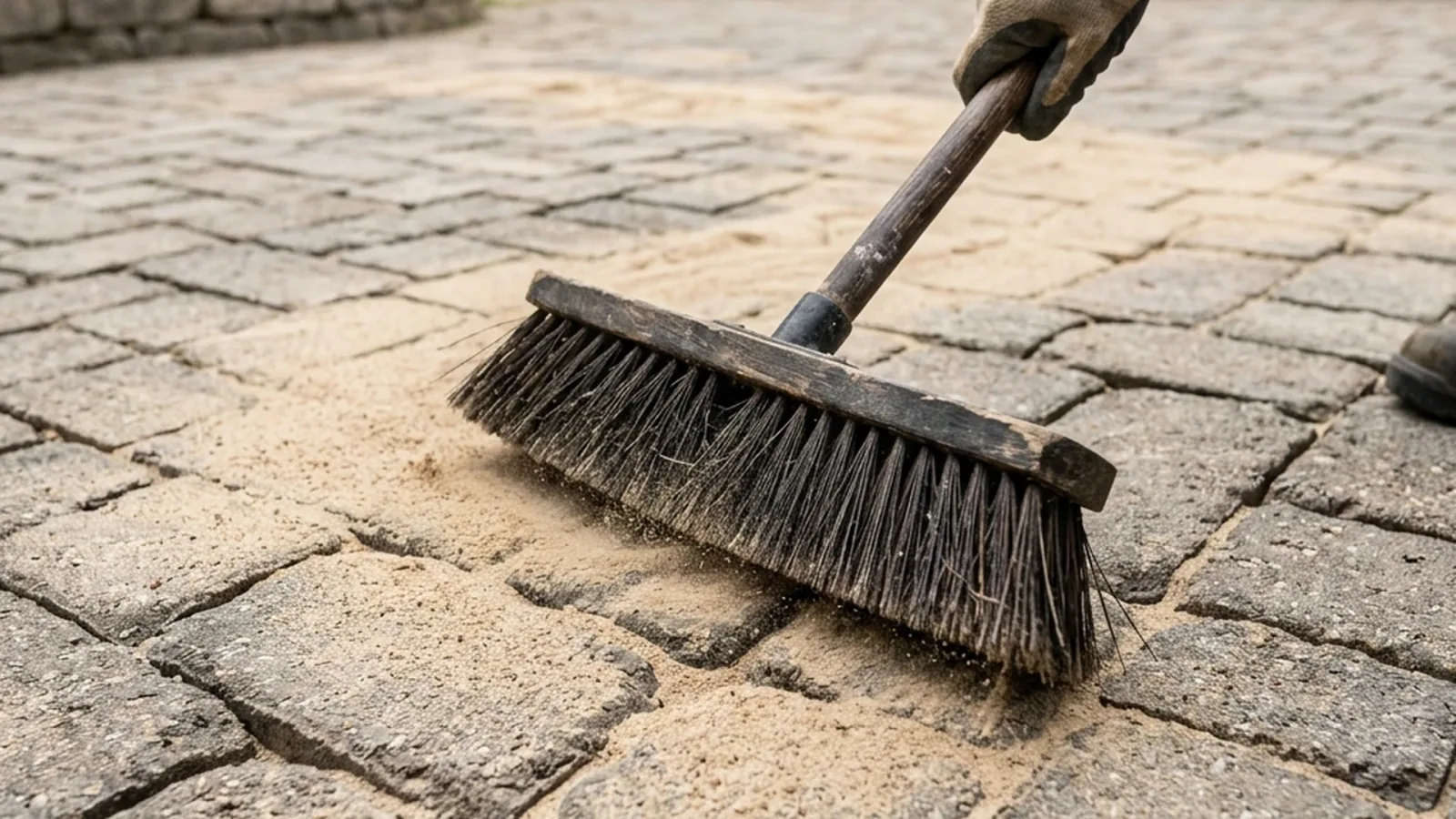
Pour polymeric sand over the paver surface and work it into the joints with a stiff bristle broom using circular motions. Fill joints to within 1/8 inch (approximately 3 mm) of the paver surface. This is the most commonly underestimated step: joints that look filled are often only 60 to 70 percent full when compaction is accounted for. Under-filled joints fail because there is insufficient binder mass to create a stable, weather-resistant joint. Run a plate compactor over the pavers once (protect the paver surface with a rubber pad on the compactor base) to settle the sand into the joints. This step significantly improves joint fill consistency compared to broom work alone.
Remove Surface Residue
Blow off all surface sand from the paver faces before activating with water. Any sand left on the surface when water is applied will bond to the paver surface and create a haze that is difficult to remove. Use a leaf blower in two passes in perpendicular directions. Even thin dust residue will create surface bonding.
Activation
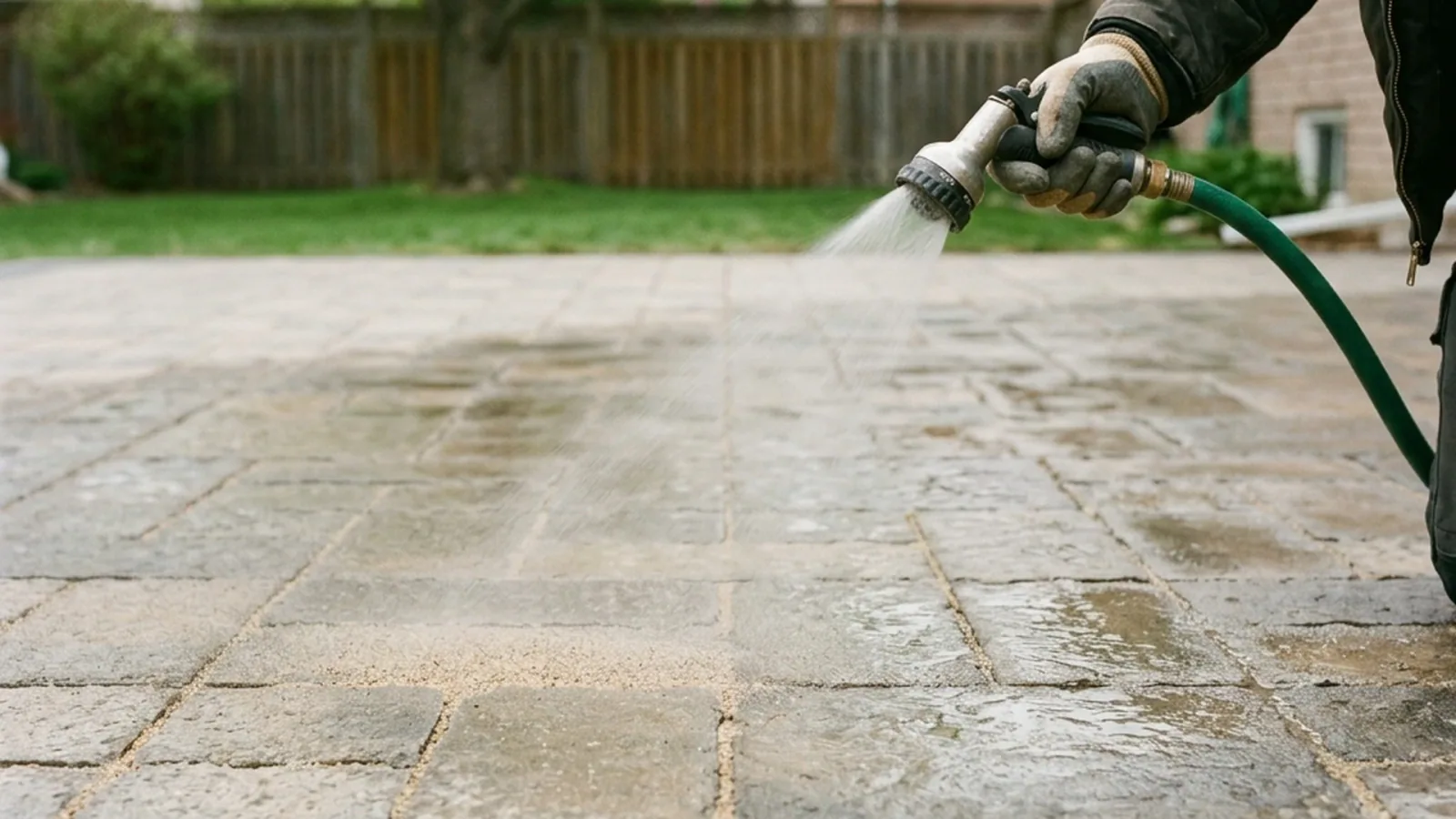
Activate with a gentle mist spray, not a pressure washer or strong hose stream. The goal is thorough wetting of the joint material without displacing it. Move slowly across the surface, keeping the spray angle low. Wet the entire installation uniformly, then do a second pass to ensure all joints are thoroughly saturated. Allow the water to penetrate for 10 to 15 minutes, then do a final light misting pass. Do not walk on the surface or allow traffic for at least 24 hours. The curing process continues for 48 to 72 hours after activation.
Maintenance and Refresh in Winnipeg’s Climate
When Does Polymeric Sand Need to Be Refreshed?
Signs that the polymeric sand joint needs attention: weeds growing in joints (indicates the binder has degraded and organic material has accumulated), pavers shifting or becoming unstable (indicates the joint has eroded or failed), visible erosion channels in joints after rain, or joints that crumble when probed with a finger rather than resisting pressure.
In Winnipeg’s climate, plan on a polymeric sand refresh inspection every 3 to 4 years, with full refresh on a 5 to 8 year cycle for most residential installations. High-traffic areas like front walkways and driveway aprons deteriorate faster than low-traffic patio areas.
Partial joint repair: Individual joints that have failed can be addressed without refreshing the entire installation. Clean out the failed section, blow clear, and apply fresh polymeric sand to that area only, following the same process. The colour match will not be perfect immediately but weathers to a similar appearance over one season.
Choosing the Right Polymeric Sand for Winnipeg
- Choose a product rated for freeze-thaw conditions specifically. Some polymeric sand products are formulated for warmer climates and do not have adequate flexibility for Canada’s temperature range.
- Joint width matters: most polymeric sand products are rated for joints between 1/8 inch and 1.5 inches. Very narrow joints (under 1/8 inch) may not accept polymeric sand effectively. Very wide joints (over 1.5 inches) may need a coarser polymeric jointing compound.
- Colour options: polymeric sand is available in beige, grey, and tan tones. The colour fades somewhat after curing; request a cured colour chip from the supplier rather than judging from the bag.
FAQ: Polymeric Sand in Winnipeg
Can I apply polymeric sand in the fall in Winnipeg?
Yes, but with strict timing requirements. The installation must be completed with enough warm weather remaining for full curing: a minimum of 48 hours above 10 degrees Celsius with no frost after activation. In Winnipeg, mid-September is generally safe. Late September is marginal and requires a careful 10-day forecast review. October installations are not recommended; the risk of frost interrupting the curing process is too high. A failed fall installation requires full removal and reinstallation in spring.
Why did my polymeric sand turn white after the first winter?
Efflorescence, a white salt deposit that migrates to the surface during the freeze-thaw process, is common on polymeric sand and on concrete paving generally. It is a chemical reaction between calcium compounds in the curing agents and moisture, not a sign of product failure. Efflorescence typically weathers off naturally within one or two seasons. An efflorescence cleaner can accelerate removal if appearance is a concern.
My pavers have existing polymeric sand that is failing. Do I need to remove it all before reapplying?
Yes. Applying new polymeric sand over failed polymeric sand does not work because the new material cannot bond properly to the old degraded surface or reach the full joint depth. The existing material must be removed, joints cleaned out, and fresh sand applied to the full depth. This is more labour-intensive than initial application but is the only approach that produces a lasting result.
Order Polymeric Sand at Ditchfield Supplies
Ditchfield carries polymeric sand and paver jointing products suitable for Winnipeg’s climate conditions. For installation of new interlocking paver surfaces requiring proper joint filling as part of the build, Lawn ‘N’ Order installs interlocking patio and walkway systems across Winnipeg.
Order at Ditchfield Supplies
Call 204-889-6268