Quick Takeaways
- Formula: Length (ft) × Width (ft) × Depth (in) ÷ 12 ÷ 27 = cubic yards
- One cubic yard covers approximately 162 square feet at 2 inches deep
- For top layer estimation, 2 inches is the standard default depth
- Small projects (under 0.25 yards) are easier to handle with bags
- Bulk ordering saves money on larger projects
Nothing derails a weekend landscaping project faster than running out of mulch halfway through. Or worse, ordering way too much and watching cubic yards of material sit in your driveway with nowhere to go.
A mulch coverage calculator takes the guesswork out of ordering. With a few simple measurements and basic math, you’ll know exactly how much material you need before placing your order. No more emergency runs to the garden center. No more leftover piles. Just the right amount of mulch for your project.
Free Material Calculator
Enter your project measurements in Ditchfield’s main calculator to estimate the material volume you need.
How to Calculate Mulch Coverage
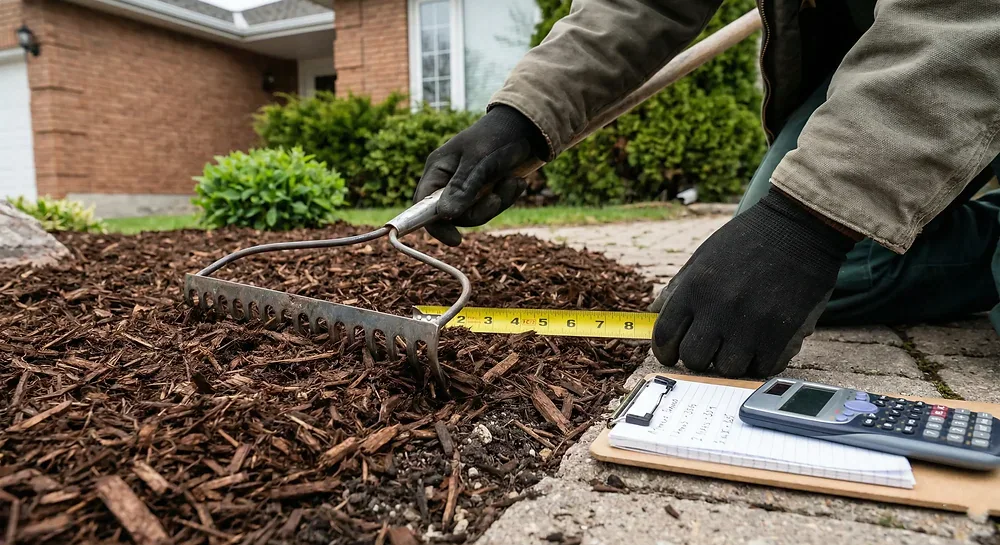
Breaking that down: You multiply length times width to get square footage. Then multiply by depth in inches, divide by 12 to convert to feet, and divide by 27 to convert cubic feet to cubic yards. Mulch is typically sold by the cubic yard for bulk orders.
Step-by-Step Example
Let’s say you have a garden bed that measures 20 feet long by 8 feet wide, and you want 2 inches of fresh mulch:
- Calculate area: 20 × 8 = 160 square feet
- Convert depth to feet: 2 inches ÷ 12 = 0.167 feet
- Calculate cubic feet: 160 × 0.167 = 26.7 cubic feet
- Convert to cubic yards: 26.7 ÷ 27 = 0.99 cubic yards
You’d need approximately 1 cubic yard of mulch for this bed.
Calculating Irregular Shapes
Not every bed is a perfect rectangle. For irregular shapes, break the area into manageable sections. Calculate each section separately, then add the totals together.
For circular beds around trees, measure the diameter and use this formula: Diameter × Diameter × 0.785 = square feet. Then proceed with the depth calculation as normal.
How Much Does One Yard of Mulch Cover?
Coverage per Cubic Yard:
- 1 inch deep: 324 sq ft
- 2 inches deep: 162 sq ft (standard)
- 3 inches deep: 108 sq ft
- 4 inches deep: 81 sq ft
Bagged vs. Bulk: Which to Choose?
For small projects under 0.25 cubic yards, bags are often more practical. Most mulch bags hold about 1 cubic foot (roughly 0.037 cubic yards). You can grab exactly what you need without dealing with bulk delivery.
For anything larger, bulk mulch is more economical. You’ll pay less per cubic yard and avoid the hassle of handling dozens of bags. Bulk delivery also means no trips back and forth to the store.
What Depth of Mulch Do You Need?
Garden Beds: 2-3 Inches
For most garden beds, 2-3 inches of mulch provides optimal benefits. This depth suppresses weeds effectively, retains moisture, and moderates soil temperature without smothering plant roots.
On heavy Manitoba clay soils, 3 inches often performs better for moisture retention. Clay drains slowly, and the extra depth helps regulate soil temperature through Winnipeg’s wide swings while keeping moisture levels more consistent during dry spells.
If you’re topping up existing mulch, you may only need 1-2 inches to refresh the look and maintain coverage. Check what’s already there before adding more.
Tree Rings: 3-4 Inches (Avoid Volcano Mulching)
Trees benefit from a mulched ring extending 3-4 feet from the trunk. Apply 3-4 inches of mulch, but keep it several inches away from the trunk itself. Mulch piled against tree bark holds moisture that promotes rot and disease.
The goal is a doughnut shape, not a volcano. This common mistake kills more trees than people realize.
Pathways: 3-4 Inches
Mulched pathways need enough depth to stay stable underfoot without compacting down to nothing. Start with 3-4 inches and expect some settling over time. You’ll likely need to top up pathways more frequently than static beds.
Common Mulch Calculation Mistakes
Forgetting to Account for Existing Mulch
If you already have mulch in your beds, you don’t need to calculate for full depth. Measure what’s there. If you have 1 inch of old mulch and want 3 inches total, you only need to order enough for 2 inches of coverage.
Measuring Before Bed Prep
Bed edges expand when you re-cut them. Plants get moved or removed. Take your measurements after you’ve finished preparing beds, not before. Otherwise you’ll order based on last year’s layout rather than this year’s actual area.
Not Ordering Extra
Mulch settles, spills, and sometimes disappears into low spots you didn’t account for. If your calculation comes to 2.8 yards, order 3. Running short is more expensive and frustrating than having a small surplus.
Mulch Types and Coverage Considerations
Wood Mulch: Brown, Black, Natural
Dyed and natural wood mulch options all calculate the same way. The colour choice is aesthetic. Brown and black dyed mulches hold their colour longer than natural, but all types provide similar coverage and benefits.
Cedar Bark Chunks
Larger cedar bark chunks have more air space between pieces than finely ground mulch. While the calculation remains the same, chunky mulch may look thinner at the same depth. Some gardeners prefer to add an extra half inch when using coarser materials.
How Texture Affects Settling
Fine mulches compact more than coarse ones. A bed that starts at 3 inches of fine mulch might settle to 2 inches within a few months. Coarser materials maintain their depth better over time. Factor this into your planning if you want to minimize how often you top up.
Using the Ditchfield Mulch Calculator
Skip the math entirely with our online mulch calculator. Enter your length, width, and desired depth. The calculator does the conversion automatically and tells you exactly how many cubic yards you need.
The calculator also suggests the most practical ordering combination. For smaller amounts (under 0.25 yards), it recommends bags. For larger orders, it breaks down the total into full yards, half yards, and bags to minimize waste and maximize value. For example, if you need 1.7 cubic yards, the calculator might suggest ordering 1 yard + 0.5 yard + a few bags rather than 2 full yards.
Frequently Asked Questions
How Many Bags of Mulch Equal One Cubic Yard?
Most standard mulch bags hold about 1 cubic foot. Since there are 27 cubic feet in a cubic yard, you’d need roughly 27 bags to equal one yard of bulk mulch. At that volume, bulk delivery is almost always more economical and saves you the hassle of handling dozens of individual bags.
How Often Should I Replace Mulch?
Most garden beds need a mulch top-up once a year, typically in spring. You usually don’t need to remove the old layer. Just add 1 to 2 inches of fresh mulch on top of what’s already there to restore the look and maintain proper depth. Pathways and high-traffic areas may need a mid-season refresh.
Does Mulch Colour Affect Performance?
Colour is primarily an aesthetic choice. Brown, black, and natural mulches all provide the same moisture retention, weed suppression, and soil insulation. Dyed mulches (brown and black) hold their colour longer than natural wood mulch, which fades to grey over time. The dyes used in commercial mulch are non-toxic and safe for gardens.
Should I Mulch Before or After Planting?
Plant first, then mulch. Spread mulch around your plants after they’re in the ground, keeping it a few inches away from stems and trunks. This prevents moisture from sitting against plant tissue, which can cause rot. Mulching after planting also lets you see exactly where coverage is needed without guessing around future plant locations.
Ready to Order Your Mulch?
At Ditchfield Soils, we offer brown, black, natural, and cedar bark mulches in bulk and bags. Use our online calculator to determine your needs, then order for pickup or delivery across Winnipeg. With over 35 years serving Manitoba gardeners and landscapers, we’ll help you get exactly what your project requires.