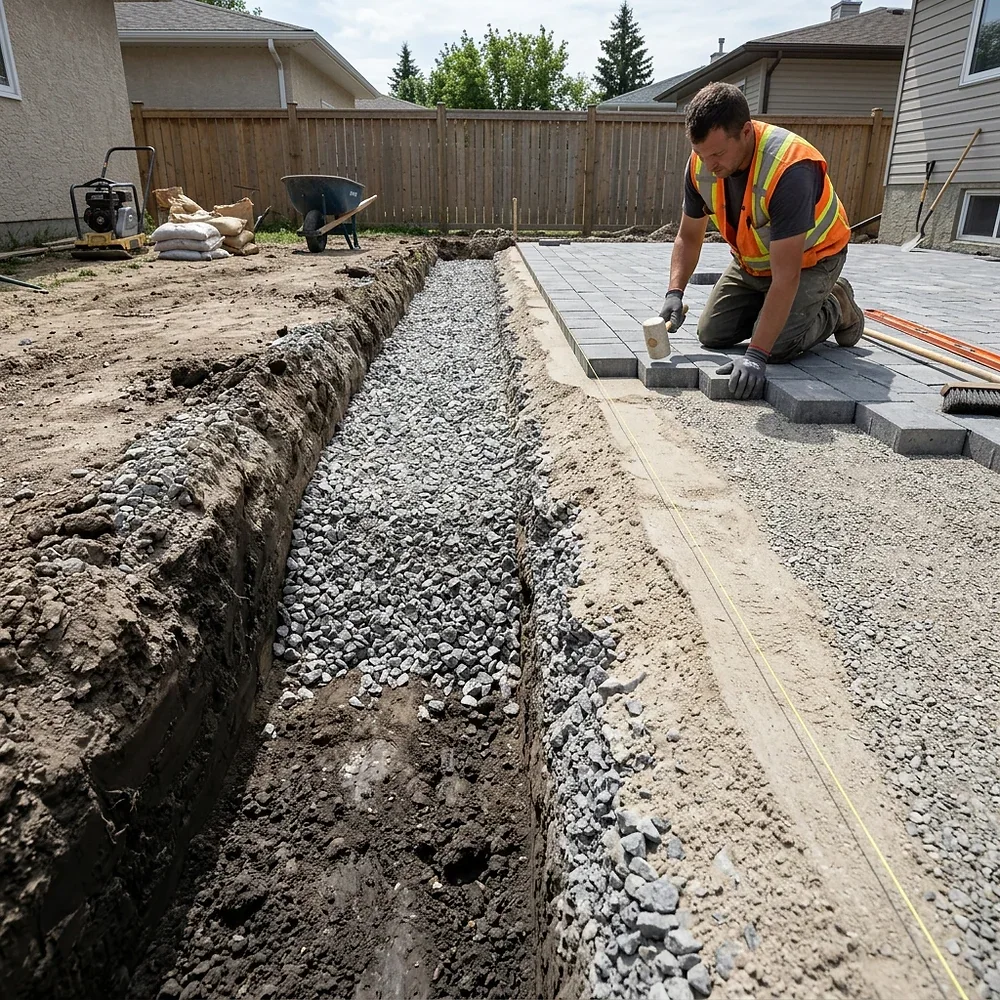
- A Winnipeg patio base requires three distinct layers: compacted granular sub-base, compacted crusher run, and a bedding sand layer — each serves a different function
- Total base depth should reach 8–12 inches for residential patios in Winnipeg’s frost climate; shallower bases heave
- Crusher run limestone (road crush) is the standard sub-base material; its angular particles lock together when compacted. See our crushed limestone grades for pickup or delivery.
- Bedding sand is exactly 1 inch deep after compaction — not a drainage layer, a levelling layer
- All base materials are available for pickup or delivery at Ditchfield Supplies, 2929 Sturgeon Road
Why Patio Base Materials Matter More in Winnipeg Than Anywhere Else
Winnipeg’s frost depth reaches approximately 4 feet. The ground freezes, expands, and thaws repeatedly through winter and spring. Any hardscape structure that isn’t built on a base designed to manage that movement will move with it — and not uniformly. The base under a patio isn’t just filler between the pavers and the soil. It’s an engineered system that distributes load, manages drainage, and resists frost heave. Get the depth wrong and the patio heaves. Get the material wrong, and it compresses unevenly. Get the bedding sand depth wrong, and individual pavers rock and sink.
After 35 years of supplying base materials to Winnipeg contractors and homeowners, the most common mistake we see is treating the base as a cost to minimize rather than a structure to engineer. The pavers are what people see; the base is what determines whether those pavers are still level in five years.
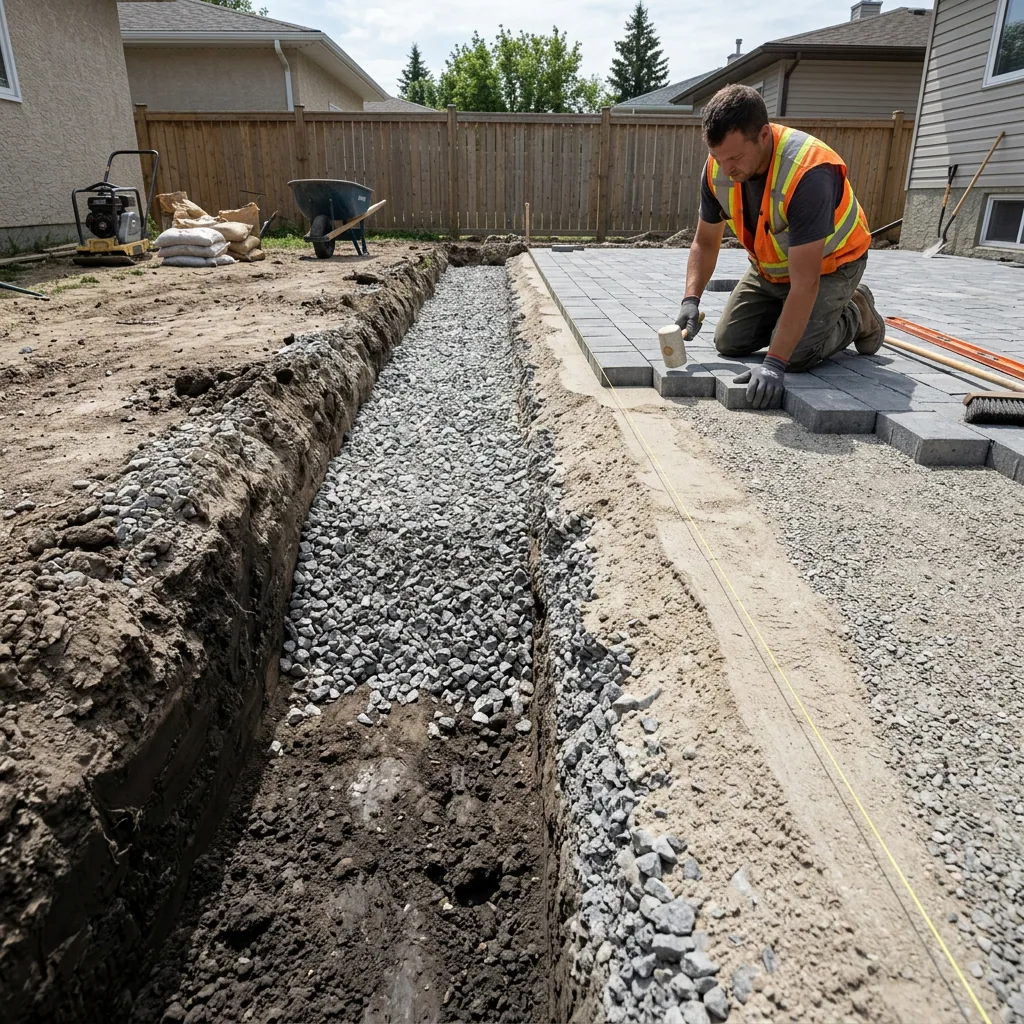
The Three-Layer Base System
Granular Sub-Base: Crusher Run Limestone
Structural foundation. Provides stable bearing capacity, resists frost heave, drains water away. Material: crusher run limestone (road crush, Class 5, ¾ inch down) — angular particles lock together under compaction. Must be placed in 4-inch lifts, each compacted before the next. Depth: 6 to 8 inches for standard residential patios; 8 to 10 inches for heavier loads.
Levelling Course (Finer Crusher Run or Concrete Sand)
A 1 to 2 inch intermediate layer that smooths the rough surface of the compacted sub-base. Compacted and screeded flat before bedding sand goes on top. Not all installations include this layer — for well-controlled sub-base surfaces, the sub-base transitions directly to bedding sand.
Bedding Sand — Exactly 1 Inch
The layer pavers sit on directly. Purpose: levelling and seating only — not drainage, not structural support. Exactly 1 inch deep after compaction. Thicker bedding sand compresses unevenly under paver load, causing individual pavers to settle at different rates. Material: coarse concrete sand (ASTM C33) — not mason sand, play sand, or general-purpose sand.
Material Quantities: How Much Do You Need?
Crusher Run Sub-Base
| Patio Size | At 6 Inches | At 8 Inches | At 10 Inches |
|---|---|---|---|
| 100 sq ft | 1.9 cu yd | 2.5 cu yd | 3.1 cu yd |
| 150 sq ft | 2.8 cu yd | 3.7 cu yd | 4.6 cu yd |
| 200 sq ft | 3.7 cu yd | 5.0 cu yd | 6.2 cu yd |
| 300 sq ft | 5.6 cu yd | 7.4 cu yd | 9.3 cu yd |
| 400 sq ft | 7.4 cu yd | 9.9 cu yd | 12.3 cu yd |
| 500 sq ft | 9.3 cu yd | 12.3 cu yd | 15.4 cu yd |
Bedding Sand
At exactly 1 inch depth: Length (ft) × Width (ft) × 1 ÷ 324 = cubic yards. For a 200 sq ft patio: 200 × 1 ÷ 324 = 0.62 cubic yards. Order 0.75 yards. For most residential patios, 1 to 2 cubic yards is sufficient.
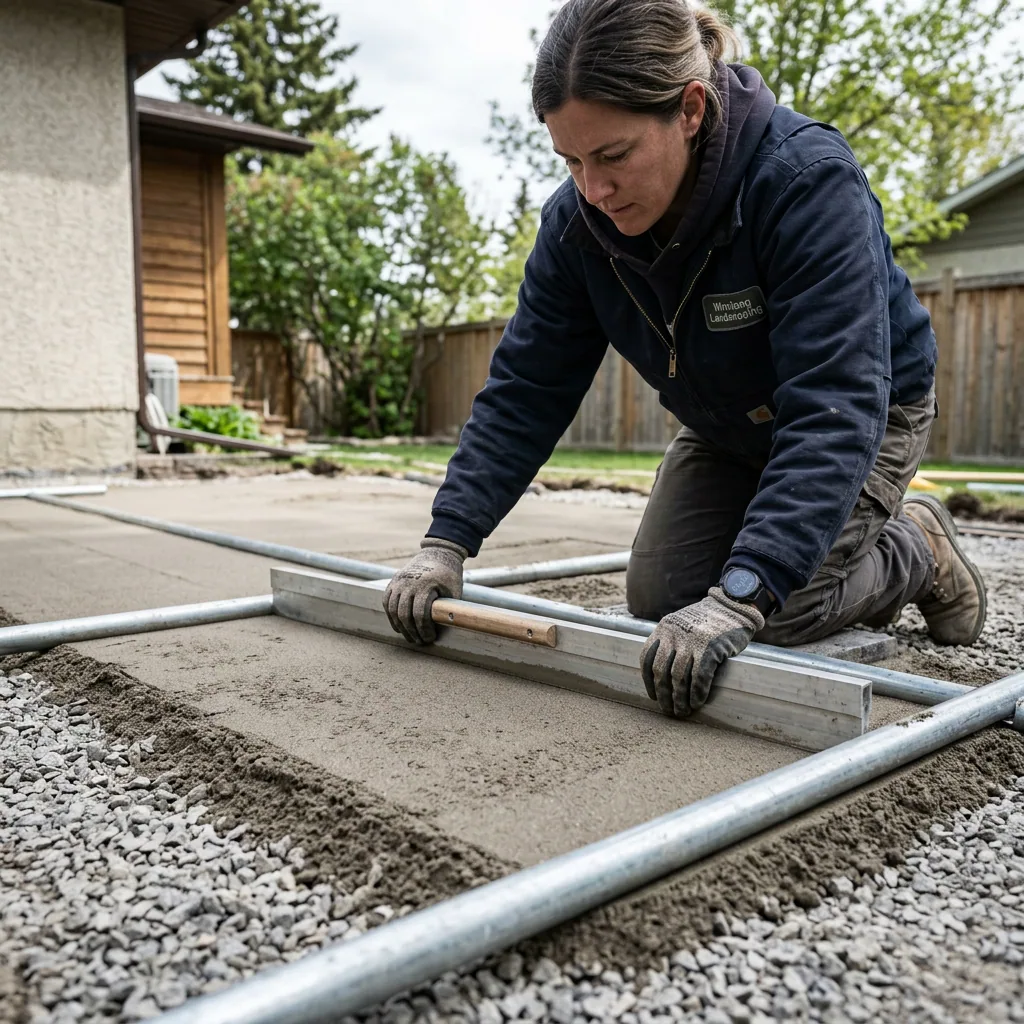
Compaction: The Step That Makes or Breaks the Base
The right material at the right depth does nothing without proper compaction. A plate compactor — a machine rental available from most tool rental yards — is the tool for this job. Hand tamping a granular base doesn’t achieve anywhere near the density required.
Place crusher run in 4-inch lifts — not all at once
Compact each lift before adding the next
Overlap compactor passes by 50% to ensure full coverage
Make a final pass after all material is placed
Test: press firmly with your foot — a properly compacted base shows no impression
Bedding sand exception: For the bedding sand layer, screed to exactly 1 inch using guide pipes, then do not compact the sand itself. The pavers will seat the sand as they’re installed. Pre-compacting the sand layer disrupts the screeded surface.
Polymeric Sand: The Final Step
After pavers are laid on the bedding sand, the joints between them need to be filled. Polymeric sand — a specialized jointing material that hardens when wetted and cured — is the correct product for interlocking paver installations. It resists weed germination, joint erosion, and ant excavation, and it stabilizes the paver surface against horizontal movement. Ditchfield Supplies carries Belgard’s SmartSand polymeric sand as well as compatible options for Barkman and other paver systems.
FAQ: Patio Base Materials in Winnipeg
Can I use pea gravel instead of crusher run for the sub-base?
No. Pea gravel has round particles that don’t interlock under compaction. It shifts under load, provides inconsistent bearing support, and allows frost to penetrate and heave unevenly. Crusher run limestone is the correct material for patio sub-bases in Winnipeg — it’s not interchangeable with other gravel types.
Why can’t I just use more sand for easier levelling?
Thicker sand compresses at different rates under different load points — heavier paver sections sink more than lighter ones — and the surface becomes uneven within a season. The 1-inch bedding sand specification exists because it’s the thickness that provides levelling function without introducing differential settlement.
Does the base need to extend beyond the patio edge?
Yes, ideally by 6 to 12 inches on all sides. This prevents the edge pavers from losing support at their outer face and tilting inward over time. Edge restraints (plastic or aluminum paver edging spiked into the base) are installed at the patio perimeter to hold the paver field in position.
How do I know if my existing base is deep enough for a new patio?
If you’re installing over an existing base, excavate a small test pit at the edge of the area and measure the depth of the granular material. If it’s less than 6 inches of well-compacted crusher run, the base needs to be improved before new pavers go on.
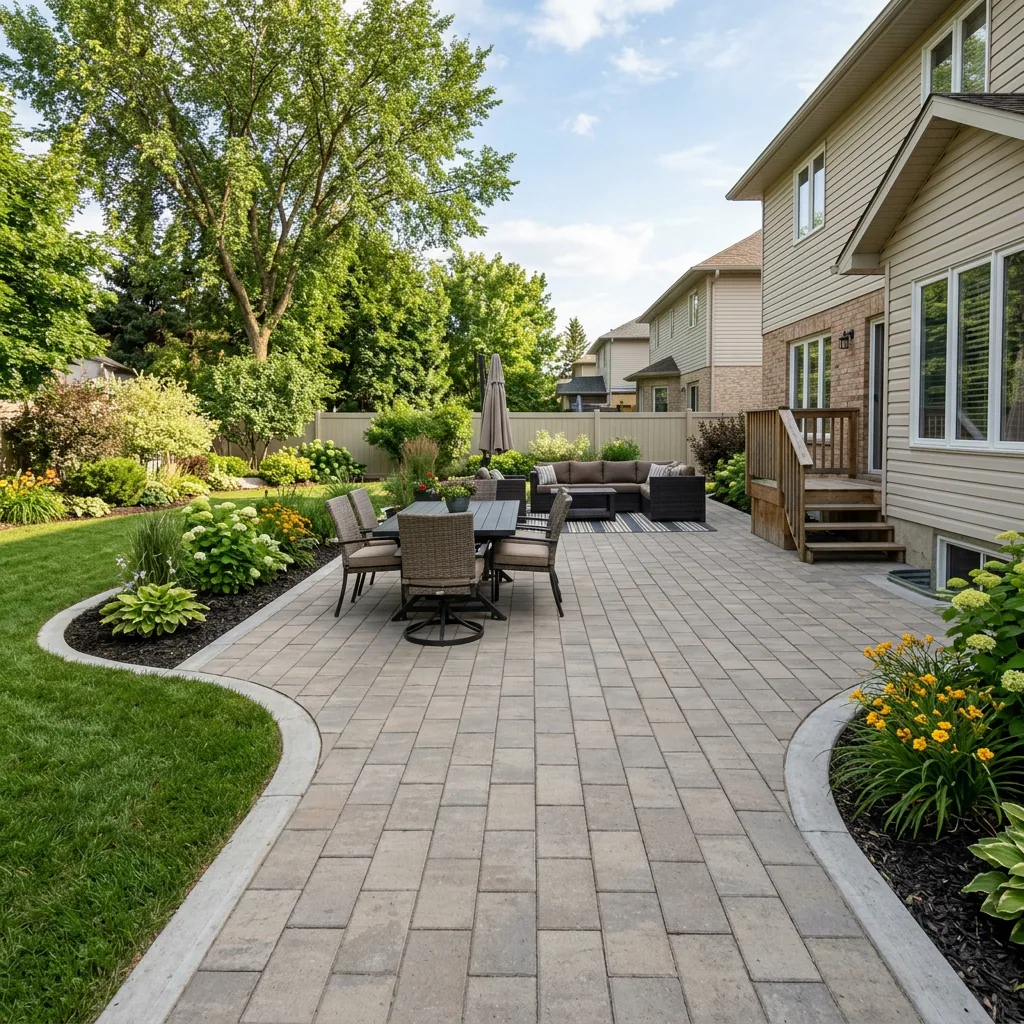
Order Your Base Materials at Ditchfield Supplies
Crusher run limestone, bedding sand, polymeric sand, and paver edging are all available for pickup or delivery. Browse and order at ditchfieldsoils.ca or call 204-889-6268. Same-day and scheduled delivery available across Winnipeg.