Quick Takeaways
- Test readiness with squeeze test: if soil crumbles, it’s ready to work
- Add 2-3 inches of compost mixed into top 6-8 inches before planting
- Loosen compacted soil 8-12 inches deep using garden fork or tiller
- Wait 1-2 weeks after amending before planting for nutrients to settle
- Soil test every 3-5 years tells you exactly what your garden needs
Why Spring Soil Prep Matters
Your garden is only as good as the soil it grows in. Healthy soil produces healthy plants. Poor soil produces struggling plants that attract pests and disappoint at harvest.
When Is Soil Ready to Work?
Step-by-Step Spring Preparation
Step 1: Clear the Bed
Remove dead plant material, fallen branches, and debris. Pull weeds while they’re small. Old material can harbor diseases and pests.
Step 2: Loosen Compacted Soil
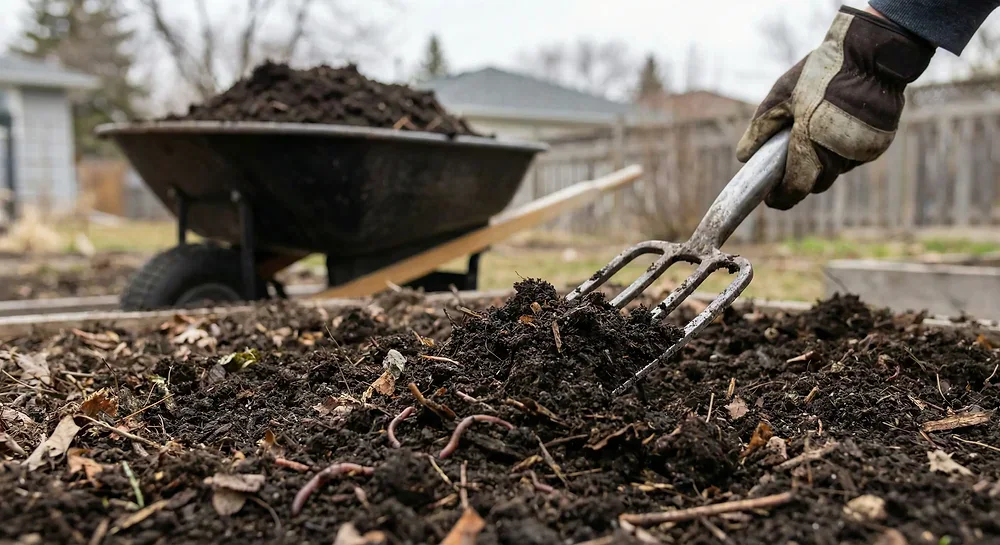
Use a garden fork or tiller to loosen the top 8-12 inches. This allows roots to penetrate easily and improves drainage.
Step 3: Add Organic Matter
Add 2-3 inches of compost across the bed surface, then mix into the top 6-8 inches of soil.
Step 4: Mix and Rest
Turn compost into soil using fork or spade. After amending, let soil rest 1-2 weeks before planting. This allows amendments to integrate and activates microbial activity.
How Much Do You Need?
- 100 sq ft: 0.6 cubic yards (2-inch layer)
- 200 sq ft: 1.2 cubic yards
- 500 sq ft: 3 cubic yards
Get Your Soil Ready
At Ditchfield Supply, we carry the soils, composts, and amendments you need. Our experienced team helps you choose products matched to your garden’s needs.