About Clean Fill
Economical fill for leveling and building up low areas where growing is not the goal.
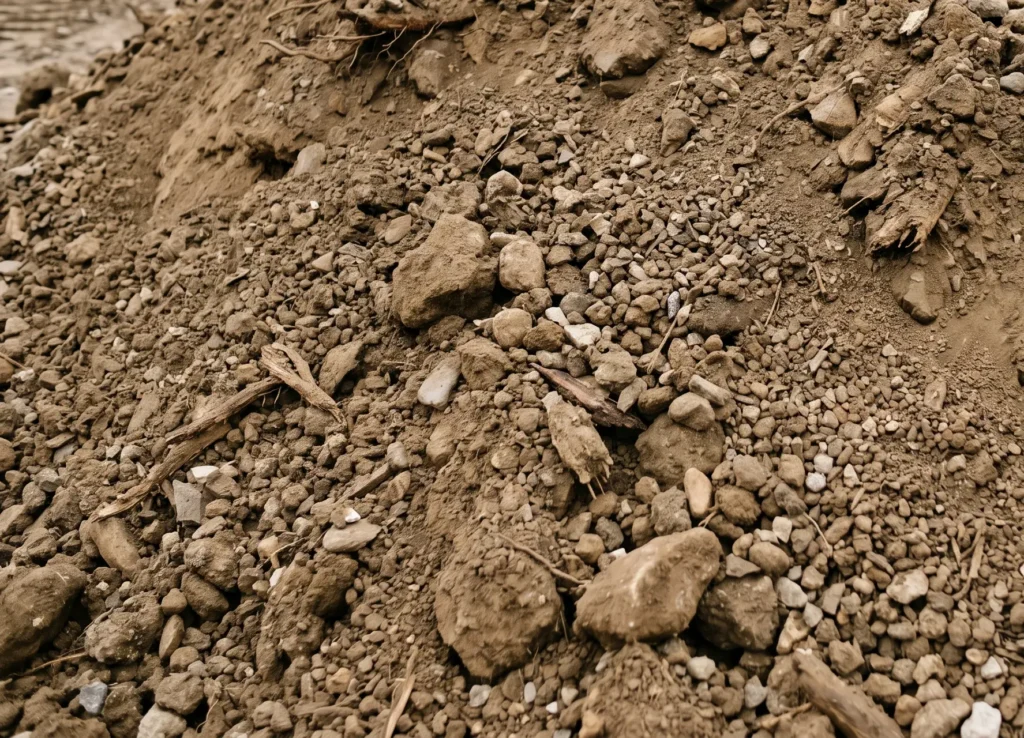
Clean fill is exactly what the name says: soil with no growing ambitions. It is free of garbage, concrete and large debris, and its job is volume — raising a low corner of the yard, backfilling behind a wall, building up a pad, or bringing a settled area back to grade before the good soil goes on top.
Because it is not a growing medium, fill is the cheapest material in the yard by a wide margin — use it for the bottom 80% of a build-up and finish with topsoil where roots actually live. Not sure what your project needs? Read our soil comparison guide.
Questions about Clean Fill
What is clean fill used for?
Clean fill does the heavy lifting on a site: raising low or settled areas, backfilling behind retaining walls and foundations, building up pads for a shed or garage, filling in an old pool or excavation, and correcting grade so water drains away from the house. Nothing grows in it, and that is the point.
Clean fill, black dirt or topsoil — which do I need?
Use clean fill for depth and volume, black dirt to build up planting areas, and screened topsoil as the final 2–4″ where sod or plants go. A typical regrade is fill to within a few inches of finished height, then topsoil on top — ordering topsoil for the whole depth costs twice as much for no benefit.
Does clean fill compact well enough to build on?
Fill compacts fine for landscaping grade work when placed in 6″ lifts and packed as you go, and it will keep settling for a season if you skip that. For anything structural — a garage slab, footings or a load-bearing pad — follow your engineer or contractor’s spec; compacted crushed limestone is usually the right base there, not fill.